Book guide and evaluation
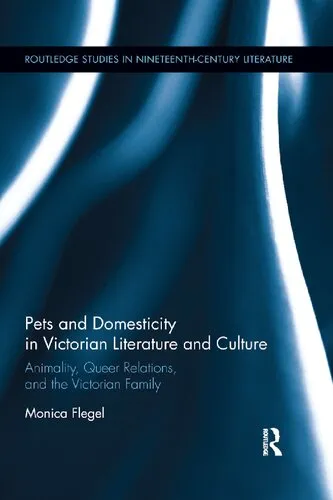
Pets and Domesticity in Victorian Literature and Culture: Animality, Queer Relations, and the Victorian Family
Monica Flegel
English
Intermediate
novel
4.5 / 5
0 reviews
2015
Published
216
pages
374
views
Addressing the significance of the pet in the Victorian period, this book examines the role played by the domestic pet in delineating relations for each member of the "natural" family home. Flegel explores the pet in relation to the couple at the head of the house, to the childre
Before you read
What will you get from this book?
Addressing the significance of the pet in the Victorian period, this book examines the role played by the domestic pet in delineating relations for each member of the "natural" family home. Flegel explores the pet in relation to the couple at the head of the house, to the children who make up the family’s dependents, and to the common familial "outcasts" who populate Victorian literature and culture: the orphan, the spinster, the bachelor, and the same-sex couple. Drawing upon both animal studies and queer theory, this study stresses the importance of the domestic pet in elucidating normative sexuality and (re)productivity within the familial home, and reveals how the family pet operates as a means of identifying aberrant, failed, or perverse familial and gender performances. The family pet, that is, was an important signifier in Victorian familial ideology of the individual family unit’s ability to support or threaten the health and morality of the nation in the Victorian period. Texts by authors such as Clara Balfour, Juliana Horatia Ewing, E. Burrows, Bessie Rayner Parkes, Anne Brontë, George Eliot, Frederick Marryat, and Charles Dickens speak to the centrality of the domestic pet to negotiations of gender, power, and sexuality within the home that both reify and challenge the imaginary structure known as the natural family in the Victorian period. This book highlights the possibilities for a familial elsewhere outside of normative and restrictive models of heterosexuality, reproduction, and the natural family, and will be of interest to those studying Victorian literature and culture, animal studies, queer studies, and beyond.
Ask this book
Your question is answered in the context of this title and author. Each answer uses 2 points.
Sign in to ask the book assistant.
Reader reviews
0 reviews, 4.5 average out of 5
No reviews yet
If you have read this book, help the next reader with your experience.
Write a review
Sign in to publish a review.
Reader questions and answers
Ask a focused question and learn from the community.
Sign in to ask or answer a question.
No questions yet
Be the first to ask a clear, useful question.
What to read next
Related references that continue this learning path.
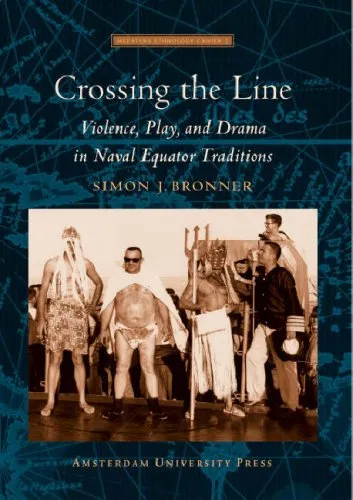
Crossing the Line: Violence, Play, and Drama in Naval Equator Traditions
Simon J. Bronner
2007
View book