Code Complete: A Practical Handbook of Software Construction (with PDF outline)
Steve McConnell
2004
View book
Book guide and evaluation
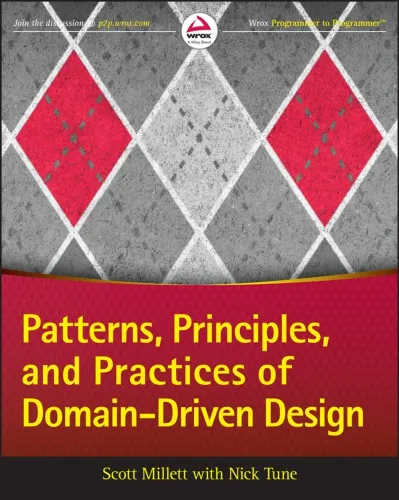
Millett, Scott;Tune, Nick
0 reviews
Published
pages
views
Welcome to the introduction of Patterns, Principles, and Practices of Domain-Driven Design, a comprehensive guide authored by Millett, Scott, and Tune, Nick. This book serves as a strategic resource for anyone who wants to understand the essence of Domain-Driven Design (DDD
Before you read
Welcome to the introduction of Patterns, Principles, and Practices of Domain-Driven Design, a comprehensive guide authored by Millett, Scott, and Tune, Nick. This book serves as a strategic resource for anyone who wants to understand the essence of Domain-Driven Design (DDD) and how to apply it effectively in software development. By blending theory with practical examples, it helps developers, architects, and teams unlock the potential of creating software systems deeply connected to the problem domain.
The book provides a deep dive into Domain-Driven Design concepts while addressing patterns, principles, and best practices. It begins with the fundamentals of DDD, explaining its core philosophy: building software that mirrors the language and processes of its business domain. Moving beyond just theory, the authors explore practical strategies for breaking down complex systems using patterns like Bounded Contexts, Aggregates, and Domain Events.
In later chapters, the book tackles modern software development challenges like ensuring scalability, managing distributed systems, and designing for failure. Topics like Command Query Responsibility Segregation (CQRS) and Event Sourcing are covered with practical guidance, making them accessible for teams striving to build resilient systems. Throughout, the book bridges the gap between design techniques and implementation details by tying DDD principles to contemporary technologies such as cloud computing, NoSQL databases, and microservices architectures.
Finally, the book provides actionable advice on team collaboration and communication, key areas often overlooked in technical discussions. By focusing on communication between domain experts and developers, the authors ensure that the technical design stays aligned with business goals.
Here are some memorable quotes from the book that distill its essence:
"The heart of software development lies in building a deep understanding between developers and the domain experts they work with."
"Bounded Contexts are a way to contain the inevitable complexity of large systems by drawing boundaries that align to the business."
"A model isn’t just a diagram; it’s a cohesive set of ideas that serve as the foundation for design and implementation."
As industries increasingly adopt Domain-Driven Design, this book stands as a cornerstone for mastering the methodology. For professionals tackling complex software systems, it not only provides a rich theoretical foundation but also dives into modern, practical implementations. Whether you are building enterprise-grade solutions or microservices, the book equips you with the tools to create software systems that align with organizational goals.
Additionally, the book emphasizes the cultural and collaborative aspects of DDD, enabling developers and domain experts to speak the same language and work towards shared goals. It champions the idea that well-crafted software requires not just technical skill but also a deep connection to the business it supports.
In a world where software systems grow larger, more distributed, and increasingly complex, Patterns, Principles, and Practices of Domain-Driven Design provides a much-needed roadmap for developers and architects, ensuring that systems remain functional, maintainable, and rooted in real-world value.
The knowledge within these pages will serve as a guide for professionals aiming to bridge the gap between technical craftsmanship and business-driven solutions.
Your question is answered in the context of this title and author. Each answer uses 2 points.
0 reviews, 4.5 average out of 5
Sign in to publish a review.
Ask a focused question and learn from the community.
Related references that continue this learning path.
Steve McConnell