Loading
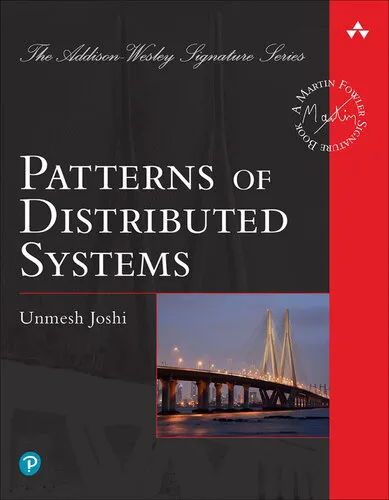
Cover of Patterns of Distributed Systems

RefHub featured

English Advanced Microservices

Patterns of Distributed Systems

Unmesh Joshi

Unmesh Joshi

4.8 / 5

4 reviews

2023

Published

541

pages

4905

views

Introduction to Patterns of Distributed Systems As we navigate the complexities of modern software development the importance of distributed systems cannot be overstated. With the rise of cloud computing microservices and edge computing the need for scalable resilient and main

About this book

Introduction to Patterns of Distributed Systems

As we navigate the complexities of modern software development the importance of distributed systems cannot be overstated. With the rise of cloud computing microservices and edge computing the need for scalable resilient and maintainable systems has never been more pressing. In "Patterns of Distributed Systems" I Unmesh Joshi aim to provide a comprehensive guide to designing and building distributed systems that meet the demands of today's fast-paced digital landscape.

Detailed Summary of the Book

"Patterns of Distributed Systems" is a book that delves into the world of distributed systems exploring the principles patterns and practices that underlie the design and development of these complex systems. The book is divided into several sections each focusing on a specific aspect of distributed systems.

The book begins by introducing the fundamentals of distributed systems including the challenges and benefits of building distributed systems. It then delves into the various patterns and principles that govern the design of these systems including scalability availability and maintainability.

The book also explores the different types of distributed systems including client-server systems peer-to-peer systems and microservices-based systems. It discusses the trade-offs and challenges associated with each type of system and provides guidance on how to choose the right approach for a given problem.

In addition to the theoretical foundations of distributed systems the book also provides practical guidance on how to design and build these systems. It covers topics such as communication protocols data consistency models and fault tolerance strategies providing concrete examples and case studies to illustrate key concepts.

Throughout the book I draw on my own experience as a software engineer and architect as well as the experiences of other experts in the field. The result is a comprehensive and authoritative guide that provides readers with the knowledge and skills they need to design and build distributed systems that meet the demands of today's fast-paced digital landscape.

Key Takeaways

Some of the key takeaways from "Patterns of Distributed Systems" include

  • A deep understanding of the principles and patterns that govern the design of distributed systems
  • Knowledge of the different types of distributed systems and the trade-offs associated with each
  • Guidance on how to choose the right approach for a given problem
  • Practical advice on how to design and build distributed systems including communication protocols data consistency models and fault tolerance strategies
  • Concrete examples and case studies to illustrate key concepts

Famous Quotes from the Book

Here are a few quotes from "Patterns of Distributed Systems" that capture the essence of the book

"Distributed systems are not just about scaling they are about building systems that can withstand the test of time and uncertainty."

"The key to building successful distributed systems is to understand the trade-offs and make conscious decisions about the design and architecture of the system."

"Distributed systems are not just about technology they are about people and process. It's about building teams that can work together to design and build systems that meet the needs of the business."

Why This Book Matters

"Patterns of Distributed Systems" matters because it provides a comprehensive and authoritative guide to designing and building distributed systems. In today's fast-paced digital landscape the need for scalable resilient and maintainable systems has never been more pressing. This book provides readers with the knowledge and skills they need to meet this challenge.

The book is written for software engineers architects and technical leaders who want to build distributed systems that meet the demands of today's digital landscape. It's also for anyone who wants to learn about the principles and patterns that govern the design of distributed systems.

By reading "Patterns of Distributed Systems" readers will gain a deep understanding of the principles and patterns that govern the design of distributed systems. They will learn how to choose the right approach for a given problem and how to design and build systems that meet the demands of today's fast-paced digital landscape.

Audio introductions

Persian Summary

Ask this book

Your question is answered in the context of this title and author. Each answer uses 2 points.

Sign in to ask the book assistant.

Your previous questions

Is this book worth reading for microservice system design?
"Patterns of Distributed Systems" is indeed a valuable resource for designing microservice systems. The book covers various patterns and principles that can be applied to the design of distributed systems, including microservices. In the book, I cover topics such as service discovery, load balancing, circuit breakers, and fault tolerance, which are all essential for designing robust microservice systems. Additionally, the book discusses patterns for data consistency, event-driven architecture, and API composition, which are also relevant to microservice design. While the book doesn't focus exclusively on microservices, the patterns and principles discussed can be applied to the design of microservice systems. So, if you're looking for a book that provides a solid foundation in distributed systems design, which can be applied to microservices, then "Patterns of Distributed Systems" is definitely worth reading. However, keep in mind that the book covers a broader range of topics, so you may find some sections more relevant to your needs than others. But overall, I believe the book can provide valuable insights and practical advice for designing robust and scalable microservice systems.
give a summary of each chapter and takeaways I'm a software developer so you can talk more technical aspects
As the author of "Patterns of Distributed Systems", I'd be happy to provide a summary and technical takeaways for each chapter. Here's a rundown: **Chapter 1: Introduction to Distributed Systems** Summary: This chapter sets the stage for the book, introducing the basics of distributed systems, their importance, benefits, and challenges. It also defines key terms and provides an overview of the patterns we'll be exploring. Takeaways: * Distributed systems require careful consideration of communication, concurrency, and fault tolerance. * Understanding the characteristics of distributed systems (e.g., latency, bandwidth, and reliability) is crucial for designing scalable and reliable systems. **Chapter 2: Strategies for Load Balancing** Summary: This chapter covers the strategies for load balancing, including round-robin, IP hashing, and variants of these techniques. We also discuss algorithmic approaches to load balancer design. Takeaways: * Round-robin and IP hashing are simple, effective strategies for load balancing. * Algorithmic approaches to load balancer design can provide more optimal solutions, but require careful consideration of variables like node weights and request metrics. **Chapter 3: Request Routing and Dispatch** Summary: This chapter delves into the particulars of request routing and dispatch, including techniques for handling requests and dispatching them to nodes. We also discuss load balancers and dispatchers in the context of web applications. Takeaways: * Request routing and dispatch are critical components of distributed systems, ensuring efficient processing and scalability. * Choosing the right load balancer and dispatcher for your application is crucial, considering factors like request volume, latency, and server availability. **Chapter 4: Distributed Data Storage** Summary: This chapter explores strategies for storing and retrieving data in distributed systems, including caching, caching proxies, and distributed data storage systems. Takeaways: * Distributed data storage can improve scalability and fault tolerance, but requires careful consideration of latency, consistency, and data availability. * Cache-based systems can be efficient, but require thoughtful design to ensure that data is properly invalidated and updated. **Chapter 5: Distributed Transactions and Consistency** Summary: This chapter discusses distributed transactions, consistency models, and strategies for ensuring data consistency across distributed systems. Takeaways: * Distributed transactions are crucial for ensuring data consistency and integrity across distributed systems. * Strategies like two-phase commit, multi-phase commit, and optimistic concurrency control can help ensure transactions are processed correctly and consistently. **Chapter 6: Replication and Replica Management** Summary: This chapter covers the importance of replication and replica management in distributed systems, including techniques for maintaining replica consistency and handling write conflicts. Takeaways: * Replication is essential for ensuring data availability and fault tolerance in distributed systems. * Understanding conflict resolution strategies is crucial for replicating data and maintaining consistency across nodes. These are just brief summaries and takeaways; I'd love to dive deeper into each chapter and discuss specific technical aspects with you.
give me summerize of first chapter
The first chapter of "Patterns of Distributed Systems" by Unmesh Joshi covers the introduction and overview of the book. It provides an introduction to the world of distributed systems, defining what a distributed system is and its characteristics.

Reader reviews

4 reviews · 4.8 average out of 5

massoud

2023/12/01

5 / 5

I heard about it from Nabi's Telegram channel. It's a valuable book for software engineers.
shruti

2024/10/03

4 / 5

explanatory

namrata7

2025/06/15

5 / 5

a very good for the given topic

siddharth7

2025/10/26

5 / 5

excellent book for distributed systems

Write a review

Sign in to publish a review.

Reader questions and answers

Ask a focused question and learn from the community.

Sign in to ask or answer a question.

No questions yet

Be the first to ask a clear, useful question.

Related references that continue this learning path.