SOFTWARE ARCHITECTURE WITH C# 10 AND .NET 6 : develop software solutions using... microservices, devops, ef core, and design pattern.
GABRIEL ABBRUZZESE FRANCESCO BAPTISTA
2022
View book
Book guide and evaluation
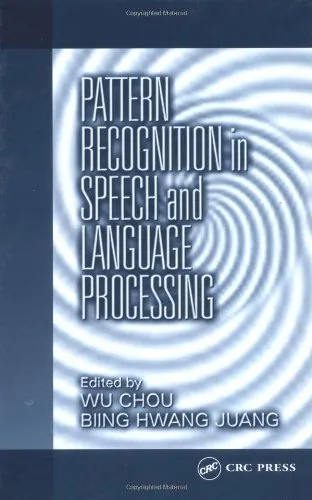
Wu Chou,Biing-Hwang Juang
0 reviews
Published
pages
views
Introduction to "Pattern Recognition in Speech and Language Processing" Welcome to the intricate world of pattern recognition, specifically tailored to the realms of speech and language processing. This book, "Pattern Recognition in Speech and Language Processing", is a co
Before you read
Welcome to the intricate world of pattern recognition, specifically tailored to the realms of speech and language processing. This book, "Pattern Recognition in Speech and Language Processing", is a comprehensive guide that covers a wide array of concepts, methodologies, and applications crucial for understanding and innovating in this dynamic field.
Within the pages of this book, readers will journey through a detailed exposition of pattern recognition theories and techniques as they apply to speech and language processes. The book is structured to introduce fundamental concepts gradually, ensuring that readers gain both theoretical and practical insights. This includes delving deeply into signal processing, statistical models, machine learning paradigms, and their seamless integration to address real-world challenges in speech and language systems.
We begin with an exploration of essential signal processing techniques that form the bedrock of speech recognition. From there, the discussion moves to the development and application of various pattern recognition models, including Hidden Markov Models (HMMs) and Gaussian Mixture Models (GMMs). These models are depicted in the context of their application to diverse speech and language problems.
The book also places a strong emphasis on machine learning advancements. Readers are guided through neural networks and deep learning architectures specifically designed to enhance the accuracy and efficiency of speech recognition systems. Furthermore, natural language processing (NLP) techniques are dissected to demonstrate their impact on improving machine understanding of human language.
Upon completing this book, readers will acquire:
"The journey towards creating machines that truly understand and produce human language is not just an engineering challenge but a profound scientific exploration."
"In the world of pattern recognition, learning from data is not just about algorithms but about understanding the very nature of human communication."
This book stands as a critical resource for researchers, engineers, and students keen on exploring the potentials of speech and language technologies. As our interactions with digital systems increasingly rely on voice and language interfaces, the significance of mastering this domain grows exponentially. "Pattern Recognition in Speech and Language Processing" provides a solid foundation for innovators seeking to push the boundaries of how machines understand and generate human-like communication.
By bridging the gap between academic theories and practical implementations, this book empowers its readers to contribute to the ever-evolving field of speech and language processing. It encourages a deeper appreciation for the nuances of human language and the technological efforts needed to emulate it, setting a trajectory for future advancements in artificial intelligence and communication systems.
Your question is answered in the context of this title and author. Each answer uses 2 points.
0 reviews, 4.6 average out of 5
Sign in to publish a review.
Ask a focused question and learn from the community.
Related references that continue this learning path.
GABRIEL ABBRUZZESE FRANCESCO BAPTISTA

Gabriel Baptista,Francesco Abbruzzese