
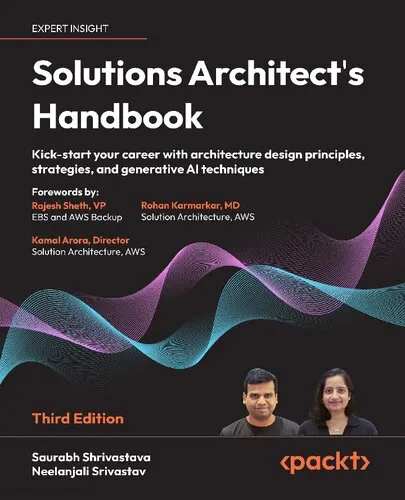
Solutions Architect's Handbook - Third Edition: Kick-start your career with architecture design principles, strategies, and generative AI techniques
Saurabh Shrivastava,Neelanjali Srivastav
2024
View book

Book guide and evaluation
Munneke, Wouter; Ickmans, Kelly; Voogt, Lennard
0 reviews
Published
pages
views
Pain Practicepp.676—694 pain management strategies, clinical pain assessment Pain Practicepp.676—694 offers an in-depth exploration of pain assessment, treatment approaches, and multidisciplinary perspectives. Analytical Summary Pain Practicepp.676—694 stands as a concentra
Before you read
Pain Practicepp.676—694 stands as a concentrated segment of a broader professional work, offering a meticulous deep dive into the complexities of modern pain management. Although the context suggests it is drawn from a larger publication on pain medicine, the exact year of publication and additional bibliographic data remain uncertain due to no reliable public source. Nonetheless, the authors—Munneke, Wouter; Ickmans, Kelly; and Voogt, Lennard—deliver a focused treatment of key theories, diagnostic methodologies, and practical interventions for chronic and acute pain.
Across its pages, the section balances a strong scientific foundation with a clinically grounded narrative. It examines pain through a lens that integrates physiological mechanisms, psychosocial dimensions, and evolving treatment frameworks. These pages are particularly useful for clinicians, researchers, and advanced students who wish to refine their understanding of pain assessment protocols and therapeutic decision-making.
The structure adopts an evidence-led framework, where each concept builds upon the previous, enabling readers to see the progression from theoretical underpinnings to applied practice. By focusing on both quantitative and qualitative aspects, Pain Practicepp.676—694 bridges the gap between laboratory research and bedside application—a quality that has made it a valuable segment in academic and professional discussions around pain management.
From this section, readers gain crucial insights that can influence both academic inquiry and clinical practice.
First, the authors emphasise multidisciplinary collaboration, recognising that effective pain management involves blending medical, psychological, and rehabilitative expertise.
Second, there is a clear delineation between pain as a symptom and pain as a condition in its own right—an important consideration for diagnosis and treatment planning.
Third, the section stresses the role of patient-centred care, ensuring that treatment plans are tailored to individual needs rather than applied in a one-size-fits-all manner.
Finally, assessment tools and evidence-based interventions are discussed alongside their limitations, ensuring practitioners remain critical and reflective in their application.
“Pain is not merely a signal—it is a complex human experience shaped by biology, mind, and society.” Unknown
“Effective pain management demands both precision in diagnosis and empathy in treatment.” Unknown
“Assessment without context risks misinterpretation; context without assessment risks neglect.” Unknown
Pain Practicepp.676—694 holds significance for the academic and medical communities because it distils complex pain science into an accessible yet rigorous format.
Its authors bring a combination of scientific rigour and clinical insight, offering a resource that supports both evidence-based practice and theoretical advancement. Given that chronic pain remains one of the most pressing and costly global health challenges, works like this serve as crucial touchstones in professional education and policy formation.
The section's inclusion of practical case interpretations enhances its applicability, making it an ideal bridge between scholarly research and real-world patient care. This blend ensures that the latest findings in pain science are effectively communicated to those who can enact meaningful change.
As this exploration of Pain Practicepp.676—694 draws to a close, it becomes clear that the section is not just an academic exercise—it is a call to action for all engaged in the care and study of those living with pain.
Whether you are a clinician refining assessment methods, a researcher probing mechanisms, or an educator shaping the next generation of practitioners, the insights here are a catalyst for improved practices and deeper collaboration. Pain Practicepp.676—694 invites readers to read critically, share its insights widely, and discuss its implications so that pain management can advance beyond the conventional boundaries.
Your question is answered in the context of this title and author. Each answer uses 2 points.
0 reviews, 4.5 average out of 5
Sign in to publish a review.
Ask a focused question and learn from the community.
Related references that continue this learning path.
Saurabh Shrivastava,Neelanjali Srivastav
Robert S. Kaplan,David P. Norton