Book guide and evaluation
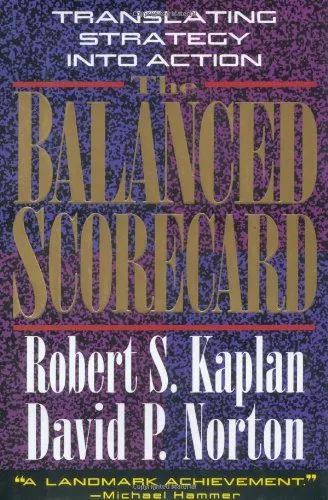
The Balanced Scorecard: Translating Strategy into Action
Robert S. Kaplan,David P. Norton
English
Unordered
Economics
4.5 / 5
0 reviews
1996
Published
329
pages
674
views
Introduction to The Balanced Scorecard: Translating Strategy into Action Welcome to an exploration of 'The Balanced Scorecard: Translating Strategy into Action.' This pivotal book revolutionizes the way businesses plan and execute their strategic goals by introducing an innova
Before you read
What will you get from this book?
Introduction to The Balanced Scorecard: Translating Strategy into Action
Welcome to an exploration of 'The Balanced Scorecard: Translating Strategy into Action.' This pivotal book revolutionizes the way businesses plan and execute their strategic goals by introducing an innovative framework that integrates financial and non-financial performance measures.
Detailed Summary of the Book
The Balanced Scorecard, authored by Robert S. Kaplan and David P. Norton, is a groundbreaking publication that fundamentally changes how enterprises think about strategy and performance management. Released in 1996, the book integrates traditional financial measures with non-financial metrics to give a comprehensive view of business performance.
Kaplan and Norton introduce the balanced scorecard as a tool that enhances the traditional financial perspectives with three additional components: customer perspective, internal business processes, and learning and growth. This holistic approach enables organizations to not only monitor current performance through lagging indicators but also facilitate future performance through leading indicators.
The authors argue that by linking performance measures to strategy, businesses can bridge the gap between strategy formulation and implementation. The balanced scorecard functions not just as a measure, but as a management system that aligns business activities with the vision and strategy of the organization, improves internal and external communications, and monitors organizational performance against strategic goals.
Key Takeaways
- Aligns business activities with the organization's vision and strategy.
- Uses leading and lagging indicators to measure organizational performance comprehensively.
- Enhances communication within the organization and with stakeholders.
- Provides a framework for strategic management beyond financial metrics alone.
Famous Quotes from the Book
"The Balanced Scorecard was not originally designed to serve as the cornerstone of a new strategic management system. Yet, as we introduced the scorecard and implemented it in a variety of different organizations, we gained insights into its power as a driver of future performance."
"An organization’s measurement system strongly affects the behavior of managers and employees."
Why This Book Matters
In today's dynamic business environment, traditional management tools focused solely on financial indicators are no longer sufficient. Kaplan and Norton's balanced scorecard offers a strategic framework that ensures long-term success by incorporating a balanced view of critical success factors.
This book is pivotal for organizations seeking to convert strategic plans into actionable objectives. It empowers companies to create a strategic focus, thereby enhancing effectiveness and competitiveness. The balanced scorecard has become a popular management tool used by countless organizations worldwide, signifying its importance and impact on strategic planning and execution.
Ask this book
Your question is answered in the context of this title and author. Each answer uses 2 points.
Sign in to ask the book assistant.
Reader reviews
0 reviews, 4.5 average out of 5
No reviews yet
If you have read this book, help the next reader with your experience.
Write a review
Sign in to publish a review.
Reader questions and answers
Ask a focused question and learn from the community.
Sign in to ask or answer a question.
No questions yet
Be the first to ask a clear, useful question.
What to read next
Related references that continue this learning path.