Loading
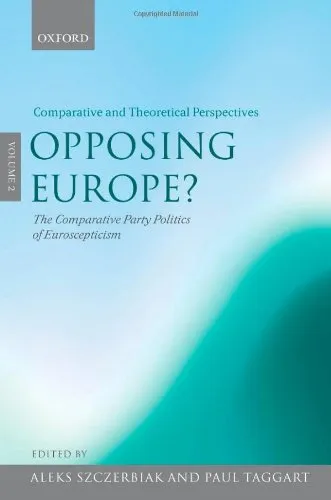
Cover of Opposing Europe?: The Comparative Party Politics of Euroscepticism: Comparative and Theoretical Perspectives

Book guide and evaluation

Opposing Europe?: The Comparative Party Politics of Euroscepticism: Comparative and Theoretical Perspectives

Aleks Szczerbiak,Paul Taggart

English Intermediate novel
4.7 / 5

0 reviews

2008

Published

298

pages

292

views

The project of European integration now spans Europe, but in becoming bigger and broader the European Union has broughtry on itself significant criticism. As the EU becomes deeper,nd wider, and more ambitious, so opposition and scepticismnd become more prominent for citizens and

Before you read

What will you get from this book?

The project of European integration now spans Europe, but in becoming bigger and broader the European Union has broughtry on itself significant criticism. As the EU becomes deeper,nd wider, and more ambitious, so opposition and scepticismnd become more prominent for citizens and more problematic for elites. Concerns about a 'democratic deficit' and theomestic distance between European elites and publics have come to be a common feature of European politics. As a consequence Euroscepticism has become a part of the terrain of conflict between political parties across Europe. Opposing Europe? provides the first comprehensive review of party-based Euroscepticism across the breadth of contemporary Europe and the first in-depth comparative academic study of Euroscepticism. This, the second of two volumes, is made up of comparative chapters which address different aspects of Euroscepticism. The volume looks across Europe and includes EU member states and candidate and non-member states in order to draw out comparative lessons that relate to the nature of political parties, party systems, and the domestic politics of European integration. Opposing Europe? is a groundbreaking, 'state of the art' book that provides a definitive review of a key issue in European politics. It is also one of the few attempts to integrate the fields of EU studies with both West European and East European studies in order to draw lessons about the way in which the EU interacts with domestic politics in both member and non-member states. Examining the way that parties position themselves and compete on the European issue provides powerful lessons for the trajectory of the European integration project more generally, and on the prospects for the emergence of a European political system and polity.

Ask this book

Your question is answered in the context of this title and author. Each answer uses 2 points.

Sign in to ask the book assistant.

Reader reviews

0 reviews, 4.7 average out of 5

No reviews yet

If you have read this book, help the next reader with your experience.

Write a review

Sign in to publish a review.

Reader questions and answers

Ask a focused question and learn from the community.

Sign in to ask or answer a question.

No questions yet

Be the first to ask a clear, useful question.