Book guide and evaluation
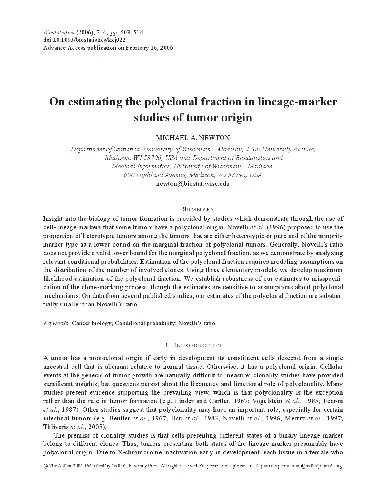
On estimating the polyclonal fraction in lineage-marker studies of tumor origin
Newton M. A.
English
Intermediate
novel
4.3 / 5
0 reviews
2006
Published
12
pages
468
views
Welcome to the deep exploration of the intricacies of tumor origin through the lens of lineage-marker studies. 'On Estimating the Polyclonal Fraction in Lineage-Marker Studies of Tumor Origin' navigates the complex world of oncology and genetics, providing insights into the p
Before you read
What will you get from this book?
Welcome to the deep exploration of the intricacies of tumor origin through the lens of lineage-marker studies. 'On Estimating the Polyclonal Fraction in Lineage-Marker Studies of Tumor Origin' navigates the complex world of oncology and genetics, providing insights into the polyclonal nature of tumors. This text is a vast resource for understanding how these diverse cellular origins can be traced, quantified, and understood in the context of cancer biology.
Detailed Summary of the Book
This book delves into the foundational concepts and advanced methodologies necessary to estimate the polyclonal fraction in tumors, a crucial aspect that influences the progression and treatment responsiveness of cancers. Polyclonal tumors, originating from multiple cells, present significant challenges in treatment and understanding their genesis is essential for developing effective therapies.
At its core, the book discusses the use of lineage-marker studies—an innovative approach that allows scientists to track cell lineage through distinct genetic markers. This technique helps decipher whether a tumor is monoclonal, originating from a single cell, or polyclonal, involving multiple ancestral lines. Understanding this distinction can drastically affect therapeutic strategies and outcomes.
The narrative unfolds with discussions on genetic markers, advanced sequencing technologies, and statistical models utilized to parse out the complexities of polyclonal origins. Through methodical breakdowns and real-world examples, readers are equipped with the tools and knowledge necessary to both comprehend and apply these concepts in research and clinical settings.
Key Takeaways
- Understanding the importance of polyclonality in tumors and its implications on treatment and prognosis.
- Insights into advanced techniques used for detecting and interpreting lineage markers in cancer cells.
- Detailed exploration of statistical and computational models pertinent to genetic research.
- A comprehensive guide to current challenges and future perspectives in tumor origin studies.
Famous Quotes from the Book
"In the labyrinth of human biology, the paths of chromosomal markers reveal the stories of our cellular beginnings."
"Understanding polyclonality in tumors is not just about deciphering complexity—it's about unlocking potential pathways to novel treatments."
"The genome is not a static script but a dynamic narrative, where lineage markers punctuate the sentences of cellular evolution."
Why This Book Matters
This book is an essential contribution to oncology and genetic research, providing valuable insights that bridge the gap between theoretical genetics and practical medical application. In an era where personalized medicine is rapidly evolving, understanding polyclonality is pivotal for developing precise treatment protocols that cater to the unique genetic landscape of an individual's cancer.
By focusing on lineage markers, the book offers innovative perspectives and methodologies that are not only relevant to researchers but also practitioners who directly engage with cancer patients. It underscores the necessity of integrating genetic understanding into mainstream medical practices to enhance therapeutic outcomes and push the boundaries of what's possible in cancer treatment.
For both educators and students, 'On Estimating the Polyclonal Fraction in Lineage-Marker Studies of Tumor Origin' serves as a comprehensive resource that supports curriculum development and further investigation into a field that continues to capture scientific curiosity and human hope. As such, it stands as a critical tool for anyone committed to advancing the understanding and treatment of cancer.
Ask this book
Your question is answered in the context of this title and author. Each answer uses 2 points.
Sign in to ask the book assistant.
Reader reviews
0 reviews, 4.3 average out of 5
No reviews yet
If you have read this book, help the next reader with your experience.
Write a review
Sign in to publish a review.
Reader questions and answers
Ask a focused question and learn from the community.
Sign in to ask or answer a question.
No questions yet
Be the first to ask a clear, useful question.
What to read next
Related references that continue this learning path.
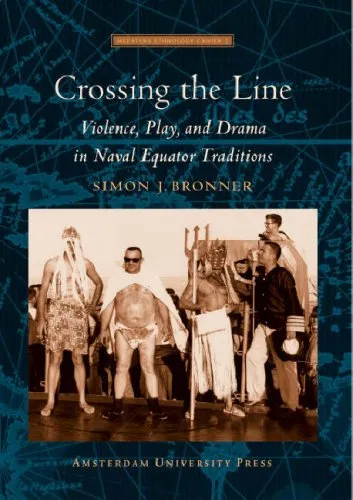
Crossing the Line: Violence, Play, and Drama in Naval Equator Traditions
Simon J. Bronner
2007
View book