Book guide and evaluation
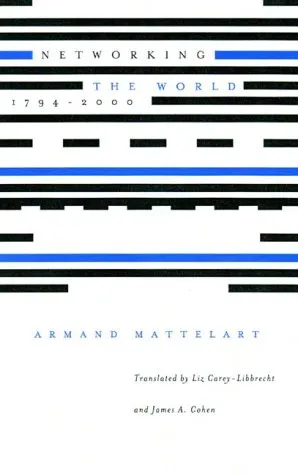
Networking the World, 1794-2000
Armand Mattelart
English
Intermediate
Technology
4.3 / 5
0 reviews
2000
Published
138
pages
375
views
Networking the World, 1794-2000 global communication history, transnational information networks Networking the World, 1794-2000 examines two centuries of global communication systems and their societal transformations. Analytical Summary Armand Mattelart’s Networking the W
Before you read
What will you get from this book?
Analytical Summary
Armand Mattelart’s Networking the World, 1794-2000 offers a meticulously researched exploration of the historical evolution of global communication systems, tracing their origins from the late 18th century to the dawn of the 21st century. The work situates communications growth at the intersection of technological innovation, political power, and cultural exchange.
Mattelart examines how early semaphore lines, maritime routes, and telegraph networks established the foundations for connecting nations and economies, paving the way for radio, television, satellites, and the internet. By contextualizing these developments within broader political, economic, and cultural processes, the author reveals the intertwined nature of technology and society.
The narrative challenges the simplistic notion of technological determinism by demonstrating how communication infrastructures are as much products of human design, ideology, and governance as they are of mechanical and digital advances. The book pays equal attention to the aspirations of connectivity and the tensions—political, economic, and social—that have accompanied the global networking process.
Rather than presenting a mere chronological history, Networking the World, 1794-2000 offers a thematic analysis that addresses transnational flows of information, the regulation of communications, and the geopolitics of networks. In doing so, it draws connections between past innovations and contemporary debates about globalization, data sovereignty, and media power.
Key Takeaways
Readers will come away with a nuanced understanding of how communication systems have shaped—and been shaped by—two centuries of geopolitical, economic, and cultural transformations.
First, the book underscores that global communication history is neither linear nor uniformly progressive; periods of expansion often meet with resistance, regulation, or unintended consequences.
Second, it emphasizes the importance of political economy in understanding media and communication systems, situating technological developments within power struggles, trade relationships, and cultural agendas.
Third, it demonstrates that the fabric of transnational information networks is woven from both centralized and decentralized forces, illustrating a complex interplay that continues to influence contemporary network design and governance.
Memorable Quotes
“Communication networks are not just channels; they are manifestations of political and cultural order.”Unknown
“The wiring of the world was as much a story of empire as of invention.”Unknown
“To understand today’s digital landscapes, one must traverse the long paths of connectivity’s past.”Unknown
Why This Book Matters
Networking the World, 1794-2000 stands out as a seminal contribution to scholarship on the global communication history, offering both breadth and depth in its analysis.
For academics, it provides a robust theoretical framework grounded in political economy, making it especially valuable for media studies, international relations, and cultural history courses. For professionals, particularly those in telecommunications, policymaking, and digital strategy, the book informs present decisions by illuminating historical patterns of network development.
Information on any awards the book may have received is unavailable due to no reliable public source confirming such details. Nevertheless, its influence in scholarly circles is evident through its continued citation in studies that bridge history and contemporary communication debates.
Inspiring Conclusion
In the end, Networking the World, 1794-2000 does more than recount the milestones of global communication—it equips the reader with a lens to critically assess the networks of today and tomorrow.
By tracing the interconnected histories of technology, politics, and culture, the book invites deep reflection on our current age of instantaneous information exchange. Its relevance endures for those seeking to understand not only how networks are built but why they take the forms they do.
If you are ready to engage in a richly detailed and intellectually rigorous journey across two centuries of connectivity, let Networking the World, 1794-2000 be your guide. Read it, share its insights, and bring its historical perspective into the important conversations of our connected age.
Ask this book
Your question is answered in the context of this title and author. Each answer uses 2 points.
Sign in to ask the book assistant.
Reader reviews
0 reviews, 4.3 average out of 5
No reviews yet
If you have read this book, help the next reader with your experience.
Write a review
Sign in to publish a review.
Reader questions and answers
Ask a focused question and learn from the community.
Sign in to ask or answer a question.
No questions yet
Be the first to ask a clear, useful question.
What to read next
Related references that continue this learning path.
Understanding Media Cultures: Social Theory and Mass Communication 2nd Edition
Nicholas Stevenson
2002
View book