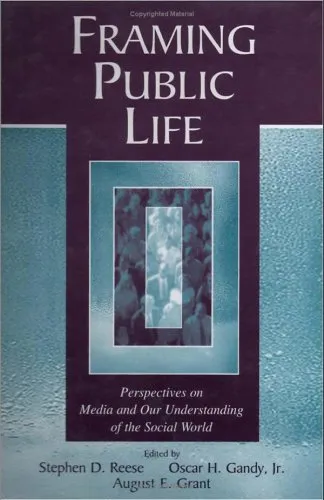
Framing Public Life: Perspectives on Media and Our Understanding of the Social World
Stephen D. Reese,Oscar H. Gandy Jr.,August E. Grant
2001
View book
Book guide and evaluation
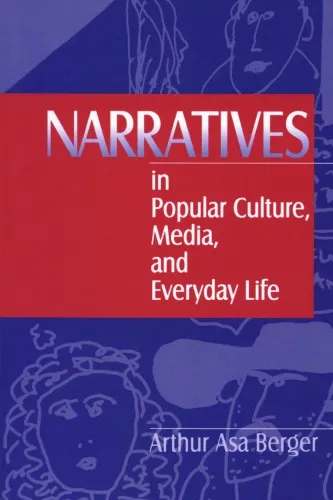
Arthur Asa Berger
0 reviews
Published
pages
views
Narratives in Popular Culture, Media, and Everyday Life media narratives, cultural storytelling Explore Narratives in Popular Culture, Media, and Everyday Life to understand storytelling across media and daily experiences. Analytical Summary "Narratives in Popular
Before you read
"Narratives in Popular Culture, Media, and Everyday Life" is a thought-provoking exploration of how stories permeate and shape human interactions, entertainment, and public discourse. Written by Arthur Asa Berger, this seminal work examines the structures, functions, and interpretations of narratives in various contexts, from television and film to daily conversation and advertising.
The book dives deeply into the idea that narratives are not simply entertainment devices but fundamental frameworks by which we make sense of our world. Berger's analysis spans mass media, folklore, pop culture, and interpersonal communication, illustrating how cultural storytelling encodes values, norms, and shared beliefs. Through analytical rigor and accessible prose, the text bridges scholarly theory and real-world application, making it a valuable resource for academics, media analysts, sociologists, and cultural critics.
Information unavailable on exact publication year due to no reliable public source, but the work retains enduring relevance. Its thematic scope encompasses narrative theory, semiotics, and cultural studies, making it an important anchor for discussions on media narratives in the classroom and research publications alike.
Readers will acquire a multi-dimensional understanding of how narratives function as both cultural artifacts and dynamic, evolving entities within media and everyday life.
One takeaway is the recognition of everyday storytelling — whether in casual conversation or digital media — as part of a broader cultural mechanism. The book details how media narratives embody collective consciousness and influence public perception.
Another lesson is the identification of narrative structures across different genres, showing parallels between, for example, newspaper articles, sitcom scripts, and urban legends. Berger establishes comparative frameworks that demystify these forms for detailed analysis.
Finally, the text emphasizes the importance of critical literacy in consuming cultural storytelling. Understanding how narratives function empowers readers to engage with media in a more discerning and proactive manner.
Stories are the connective tissue of culture, binding people through shared meaning.Unknown
The narratives we tell in everyday life mirror the larger myths we consume from media.Arthur Asa Berger
Understanding narratives is to understand humanity’s implicit negotiation with truth and imagination.Unknown
The book matters because it illuminates how pervasive narratives guide societal beliefs, consumer behavior, and individual identities.
In the context of academic research, this work bridges theoretical perspectives from cultural studies and practical examples from mass media. Professionals in journalism, marketing, advertising, and education will find actionable insights into the ways media narratives can be harnessed or critically challenged.
By situating narratives within everyday life, Berger demonstrates that cultural storytelling is both universal and context-specific. This universality allows interdisciplinary application, from communication studies to anthropology.
"Narratives in Popular Culture, Media, and Everyday Life" invites readers to look beyond surface stories and see the intricate patterns that shape culture.
Through its authoritative yet accessible approach, the book offers a compelling call to engage critically with the narratives surrounding us — in news, entertainment, and personal exchange. Arthur Asa Berger’s work underscores the point that by decoding these narratives, we unlock a deeper understanding of both ourselves and the society we inhabit.
For serious readers, academics, and professionals, the next step is clear: read, share, and discuss the insights gained from "Narratives in Popular Culture, Media, and Everyday Life" and apply them in scholarly, creative, and everyday contexts to enrich our comprehension of the world’s most powerful cultural tool — storytelling.
Your question is answered in the context of this title and author. Each answer uses 2 points.
0 reviews, 4.5 average out of 5
Sign in to publish a review.
Ask a focused question and learn from the community.
Related references that continue this learning path.
Stephen D. Reese,Oscar H. Gandy Jr.,August E. Grant
Anthony DiMaggio