
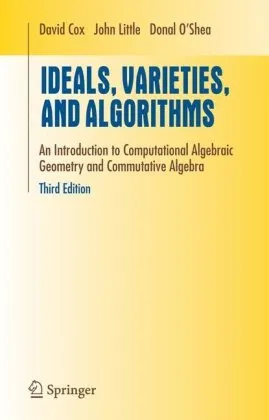
Ideals, varieties, and algorithms: an introduction to computational algebraic geometry and commutative algebra
David A. Cox,John Little,Donal O’Shea
2007
View book
Book guide and evaluation
Keller A.
0 reviews
Published
pages
views
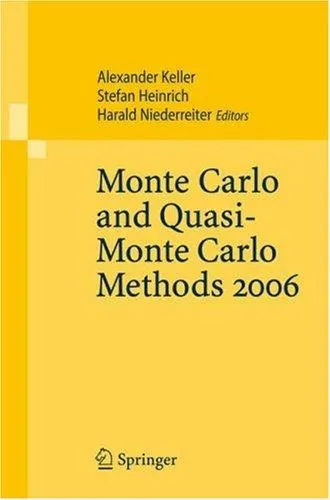
Introduction to Monte Carlo and Quasi-Monte Carlo Methods 2006 Monte Carlo and Quasi-Monte Carlo Methods 2006 is a comprehensive volume that captures the essence of the field and advances theoretical and practical knowledge. Edited by Keller A., this book features a coll
Before you read
Monte Carlo and Quasi-Monte Carlo Methods 2006 is a comprehensive volume that captures the essence of the field and advances theoretical and practical knowledge. Edited by Keller A., this book features a collection of papers from some of the most renowned researchers in the area. Each chapter delves into intricate details of Monte Carlo methods, offering fresh insights and innovative solutions to complex problems faced across various scientific domains.
The book is a proceeding of the Seventh International Conference on Monte Carlo and Quasi-Monte Carlo Methods in Scientific Computing, held in Ulm, Germany, in 2006. It covers a wide spectrum of topics including, but not limited to, the theoretical development and improvement of Monte Carlo techniques, Quasi-Monte Carlo methodologies, numerical integration, and applications in computational finance, statistical mechanics, and engineering.
The integration of computational methods and global optimizations forms a fundamental part of this volume, offering a selection of papers that focus on the convergence rates, discrepancy theories, and various algorithms that underpin these disciplines. Researchers offer a mix of theoretical background and experimental results, providing readers the tools they need to apply these methods in practical scenarios.
The book provides a rich tapestry of information that can be distilled into several key takeaways:
One of the memorable quotes from the book is:
"In the vast landscape of numerical computation, Monte Carlo and Quasi-Monte Carlo methods serve as a beacon of innovation, guiding researchers through complexity with their robust algorithmic approaches."
Such quotes underscore the book's commitment to presenting sophisticated methodologies in an accessible manner, enriching the reader's understanding and appreciation of the subject.
The importance of 'Monte Carlo and Quasi-Monte Carlo Methods 2006' lies in its exhaustive exploration of emerging trends and techniques in numerical simulation. The book serves as both an academic source and a practical guide that supports the ongoing evolution of scientific computation.
The diverse range of applications covered provides invaluable insights for theoreticians and practitioners alike, ensuring that advances in this niche become embedded in mainstream computational practices. By bridging the gap between theory and application, this publication fosters a deeper understanding of how to harness Monte Carlo and Quasi-Monte Carlo methods to tackle complex challenges in modern science and engineering.
Your question is answered in the context of this title and author. Each answer uses 2 points.
0 reviews, 4.6 average out of 5
Sign in to publish a review.
Ask a focused question and learn from the community.
Related references that continue this learning path.
David A. Cox,John Little,Donal O’Shea
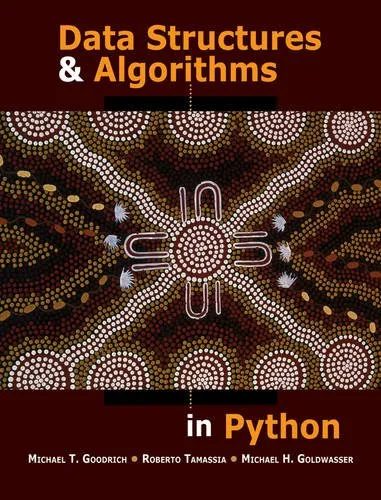
Michael T. Goodrich,Roberto Tamassia,Michael H. Goldwasser
Kent Lee,Steve Hubbard