Book guide and evaluation
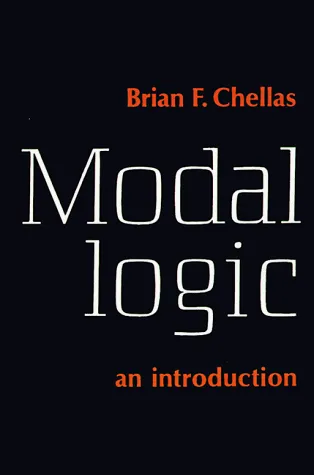
Modal Logic: An Introduction
Brian F. Chellas
English
Beginner
Logic and Foundations
4.5 / 5
0 reviews
1980
Published
305
pages
588
views
Introduction to Modal Logic: An Introduction Welcome to the exploration of 'Modal Logic: An Introduction', a comprehensive guidebook by Brian F. Chellas, dedicated to understanding the diverse dimensions of modal logic. This field of logic is pivotal in symbolizing and reasoni
Before you read
What will you get from this book?
Introduction to Modal Logic: An Introduction
Welcome to the exploration of 'Modal Logic: An Introduction', a comprehensive guidebook by Brian F. Chellas, dedicated to understanding the diverse dimensions of modal logic. This field of logic is pivotal in symbolizing and reasoning about necessity, possibility, belief, and other related modalities.
Detailed Summary of the Book
The book serves as a profound introduction to modal logic, combining rigorous academic analysis with clear and comprehensible writing. It addresses the need for a text that communicates complex logical concepts to students and enthusiasts of philosophy and mathematics. Chellas starts by discussing the basic syntax and semantics of modal logic, explaining modal operators like necessity and possibility.
Subsequent chapters delve into different systems of modal logic, such as propositional modal logic, quantified modal logic, and deontic logic. Each system is meticulously detailed with rules, axioms, and practical applications. Chellas does not merely present a static view of logic; he engages readers in the philosophical challenges these systems pose. Through examples and exercises, he provokes readers to think critically, stimulating a deeper appreciation for the subject.
Furthermore, Chellas navigates through the intricacies of Kripke semantics, offering insights into possible world semantics, accessibility relations, and the famed completeness and soundness of modal systems. His exposition provides a pathway from the fundamental concepts to more advanced topics, making the book suitable for both beginners and those seeking deeper technical knowledge.
Key Takeaways
- Understanding of basic and advanced concepts in modal logic.
- Familiarity with different modal logic systems and their real-world applications.
- Awareness of philosophical issues and interpretations of modal concepts.
- Hands-on experience through exercises that solidify understanding.
- Overview of Kripke semantics and its significance in modal logic.
Famous Quotes from the Book
“Modal logic holds the promise of offering a form of logic that is both closer to and more remote from ordinary reasoning.”
“Through modal phrases, we recognize the complexity inherent in human judgment.”
Why This Book Matters
'Modal Logic: An Introduction' is significant because it equips readers with the analytical tools necessary to explore philosophical questions through the lens of logic. It opens pathways to understanding how we make decisions, express beliefs, and articulate possibilities.
As a discipline, modal logic intersects various fields such as computer science, linguistics, artificial intelligence, and metaphysics. Chellas's book not only educates but inspires a sense of inquiry and discovery, which is essential for anyone pursuing advanced studies or careers in these domains. Furthermore, it propels the reader to see beyond traditional logic, recognizing modal reasoning as an integral part of human cognitive phenomena.
Ultimately, this book matters because it is both a thorough introduction and a catalyst for further investigation into the rich field of modal logic, emphasizing its relevance in both theoretical and practical contexts.
Ask this book
Your question is answered in the context of this title and author. Each answer uses 2 points.
Sign in to ask the book assistant.
Reader reviews
0 reviews, 4.5 average out of 5
No reviews yet
If you have read this book, help the next reader with your experience.
Write a review
Sign in to publish a review.
Reader questions and answers
Ask a focused question and learn from the community.
Sign in to ask or answer a question.
No questions yet
Be the first to ask a clear, useful question.
What to read next
Related references that continue this learning path.
A Study of Husserl's Formal and Transcendental Logic
Suzanne Bachelard. Translated by Lester E. Embree
1990
View book
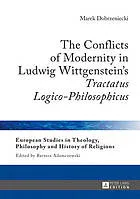
The conflicts of modernity in Ludwig Wittgenstein's Tractatus Logico-Philosophicus
Dobrzeniecki,Marek
2016
View book