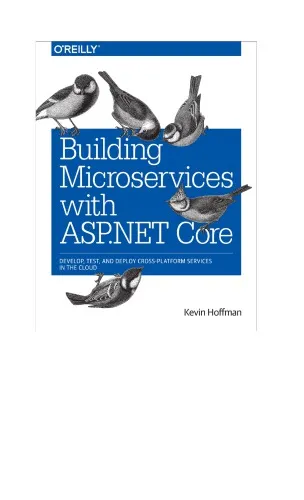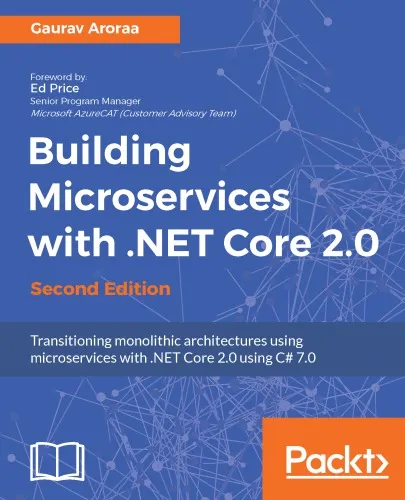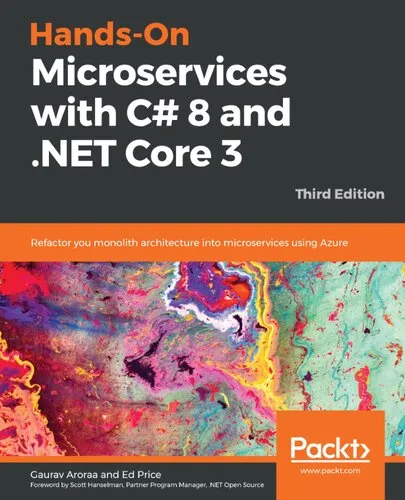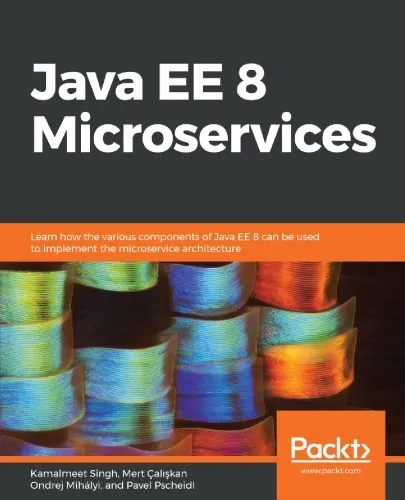
Java EE 8 Microservices - Learn how the various components of Java EE 8 can be used to implement the microservice architecture.
Kamalmeet Singh,Pavel Pscheidl et al.
2020
View book
Book guide and evaluation
Christian Horsdal
0 reviews
Published
pages
views
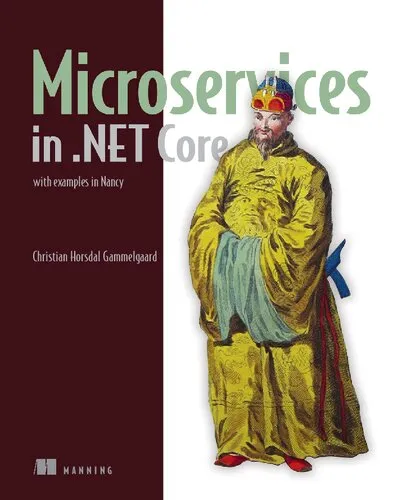
Introduction to "Microservices in .NET Core: With Examples in Nancy" "Microservices in .NET Core: With Examples in Nancy" is a comprehensive guide that equips developers with the practical knowledge they need to design and implement microservices architectures using .NET
Before you read
"Microservices in .NET Core: With Examples in Nancy" is a comprehensive guide that equips developers with the practical knowledge they need to design and implement microservices architectures using .NET Core. The book is particularly notable for its use of Nancy, a lightweight library for building HTTP services in .NET, which provides a simplified and flexible approach to API development. Whether you are an experienced developer or just starting with microservices, this book serves as an essential resource for mastering the concepts of distributed systems while leveraging the power of .NET Core.
The book aims to simplify the transition from monolithic applications to microservices-based architectures by demonstrating patterns, tools, and techniques that are essential for efficient development. Its hands-on approach ensures that readers can immediately apply their learning to build scalable, resilient, and maintainable applications. Throughout the pages, you’ll explore real-world examples, detailed explanations, and actionable insights that make complex concepts accessible.
The book begins by establishing the need for microservices in modern development and why organizations are shifting from monolithic architectures to more modular, distributed systems. It delves deep into the principles of microservices, such as independent deployability, scalability, and fault tolerance. Using .NET Core as the development framework, the book introduces readers to building APIs and services that can run on modern cloud infrastructures.
One of the book's distinguishing features is the use of Nancy, a lightweight framework that simplifies and streamlines HTTP-based interactions. Nancy allows developers to focus more on the application logic rather than boilerplate code. The book covers everything from service communication via APIs to state management and deploying services on Docker or Kubernetes.
Topics include designing microservices, managing dependencies, testing and monitoring, and resilient communication patterns like retries and circuit breakers. By the end of the book, readers will have constructed fully functional microservices and learned best practices for maintaining and evolving these systems.
"Microservices aren’t a magic bullet; they are a trade-off between complexity and scalability. Embracing microservices means you also embrace new challenges."
"Resilience and fault tolerance aren’t optional qualities for distributed systems; they’re essential. Without them, your architecture will crumble under pressure."
The shift to microservices is reshaping the landscape of software development, empowering businesses to innovate faster, scale efficiently, and adapt to change more rapidly. With countless frameworks and tools available, understanding how to make the right choices can be daunting. This is where "Microservices in .NET Core: With Examples in Nancy" makes a difference.
The book bridges the gap between theory and practice, helping developers take tangible steps toward implementing microservices that meet modern demands. Its integration of .NET Core and Nancy showcases how developers can achieve flexibility and maintainability without sacrificing performance. Additionally, the emphasis on real-world applications ensures readers gain confidence in applying what they learn in actual projects.
Whether you're building your first microservice or optimizing an existing architecture, this book guides you through proven strategies, detailed examples, and expert tips that elevate your development capabilities. It’s not just a guidebook—it’s a complete toolkit for building the future of distributed systems.
Your question is answered in the context of this title and author. Each answer uses 2 points.
0 reviews, 4.3 average out of 5
Sign in to publish a review.
Ask a focused question and learn from the community.
Related references that continue this learning path.
Kamalmeet Singh,Pavel Pscheidl et al.