Solemn
2025/08/05
5 / 5
The book is just right
Book guide and evaluation
Aroraa,Gaurav
1 reviews
Published
pages
views
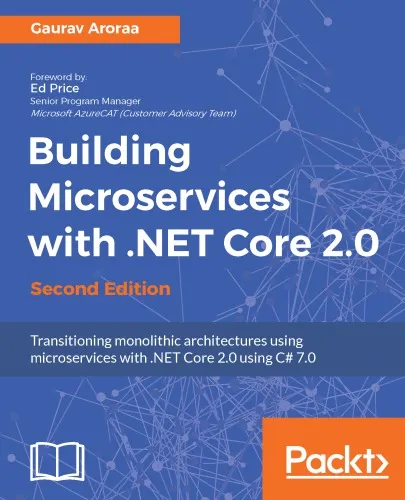
Introduction to "Building Microservices with .NET Core 2.0" In the rapidly evolving landscape of software development, microservices have emerged as a preferred architectural style for building scalable, robust, and maintainable applications. "Build
Before you read
In the rapidly evolving landscape of software development, microservices have emerged as a preferred architectural style for building scalable, robust, and maintainable applications. "Building Microservices with .NET Core 2.0" serves as a comprehensive guide to transitioning from traditional monolithic architectures to microservices using .NET Core 2.0 and C#. This book is meticulously crafted to help developers understand the core concepts of microservices and seamlessly integrate them using practical and illustrative examples.
This book starts by laying a strong foundation in the principles of microservices architecture, discussing the reasons why modern enterprise solutions are favoring microservices over monolithic structures. It delves into the core benefits of microservices, such as enhanced scalability, improved fault isolation, and continuous deployment capabilities.
The narrative progresses by exploring the .NET Core 2.0 framework, chosen for its versatility and powerful cross-platform capabilities. Readers are introduced to C#, a language that pairs seamlessly with .NET Core to build sophisticated and efficient microservices. Through numerous code samples, the book demonstrates how to create, deploy, and maintain microservices, focusing on modularity, resilience, and performance tuning.
Key scenarios are addressed, such as data management across distributed systems, ensuring security within microservices, and implementing effective monitoring and logging strategies. By the end of the book, readers are equipped with practical knowledge to not only build new applications with microservices but also refactor and transition existing monolithic applications to a microservices architecture effortlessly.
"Microservices are more than just a solution to scalability issues; they represent a paradigm shift towards autonomous, cross-functional teams that hold end-to-end accountability."
"Transitioning to microservices requires overcoming not just technical, but cultural and organizational challenges."
"Building Microservices with .NET Core 2.0" stands out as an essential resource for developers and architects aiming to modernize their applications using microservices. In an age where agility and speed-to-market are critical, this book provides readers with a strategic advantage by demystifying the complexities associated with microservices and providing actionable insights.
The emphasis on practical examples ensures that theoretical concepts are grounded in real-world applications, enabling developers to translate knowledge into immediate practical improvements. The book also addresses the common pitfalls encountered during the transition phase, providing guidance to mitigate risks effectively.
By choosing .NET Core 2.0, the book highlights a powerful toolset that is cross-platform, ensuring that applications built today are ready for tomorrow's technological advancements. Whether you're an experienced developer or a newcomer to the field, this book equips you with the necessary skills and confidence to transform the way software is crafted and delivered.
Your question is answered in the context of this title and author. Each answer uses 2 points.
1 reviews, 5.0 average out of 5
2025/08/05
5 / 5
The book is just right
Sign in to publish a review.
Ask a focused question and learn from the community.
Related references that continue this learning path.
Kamalmeet Singh,Pavel Pscheidl et al.