

Design and Analysis of Approximation Algorithms
Ding-Zhu Du,Ker-I Ko,Xiaodong Hu (auth.)
2012
View book
Book guide and evaluation
Sushanta K. Mitra,Suman Chakraborty
0 reviews
Published
pages
views
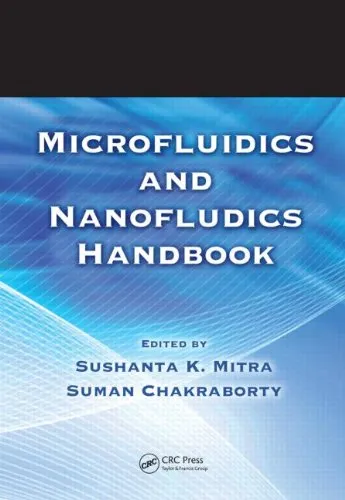
Introduction to "Microfluidics and Nanofluidics Handbook, 2 Volume Set" The field of microfluidics and nanofluidics has rapidly emerged as a transformative domain of science and engineering. The "Microfluidics and Nanofluidics Handbook, 2 Volume Set" serves as an authori
Before you read
The field of microfluidics and nanofluidics has rapidly emerged as a transformative domain of science and engineering. The "Microfluidics and Nanofluidics Handbook, 2 Volume Set" serves as an authoritative and comprehensive reference, offering a deep dive into these interdisciplinary fields. Written by experts in the field, Sushanta K. Mitra and Suman Chakraborty, this handbook delivers both foundational concepts and cutting-edge advancements in microfluidics and nanofluidics, making it an indispensable resource for researchers, practitioners, and students alike.
Microfluidics and nanofluidics explore the manipulation and behavior of fluids at microscale and nanoscale dimensions. As these fields advance, they have found applications ranging from healthcare and biotechnology to energy solutions and materials science. This two-volume set is meticulously designed to accommodate diverse audiences, covering fundamental principles, experimental techniques, and real-world applications, alongside groundbreaking research developments.
The "Microfluidics and Nanofluidics Handbook, 2 Volume Set" is divided into two key volumes, each tailored to specific aspects of this dynamic field:
Together, the volumes offer a holistic perspective, bridging the gap between fundamental science and innovative technological applications. By integrating concepts across physics, chemistry, biology, and engineering, this handbook acts as a valuable resource in understanding micro- and nanoscale fluid phenomena.
Whether you are working in academia, industry, or startups, this handbook offers unparalleled guidance and a solid foundation for advancing your knowledge in microfluidics and nanofluidics.
"Microfluidics and nanofluidics don't just reduce the size of fluidic systems; they transform the way we envision and interact with fluids in science and engineering."
"At the confluence of microscale mechanics and nanoscale physics lies the potential to solve humanity's grand challenges – one droplet at a time, one molecule at a time."
In today’s fast-evolving world of science and technology, understanding micro- and nanoscale fluid systems is no longer optional – it is essential.
This book matters because it encapsulates the interdisciplinary nature of modern science, bringing together principles from diverse fields to offer a unified framework for understanding microfluidics and nanofluidics. It empowers the reader to apply knowledge in several areas, including disease diagnostics, environmental monitoring, energy harvesting, and drug development. With its clear, accessible language and contributions from global thought leaders, this book is a testament to how small-scale systems can create a large-scale impact on innovation and problem-solving.
Students, researchers, and industry professionals will all benefit from using this guide as a cornerstone of their work. Its thorough presentation of concepts and applications positions it as a critical resource in shaping the future of fluidics-based technologies.
Your question is answered in the context of this title and author. Each answer uses 2 points.
0 reviews, 4.5 average out of 5
Sign in to publish a review.
Ask a focused question and learn from the community.
Related references that continue this learning path.
Ding-Zhu Du,Ker-I Ko,Xiaodong Hu (auth.)

Bruce, Peter C.;Patel, Nitin Ratilal;Shmueli, Galit;Stephens, Mia L.

Galit Shmueli,Peter C. Bruce