
Book guide and evaluation
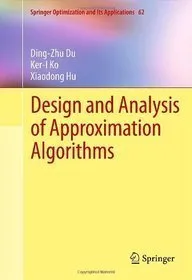
Design and Analysis of Approximation Algorithms
Ding-Zhu Du,Ker-I Ko,Xiaodong Hu (auth.)
English
Beginner
Mathematics
4.5 / 5
0 reviews
2012
Published
450
pages
599
views
Introduction to 'Design and Analysis of Approximation Algorithms' In the realm of computer science, particularly within the field of algorithm design, the quest for precise and efficient solutions often encounters the complex nature of NP-hard problems. In these instances,
Before you read
What will you get from this book?
Introduction to 'Design and Analysis of Approximation Algorithms'
In the realm of computer science, particularly within the field of algorithm design, the quest for precise and efficient solutions often encounters the complex nature of NP-hard problems. In these instances, approximation algorithms become invaluable, offering solutions that are "good enough" within acceptable error margins. 'Design and Analysis of Approximation Algorithms' by Ding-Zhu Du, Ker-I Ko, and Xiaodong Hu is an authoritative text that navigates the intricate domain of approximation algorithms. It seamlessly blends theoretical foundations with practical applications, making it indispensable for students, researchers, and practitioners alike.
Summary of the Book
The book initiates readers into the fascinating world of approximation algorithms by establishing a robust theoretical framework. It delineates the significance of approximation algorithms in addressing computationally intense problems, where exact solutions are often unattainable within realistic timeframes. The authors meticulously explore both classical and contemporary strategies for crafting approximation algorithms, emboldening readers with the knowledge to tackle challenges in graph theory, combinatorial optimization, and beyond.
Furthermore, the text includes a detailed examination of various methodologies such as greedy algorithms, local search, and linear programming relaxations. Each technique is elucidated through rigorous analysis, accompanied by illustrative examples that bolster comprehension. The book also investigates the inherent trade-offs between solution quality and computational efficiency, emphasizing the importance of balancing these two facets.
Key Takeaways
- Theoretical Foundation: Acquire a rigorous understanding of approximation algorithms' role in addressing NP-hard problems.
- Diverse Techniques: Explore a variety of methodologies, from traditional strategies to innovative approaches in algorithm design.
- Analytical Skills: Develop the acumen to analyze and evaluate the efficiency and approximation ratios of algorithms.
- Practical Applications: Understand how theoretical principles translate into real-world problem-solving across diverse domains.
Famous Quotes from the Book
"Approximation algorithms bridge the gap between theoretical optimality and practical feasibility."
"In the face of NP-hard challenges, a well-designed approximation algorithm offers a beacon of hope for feasible solutions."
"Trade-offs are the essence of approximation, where the pursuit of efficiency meets the necessity for quality."
Why This Book Matters
'Design and Analysis of Approximation Algorithms' serves as a crucial resource for anyone aspiring to master algorithmic design in the face of complexity. It is particularly relevant for those engaged in fields that require computational efficiency, such as operations research, computer science, and artificial intelligence. The authors' comprehensive approach ensures that readers not only grasp theoretical underpinnings but also learn to apply them to practical scenarios.
Moreover, the book is pivotal for fostering analytical thinking, encouraging readers to challenge conventions and devise innovative solutions to complex problems. In today’s fast-paced technological landscape, where decision-making needs to be swift yet accurate, the insights offered in this text are more pertinent than ever.
Ultimately, the blend of depth and accessibility makes 'Design and Analysis of Approximation Algorithms' an essential addition to the library of anyone serious about the art and science of algorithm design.
Ask this book
Your question is answered in the context of this title and author. Each answer uses 2 points.
Sign in to ask the book assistant.
Reader reviews
0 reviews, 4.5 average out of 5
No reviews yet
If you have read this book, help the next reader with your experience.
Write a review
Sign in to publish a review.
Reader questions and answers
Ask a focused question and learn from the community.
Sign in to ask or answer a question.
No questions yet
Be the first to ask a clear, useful question.
What to read next
Related references that continue this learning path.
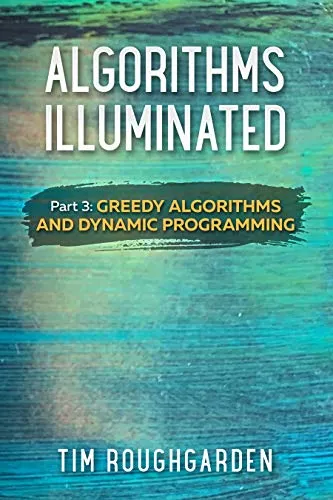
Algorithms Illuminated (Part 3): Greedy Algorithms and Dynamic Programming
Tim Roughgarden
2019
View book
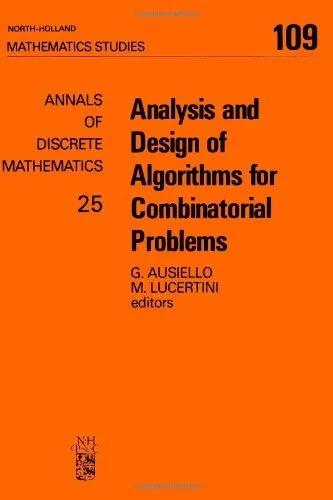
Analysis and Design of Algorithms for Combinatorial Problems
G. AusielloandM. Lucertini (Eds.)
1985
View book