Book guide and evaluation
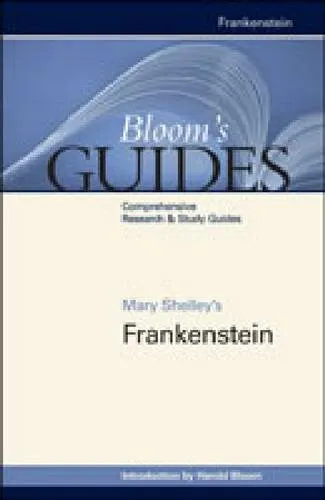
Mary Shelley's Frankenstein (Bloom's Guides)
Harold Bloom
English
Intermediate
novel
3.5 / 5
0 reviews
2007
Published
151
pages
704
views
Welcome to 'Mary Shelley's Frankenstein (Bloom's Guides)', a comprehensive exploration of one of the most pivotal works of English literature. This guide presents an in-depth analysis and insights into Mary Shelley's classic, "Frankenstein," a novel that has transcend
Before you read
What will you get from this book?
Welcome to 'Mary Shelley's Frankenstein (Bloom's Guides)', a comprehensive exploration of one of the most pivotal works of English literature. This guide presents an in-depth analysis and insights into Mary Shelley's classic, "Frankenstein," a novel that has transcended its original purpose to become a cornerstone of modern storytelling, exploring themes of ambition, isolation, and the pursuit of knowledge. In this guide, we delve into the multifaceted layers of the text, offering a detailed summary, key takeaways, and a reflection on the cultural and literary significance of this seminal work.
Detailed Summary of the Book
Penned during a cold summer in 1816, Mary Shelley's "Frankenstein" has come to represent much more than a gothic novel; it is a narrative that touches on the very essence of human endeavor and the potentially hubristic chorus of scientific exploration. Victor Frankenstein, the ambitious and flawed protagonist, embarks on a perilous journey of creating life, assembling a sentient being from cadaveric remains, only to be horrified by the creature's hideous appearance.
As the narrative progresses, readers witness the deterioration of Victor’s mental state and the tragic consequences of his abandonment of the creature. Through an isolated and remorseful life, the creature yearns for social acceptance and sympathy but is met with fear and aggression. This rejection turns him towards vengeance, laying the groundwork for a devastating confrontation with his creator.
The novel unfolds in a series of narratives within narratives, allowing insight into the perspectives of Victor, the creature, and Captain Walton, who records Frankenstein's tragic tale as he voyages through the Arctic. "Frankenstein" is not merely a story about scientific overreach; it is an exploration of human emotions, morality, and the quest for identity.
Key Takeaways
- The novel presents a cautionary tale about the pursuit of knowledge and the ethical boundaries that must be considered.
- It explores themes of isolation, both physical and emotional, through the lives of Victor and his creation.
- The story emphasizes the repercussions of one’s actions, highlighting that ambition unchecked by morality can lead to one's downfall.
- Family and companionship are central to the narrative, offering solace against the backdrop of rejection and desolation.
- Through its epistolary format and multiple viewpoints, the novel challenges readers to consider the relative nature of monstrosity and humanity.
Famous Quotes from the Book
“Beware; for I am fearless, and therefore powerful.”
“Nothing is so painful to the human mind as a great and sudden change.”
“I ought to be thy Adam, but I am rather the fallen angel”
Why This Book Matters
"Frankenstein" holds a significant place in literature due to its pioneering depiction of the duality of scientific exploration and its moral implications. Written in a time when the Industrial Revolution was unveiling unprecedented technological advancements, the novel served as a prescient warning of hubris. Shelley’s narrative continues to resonate with contemporary audiences, raising relevant questions about the relationship between creator and creation, the moral responsibility of scientists, and the nature of humanity.
Furthermore, Shelley's intricate characterizations offer profound psychological insights. Victor's ambition and guilt highlight the human struggle between ethical responsibility and personal glory, while the creature's evolution from innocence to malevolence underscores the role of society in shaping identity.
"Frankenstein" has becomepically in literature, inspiring countless adaptations and explorations in both popular culture and academic discourse. It remains an enduring piece that not only entertains but instructs and challenges its readers, prompting invaluable introspection on the complex interplay between man, nature, and the unknown.
Audio introductions
Persian Summary
Ask this book
Your question is answered in the context of this title and author. Each answer uses 2 points.
Sign in to ask the book assistant.
Reader reviews
0 reviews, 3.5 average out of 5
No reviews yet
If you have read this book, help the next reader with your experience.
Write a review
Sign in to publish a review.
Reader questions and answers
Ask a focused question and learn from the community.
Sign in to ask or answer a question.
No questions yet
Be the first to ask a clear, useful question.
What to read next
Related references that continue this learning path.