Book guide and evaluation
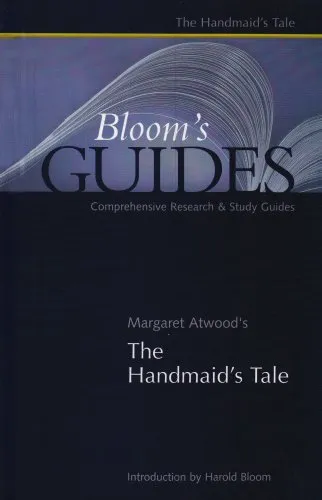
Margaret Atwood's the Handmaid's Tale (Bloom's Guides)
Harold Bloom
English
Intermediate
novel
4.2 / 5
0 reviews
2003
Published
118
pages
740
views
Margaret Atwood's "The Handmaid's Tale" is a dystopian novel that has captivated audiences with its poignant exploration of themes such as power, gender, and resistance. This Bloom's Guide offers an in-depth analysis of Atwood's influential work, providing readers with the tool
Before you read
What will you get from this book?
Margaret Atwood's "The Handmaid's Tale" is a dystopian novel that has captivated audiences with its poignant exploration of themes such as power, gender, and resistance. This Bloom's Guide offers an in-depth analysis of Atwood's influential work, providing readers with the tools to understand its complex narrative and thematic layers.
Detailed Summary of the Book
The Handmaid's Tale is set in the Republic of Gilead, a totalitarian theocracy that has replaced the United States government. This society is built on the subjugation of women, who are dehumanized and stripped of their rights. The protagonist, Offred, is a Handmaid, a woman forced into reproductive servitude to help repopulate the dwindling populace. Throughout the novel, Offred navigates her oppressive environment, recalling her life before Gilead while covertly resisting the constraints imposed upon her. Atwood's intricate narrative structure offers both past and present perspectives, providing insight into the gradual descent into authoritarianism and the timeless struggle for individual freedom.
Key Takeaways
- Power Dynamics: The novel highlights how power can corrupt societies and oppress individuals, particularly through institutionalized structures of control.
- Gender and Identity: At its core, the book examines gender roles, identity, and the fight for autonomy, shedding light on the feminist struggle against patriarchal oppression.
- Resistance: Despite its bleak setting, The Handmaid's Tale underscores the importance of resistance, hope, and individual agency in challenging authoritarian regimes.
- Relevance: The novel's themes remain pertinent, reflecting ongoing societal issues, which have fueled its resurgence in political and academic discussions.
Famous Quotes from the Book
- "Nolite te bastardes carborundorum. Don't let the bastards grind you down."
- "Better never means better for everyone ... It always means worse, for some."
- "Ignoring isn’t the same as ignorance, you have to work at it."
- "We were the people who were not in the papers. We lived in the blank white spaces at the edges of print."
Why This Book Matters
Margaret Atwood's The Handmaid's Tale is more than just a dystopian narrative; it serves as a critical warning of the dangerous potential of religious fundamentalism and unchecked governmental power. Its exploration of themes such as women's rights, identity, and freedom is particularly resonant in today's world, where similar struggles persist. Atwood's masterful storytelling and rich narrative compel readers to reflect on the value of literature in understanding real-world issues. Furthermore, The Handmaid's Tale has transcended its genre to inspire numerous adaptations, ensuring its impact on popular culture and its relevance across generations.
Audio introductions
Persian Summary
Ask this book
Your question is answered in the context of this title and author. Each answer uses 2 points.
Sign in to ask the book assistant.
Reader reviews
0 reviews, 4.2 average out of 5
No reviews yet
If you have read this book, help the next reader with your experience.
Write a review
Sign in to publish a review.
Reader questions and answers
Ask a focused question and learn from the community.
Sign in to ask or answer a question.
No questions yet
Be the first to ask a clear, useful question.
What to read next
Related references that continue this learning path.