Book guide and evaluation
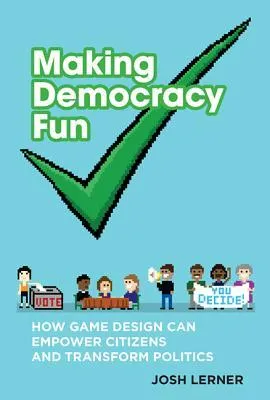
Making Democracy Fun: How Game Design Can Empower Citizens and Transform Politics
Josh Lerner
English
Unordered
Politics
4.6 / 5
0 reviews
2014
Published
285
pages
402
views
Drawing on the tools of game design to fix democracy. Anyone who has ever been to a public hearing or community meeting would agree that participatory democracy can be boring. Hours of repetitive presentations, alternatingly alarmist or complacent, for or against, accompanied by
Before you read
What will you get from this book?
Drawing on the tools of game design to fix democracy. Anyone who has ever been to a public hearing or community meeting would agree that participatory democracy can be boring. Hours of repetitive presentations, alternatingly alarmist or complacent, for or against, accompanied by constant heckling, often with no clear outcome or decision. Is this the best democracy can offer? In Making Democracy Fun, Josh Lerner offers a novel solution for the sad state of our deliberative democracy: the power of good game design. What if public meetings featured competition and collaboration (such as team challenges), clear rules (presented and modeled in multiple ways), measurable progress (such as scores and levels), and engaging sounds and visuals? These game mechanics would make meetings more effective and more enjoyable--even fun.Lerner reports that institutions as diverse as the United Nations, the U.S. Army, and grassroots community groups are already using games and game-like processes to encourage participation. Drawing on more than a decade of practical experience and extensive research, he explains how games have been integrated into a variety of public programs in North and South America. He offers rich stories of game techniques in action, in children's councils, social service programs, and participatory budgeting and planning. With these real-world examples in mind, Lerner describes five kinds of games and twenty-six game mechanics that are especially relevant for democracy. He finds that when governments and organizations use games and design their programs to be more like games, public participation becomes more attractive, effective, and transparent. Game design can make democracy fun--and make it work.
Ask this book
Your question is answered in the context of this title and author. Each answer uses 2 points.
Sign in to ask the book assistant.
Reader reviews
0 reviews, 4.6 average out of 5
No reviews yet
If you have read this book, help the next reader with your experience.
Write a review
Sign in to publish a review.
Reader questions and answers
Ask a focused question and learn from the community.
Sign in to ask or answer a question.
No questions yet
Be the first to ask a clear, useful question.
What to read next
Related references that continue this learning path.
The Wealth Paradox: Economic Prosperity and the Hardening of Attitudes
Frank Mols,Jolanda Jetten
2017
View book