
Book guide and evaluation
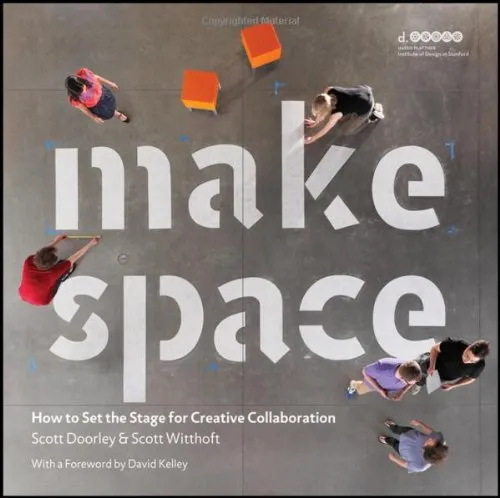
Make Space: How to Set the Stage for Creative Collaboration
Scott Doorley,Scott Witthoft,Hasso Plattner Institute of Design at Stanford University,David Kelley
English
Beginner
Prototyping
4.6 / 5
0 reviews
2012
Published
275
pages
496
views
Introduction to "Make Space: How to Set the Stage for Creative Collaboration" Authored by Scott Doorley and Scott Witthoft from the Hasso Plattner Institute of Design at Stanford University, alongside the legendary design thinker David Kelley, "Make Space: How to Set the Stage
Before you read
What will you get from this book?
Introduction to "Make Space: How to Set the Stage for Creative Collaboration"
Authored by Scott Doorley and Scott Witthoft from the Hasso Plattner Institute of Design at Stanford University, alongside the legendary design thinker David Kelley, "Make Space: How to Set the Stage for Creative Collaboration" is a revolutionary guide designed to inspire environmental innovation. This book serves as a comprehensive manual for cultivating a physical and psychological space conducive to creativity and collaboration.
Detailed Summary of the Book
The premise of "Make Space" is that the environment significantly influences creativity. The book encourages readers to rethink and redesign spaces to foster innovation. It provides actionable insights into creating physical environments that stimulate ideas and promote collaborative thinking. It is structured around five core sections: Tools, Situations, Design Template, Space Studies, and Interviews. Each section offers specific tips and real-world examples from the d.school and other creative settings.
The "Tools" section provides a detailed overview of equipment and materials that can be utilized to transform any space into a creative hub. The book emphasizes versatility, encouraging readers to make the environment adaptable to a variety of uses and people. In "Situations," the authors describe different scenarios and setups that can be used to inspire creativity depending on the task or team requirement. The "Design Template" segment contains checklists and worksheets that guide the reader in crafting their own ideal workspace.
"Space Studies" showcases diverse case studies of successful workspace transformations, illustrating the impact of thoughtfully designed environments on creative output. Finally, the "Interviews" section includes conversations with experienced designers and practitioners, offering personal insights and stories that underscore the book's main themes.
Key Takeaways
- The physical environment plays a crucial role in shaping behavior and ideas.
- Flexibility in space design can encourage more dynamic interactions and creativity.
- Intentional design leads to more effective collaboration by accommodating various workstyles and needs.
- Small, inexpensive adjustments can have a significant impact on creativity and problem-solving abilities.
Famous Quotes from the Book
"Space is the stage on which you enact your life. Make it worth your attention."
"Flexibility and adaptability are key. Your space should evolve with you."
"Encourage serendipity and allow for the unexpected to thrive."
Why This Book Matters
"Make Space" stands as a vital read for architects, designers, educators, and leaders who are aiming to infuse creativity into their environments. As businesses and organizations increasingly focus on innovation, understanding the role of physical space becomes essential. The book not only provides inspiration and guidelines for designing spaces but also emphasizes the importance of fostering a culture of creativity and collaboration. By making creativity approachable and scalable, "Make Space" contributes significantly to the discourse on the role of environment in innovation. It bridges the gap between theory and practice, offering tangible steps to enhance any workspace.
Ask this book
Your question is answered in the context of this title and author. Each answer uses 2 points.
Sign in to ask the book assistant.
Reader reviews
0 reviews, 4.6 average out of 5
No reviews yet
If you have read this book, help the next reader with your experience.
Write a review
Sign in to publish a review.
Reader questions and answers
Ask a focused question and learn from the community.
Sign in to ask or answer a question.
No questions yet
Be the first to ask a clear, useful question.
What to read next
Related references that continue this learning path.

The UX Book: Process and Guidelines for Ensuring a Quality User Experience
Rex Hartson,Pardha Pyla
2012
View book
Effective Prototyping with Excel: A practical handbook for developers and designers (Interactive Technologies)
Nevin Berger,Michael Arent,Jonathan Arnowitz,Fred Sampson
2009
View book