Book guide and evaluation
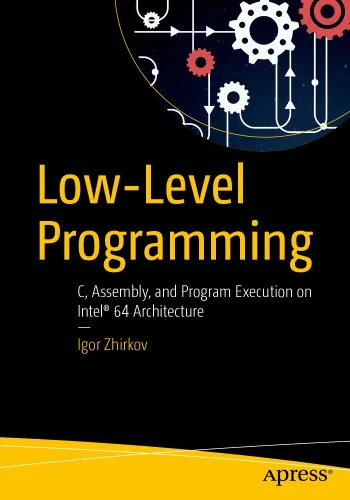
Low-level programming C, assembly, and program execution on Intel 64 architecture
Zhirkov,Igor
English
Unordered
Computer Science and Theory
4.5 / 5
0 reviews
2017
Published
446
pages
805
views
Introduction to 'Low-level Programming: C, Assembly, and Program Execution on Intel 64 Architecture' Welcome to an in-depth exploration of the intricate world of low-level programming, where we delve into the core components of computing that wield immense influence over all
Before you read
What will you get from this book?
Introduction to 'Low-level Programming: C, Assembly, and Program Execution on Intel 64 Architecture'
Welcome to an in-depth exploration of the intricate world of low-level programming, where we delve into the core components of computing that wield immense influence over all software applications. This book serves as a comprehensive guide for programmers, engineers, and technical aficionados who wish to deepen their understanding of how code interacts with hardware.
Detailed Summary
In 'Low-level Programming: C, Assembly, and Program Execution on Intel 64 Architecture,' we embark on a journey from the fundamental concepts of C programming to the intricate facets of assembly language and the nitty-gritty of program execution on Intel 64 architecture. The book marries theoretical concepts with practical applications, ensuring readers grasp the underlying mechanisms driving modern computing systems. With a focus on the Intel 64 architecture, this work offers invaluable insights into how programs are executed, memory is managed, and processors work at the most granular level.
Key Takeaways
- Comprehensive understanding of C programming and its crucial role in low-level operations.
- Insights into assembly language—decoding the most fundamental language that communicates directly with the hardware.
- An exploration of the Intel 64 architecture, detailing its structure and capabilities.
- Conceptual and practical knowledge on the compilation process, linking, and execution phases of software development.
- Techniques for optimizing code performance by understanding how compilers function and leveraging hardware features.
Famous Quotes from the Book
"Programming is not a task of typing, it's an art of thinking, where hardware limitations define the canvas and code paints the masterpiece."
"To truly master programming, one must transcend the high-level constructs and embrace the architectural nuances that dictate their behavior."
Why This Book Matters
This book is pivotal for aspiring and seasoned developers who seek a closer connection with the technology that powers their software. As computing continues to embed itself into every aspect of life, understanding the intricacies of how data is manipulated at the lowest levels becomes an invaluable asset. This book stands as a beacon for those eager to transform from ordinary coders to exceptional programmers who can optimize, innovate, and push the boundaries of what machines can achieve.
Whether you are designing performance-critical applications or developing for resource-constrained environments, low-level programming knowledge equips you with the tools needed to make informed, impactful decisions. As technology advances, the principles and practices in this book offer timeless guidance that transcends decades of technological evolution.
Embark on this transformative journey through the landscapes of low-level programming, and emerge as a master craftsman capable of shaping the future of technology.
Ask this book
Your question is answered in the context of this title and author. Each answer uses 2 points.
Sign in to ask the book assistant.
Reader reviews
0 reviews, 4.5 average out of 5
No reviews yet
If you have read this book, help the next reader with your experience.
Write a review
Sign in to publish a review.
Reader questions and answers
Ask a focused question and learn from the community.
Sign in to ask or answer a question.
No questions yet
Be the first to ask a clear, useful question.
What to read next
Related references that continue this learning path.
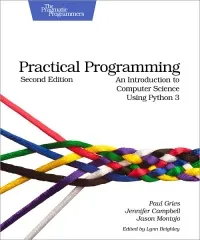
Practical Programming, 2nd Edition: An Introduction to Computer Science Using Python 3
Paul Gries,Jennifer Campbell,Jason Montojo
2013
View book
Practical Programming: An Introduction to Computer Science Using Python 3.6
Paul Gries,Jennifer Campbell,Jason Montojo
2017
View book