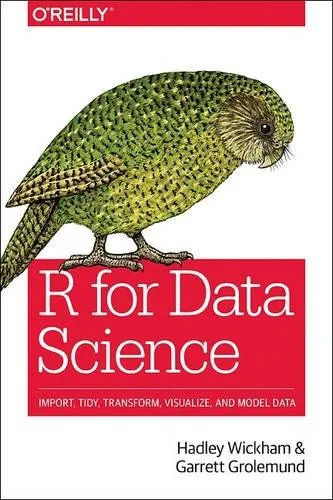
R for Data Science: Import, Tidy, Transform, Visualize, and Model Data
Hadley Wickham,Garrett Grolemund
2017
View book
Book guide and evaluation
Hanoch Ben-Yami
0 reviews
Published
pages
views
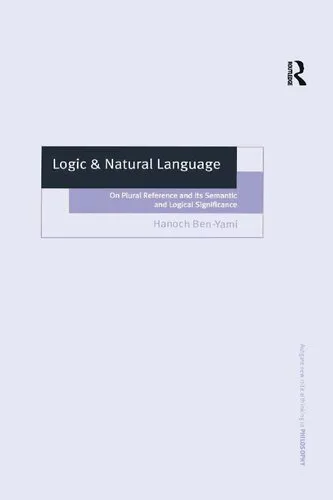
Introduction to "Logic & Natural Language: On Plural Reference and Its Semantic and Logical Significance" "Logic & Natural Language: On Plural Reference and Its Semantic and Logical Significance" is a profound exploration of the connections between logical theory, semantics, a
Before you read
"Logic & Natural Language: On Plural Reference and Its Semantic and Logical Significance" is a profound exploration of the connections between logical theory, semantics, and the nature of language. Written with meticulous philosophical rigor, this book addresses fundamental questions about how plural reference impacts our understanding of both language and logic. My aim in writing this work was not only to advance the theoretical understanding of plural reference but also to provide insights that could illuminate broader debates in linguistics, philosophy, and logic.
In this book, I explore the challenges that plural terms and plural reference pose to traditional logical systems, assess how these challenges can be met, and propose frameworks to effectively incorporate plurals without sacrificing logical coherence. The book investigates the semantic implications of plural expressions as they occur in natural language and examines their effect on prevailing logical theories. This is not merely an abstract theoretical discussion; rather, it is a venture into understanding how natural languages operate and how we can align logical systems with them when they are expanded to include plural and collective references.
Let us delve deeper into the significance of these ideas and what this book has to offer to its readers.
The book begins with an introduction to the concept of plural reference, explaining how it arises in natural language and why it presents challenges for classical logical systems. Plural terms, unlike singular terms, allow speakers to talk about multiple entities collectively. However, employing such terms in logical frameworks raises questions about reference, meaning, and truth conditions.
The central thesis of the book argues that existing approaches to logic, such as predicate logic and its formalization, must be extended or revised to handle plural expressions appropriately. I examine common logical frameworks, including first-order logic, and assess their limitations when encountering plurals like "they," "these," or "several." The book develops possible solutions to formalize plural reference while minimizing the disruption to classical logical structures.
As the discussion unfolds, I explore the differentiation between distributive and collective readings of plural expressions. For example, the sentence "The students lifted the piano" can refer to each student individually trying to lift the piano (distributive interpretation) or the students collectively working together (collective interpretation). This distinction has profound implications for semantics and poses distinctive challenges for logical treatment.
The latter part of the book proposes new conceptual models that integrate plural reference into logical systems and provides detailed philosophical discussions of their consequences. These models aim to reconcile natural language’s fluidity with the precision of logical formalism, ensuring that logic remains a faithful analytical tool for real-world linguistic usage.
"The plural is not merely a multiplicity of the singular; it is an expression of collective and distributive cognitive realities."
"To understand language is to understand the ways in which it fragments and unifies the world, even when dealing with the many."
"Logical formalism must not resist the richness of natural language; it must adapt and grow to encapsulate its plurality."
"Logic & Natural Language: On Plural Reference and Its Semantic and Logical Significance" fills an essential gap in the intersection of philosophy, linguistics, and logic. Despite the ubiquity of plural expressions in everyday language, traditional logical systems do not adequately address their semantic complexity or the philosophical questions they evoke. This book provides the theoretical tools to bridge this divide, making it an invaluable resource for anyone interested in understanding or advancing logic and meaning.
The implications of this study extend beyond academic theory; they touch on how we conceptualize and communicate about the world. By formalizing and analyzing plural reference, the book equips us with better tools to approach problems in logic, artificial intelligence, computational linguistics, and philosophy of language.
Whether you are a student of philosophy, a linguist, or a seasoned logician, this book offers a unique perspective on the fundamental nature of language and thought. Its challenges and proposals aim to inspire further inquiry and collaborative advancement in the field. By integrating perspectives on natural language into logical discourse, this book demonstrates why logic must continuously evolve to remain vital and relevant.
Your question is answered in the context of this title and author. Each answer uses 2 points.
0 reviews, 4.0 average out of 5
Sign in to publish a review.
Ask a focused question and learn from the community.
Related references that continue this learning path.
Hadley Wickham,Garrett Grolemund