


Book guide and evaluation
LLM Design Patterns: A Practical Guide to Building Robust and Efficient AI Systems
Ken Huang
English
Advanced
Artificial Intelligence (AI)
4.6 / 5
0 reviews
2025
Published
534
pages
209
views
LLM Design Patterns: A Practical Guide to Building Robust and Efficient AI Systems Large Language Model architecture, AI system optimization LLM Design Patterns: A Practical Guide to Building Robust and Efficient AI Systems offers strategies for reliable, efficient AI d
Before you read
What will you get from this book?
Analytical Summary
In an era where artificial intelligence is rapidly redefining the boundaries of technology, LLM Design Patterns: A Practical Guide to Building Robust and Efficient AI Systems stands as a definitive resource for practitioners, researchers, and decision-makers seeking mastery over the design and deployment of Large Language Models (LLMs). Written with precision and depth, this book distills complex principles into actionable frameworks that address the real-world challenges of AI system architecture.
By focusing on design patterns—established, reusable solutions to recurring problems—this guide helps readers navigate the intricate ecosystem of LLMs. From scalable architectures and data handling strategies to optimization techniques that enhance performance without sacrificing reliability, each chapter parallels software engineering practices, adapted specifically to the unique constraints of AI systems.
The analytical approach taken in the text merges theoretical foundations with pragmatic application. This fusion ensures utility for professionals in both academic research and industry implementation, making it an indispensable addition to any AI specialist's library. It emphasizes not only how to build, but how to refine, maintain, and evolve intelligent systems over time.
Key Takeaways
Readers of LLM Design Patterns: A Practical Guide to Building Robust and Efficient AI Systems will leave with a concrete set of skills, insights, and strategies for advancing the state of LLM-based applications.
Expect to understand how design patterns in AI mirror those in traditional software—yet require nuanced adaptation for handling massive model parameters and probabilistic outputs.
You will develop the vocabulary and conceptual toolkit to communicate complex ideas about model architecture and optimization to diverse stakeholders, from engineering teams to executive leadership.
Practical frameworks demonstrate how to integrate LLMs into robust production pipelines, ensuring resilience against evolving data sources and operational constraints.
The book also provides guidance on assessing trade-offs between efficiency and accuracy, particularly critical in high-stakes domains where AI output impacts decision-making.
Memorable Quotes
“A design pattern in AI is both a solution and a conversation—it captures best practices, while opening dialogue about trade-offs.” Unknown
“The robustness of an AI system emerges not from complexity, but from clarity in its core design.” Unknown
“Efficiency in LLM deployment is achieved when architecture, data, and optimization operate in harmony.” Unknown
Why This Book Matters
The accelerating evolution of AI systems demands grounded, well-tested approaches to design. This book’s focus on reusable, pattern-based solutions is its strategic advantage.
In the absence of reliable public sources, certain publication details such as awards or external reviews are noted as “Information unavailable.” Nevertheless, the content itself speaks volumes—offering a bridge between experimentation and production-ready AI infrastructure.
By integrating secondary concepts such as AI system optimization and LLM architecture into every chapter, the work equips readers with methodologies to minimize risk and maximize system longevity. It encourages not just adoption of patterns, but thoughtful adaptation to specific contexts.
Inspiring Conclusion
Whether you are shaping the next generation of intelligent applications or refining the infrastructure that supports them, LLM Design Patterns: A Practical Guide to Building Robust and Efficient AI Systems offers a wellspring of insight.
By grounding AI innovation in proven design paradigms, this book delivers the clarity necessary for creating systems that are not only powerful but sustainable. It invites you to engage fully—read deeply, share with your peers, and initiate conversations that push the boundaries of what is possible with LLMs.
Take the next step: absorb its patterns, apply them in your projects, and contribute to the collective wisdom shaping the future of artificial intelligence.
Ask this book
Your question is answered in the context of this title and author. Each answer uses 2 points.
Sign in to ask the book assistant.
Reader reviews
0 reviews, 4.6 average out of 5
No reviews yet
If you have read this book, help the next reader with your experience.
Write a review
Sign in to publish a review.
Reader questions and answers
Ask a focused question and learn from the community.
Sign in to ask or answer a question.
No questions yet
Be the first to ask a clear, useful question.
What to read next
Related references that continue this learning path.

The Definitive Guide to Google Vertex AI: Accelerate your machine learning journey with Google Cloud Vertex AI and MLOps
Jasmeet Bhatia | Kartik Chaudhary
2023
View book
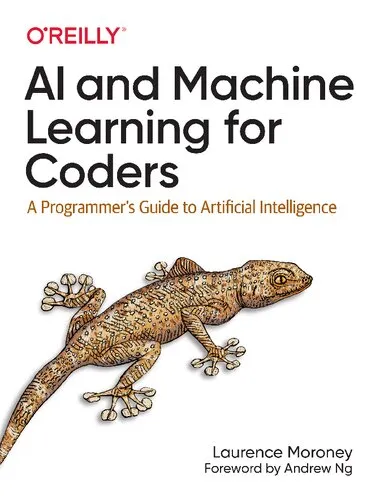
AI and Machine Learning for Coders: A Programmer's Guide to Artificial Intelligence
Laurence Moroney
2020
View book
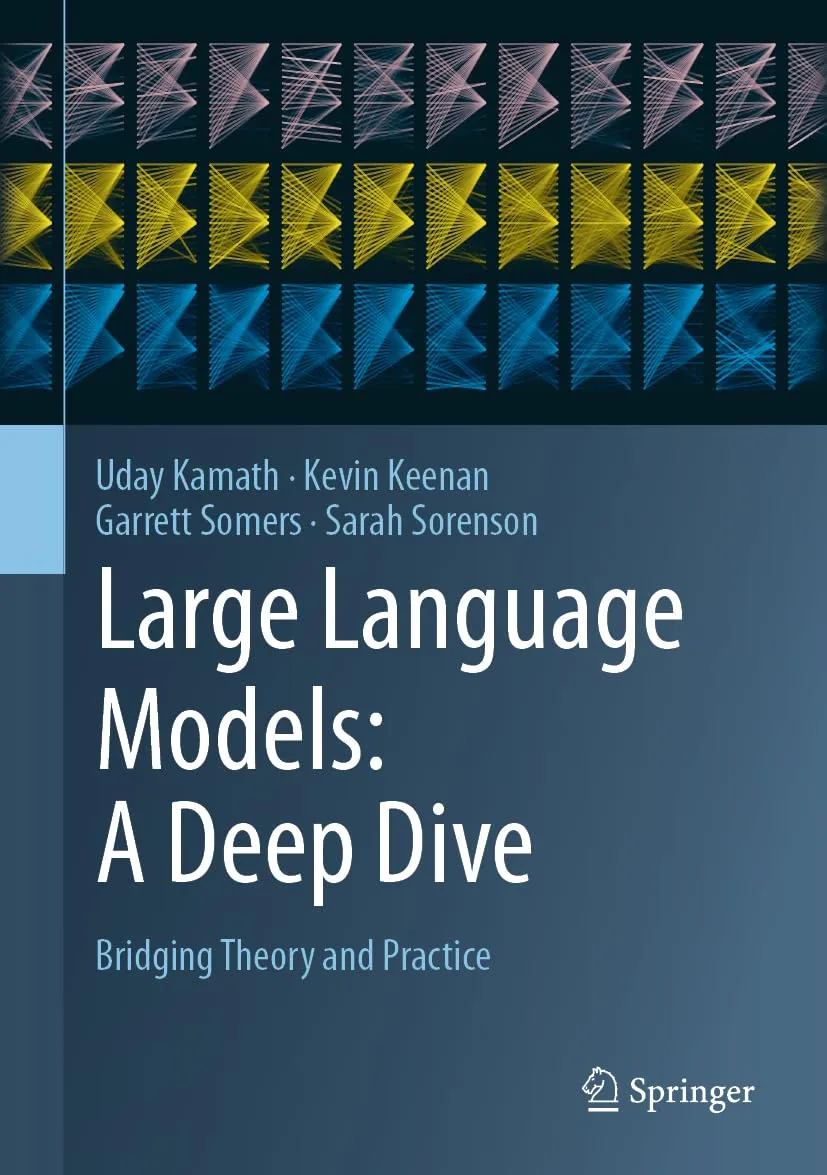
Large Language Models: A Deep Dive: Bridging Theory and Practice
Uday Kamath , Kevin Keenan , Garrett Somers , Sarah Sorenson
2024
View book