
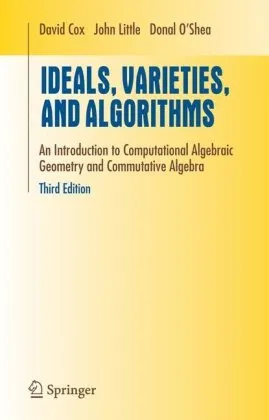
Ideals, varieties, and algorithms: an introduction to computational algebraic geometry and commutative algebra
David A. Cox,John Little,Donal O’Shea
2007
View book
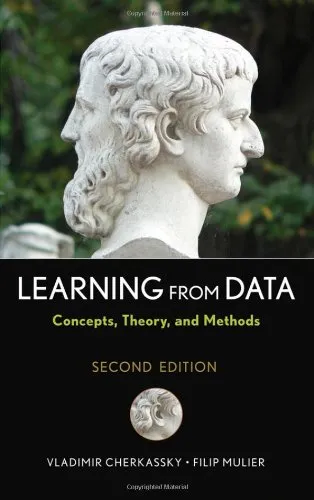
Book guide and evaluation
Vladimir S. Cherkassky,Filip Mulier
0 reviews
Published
pages
views
Introduction to "Learning from Data: Concepts, Theory, and Methods, Second Edition" "Learning from Data: Concepts, Theory, and Methods, Second Edition" is a comprehensive book designed for anyone intrigued by the interplay between data, learning algorithms, and practical p
Before you read
"Learning from Data: Concepts, Theory, and Methods, Second Edition" is a comprehensive book designed for anyone intrigued by the interplay between data, learning algorithms, and practical problem-solving. This book is an essential guide for students, researchers, and practitioners aiming to develop a solid understanding of data-driven learning methodologies, encompassing theoretical concepts and practical implementation.
The field of data-driven learning has exploded over the past few decades, from its theoretical beginnings to its now omnipresent role in fields like artificial intelligence (AI), machine learning (ML), and data science. This book offers a cohesive and structured introduction to the vast landscape of learning from data. It is designed to demystify the foundations of modern data-driven approaches while ensuring readers can apply these concepts to real-world applications.
The second edition brings significant updates and refinements compared to the first edition, addressing recent advancements in the field. This edition offers expanded explanations, new chapters, and modern algorithmic implementations that cater to today’s data-driven challenges. The book delves into core topics such as supervised and unsupervised learning, regression, classification, kernel methods, neural networks, and deep learning.
It is particularly valuable for readers because it strikes a balance between mathematical rigor and intuitive explanations. The authors provide not only the theoretical underpinnings of algorithms but also their practical implications and limitations. Furthermore, the book contextualizes these methods by incorporating real-world case studies, numerical examples, and experimental validations. This combination ensures that readers develop both foundational knowledge and a hands-on understanding of learning systems.
"Learning from data is more than the act of building algorithms—it is an art that blends mathematics with intuition and the practicalities of imperfect data."
"A good learning algorithm is one that trades off complexity and generalization, achieving an equilibrium that works across diverse datasets."
"Data, no matter how plentiful, is meaningless without context. Learning begins with understanding not just the structure of data, but also the underlying phenomenon it represents."
The importance of "Learning from Data: Concepts, Theory, and Methods, Second Edition" lies in its ability to empower readers to decipher the complexities of the modern information landscape. In an era defined by data, the ability to derive actionable insights from information is paramount. This book equips its audience with the tools and knowledge to do just that.
What sets this book apart is its dual emphasis on clarity and depth. For aspiring students, it serves as a foundational text, building a robust understanding of the theories and algorithms that power modern ML. For practitioners and researchers, it provides valuable insights and methods that extend to solving real-world problems effectively.
Additionally, the authors highlight the philosophical and ethical implications of working with data—encouraging a responsible approach to harnessing advanced techniques while being mindful of their societal impact.
Ultimately, the book matters because it acts as a bridge—connecting the theoretical aspects of machine learning with practical problem-solving in a way that truly prepares readers for tackling challenges in today's data-centric world.
Your question is answered in the context of this title and author. Each answer uses 2 points.
0 reviews, 4.5 average out of 5
Sign in to publish a review.
Ask a focused question and learn from the community.
Related references that continue this learning path.
David A. Cox,John Little,Donal O’Shea
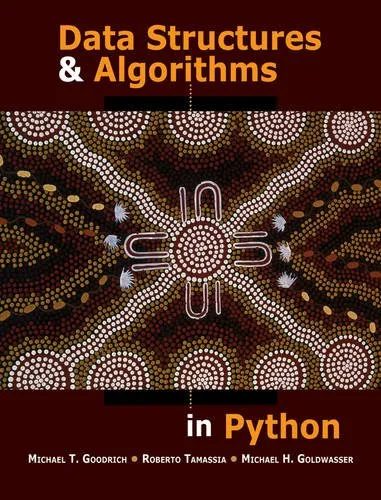
Michael T. Goodrich,Roberto Tamassia,Michael H. Goldwasser
Kent Lee,Steve Hubbard