
Book guide and evaluation
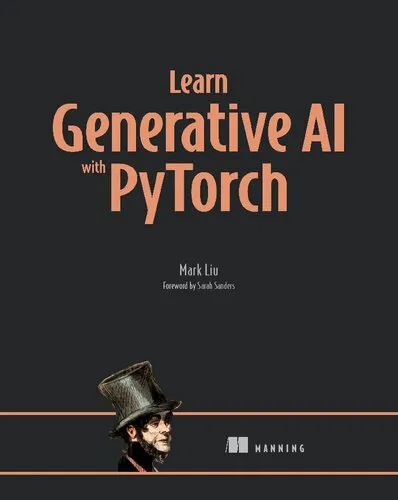
Learn Generative AI with PyTorch
Mark Liu
English
Advanced
Artificial Intelligence (AI)
5.0 / 5
0 reviews
2024
Published
434
pages
2634
views
Introduction to 'Learn Generative AI with PyTorch' In an ever-evolving landscape of artificial intelligence, generative models stand out as a transformative force. Among the most popular tools for building these models is PyTorch, an open-source machine learning li
Before you read
What will you get from this book?
Introduction to 'Learn Generative AI with PyTorch'
In an ever-evolving landscape of artificial intelligence, generative models stand out as a transformative force. Among the most popular tools for building these models is PyTorch, an open-source machine learning library that provides the tools necessary for deep learning researchers and developers. As the author of 'Learn Generative AI with PyTorch', I am thrilled to present a comprehensive guide that not only elucidates the intricate concepts of generative AI but does so with practical applications using PyTorch.
Detailed Summary of the Book
'Learn Generative AI with PyTorch' takes readers on a journey from the foundational concepts of neural networks to the sophisticated architectures that power generative models. The book is meticulously structured to guide you through the core principles of generative modeling, including Generative Adversarial Networks (GANs), Variational Autoencoders (VAEs), and other state-of-the-art techniques.
This book caters to a diverse audience, from novice machine learning enthusiasts to seasoned AI experts looking to expand their skills in the booming arena of generative AI. Each chapter is designed to build your understanding incrementally, ensuring that even the most complex topics are accessible and comprehensible. Throughout the book, you'll find practical code examples written in PyTorch, demonstrating real-world applications, and end-of-chapter exercises to test your comprehension and encourage deeper exploration.
In addition to detailed theoretical insights and practical coding guidelines, 'Learn Generative AI with PyTorch' emphasizes the ethical considerations and potential implications of deploying AI in various domains. This comprehensive approach prepares readers not only to harness the power of generative models but to do so responsibly.
Key Takeaways
-
Mastery of PyTorch: Gain proficiency in PyTorch, understanding its unique features and libraries that make it a preferred choice for AI researchers.
-
Deep Dive into Generative Models: Explore popular generative models like GANs and VAEs, and learn how to implement and fine-tune them for specific tasks.
-
Practical Insights: Acquire hands-on experience through practical examples and code snippets, bridging the gap between theory and practice.
-
Ethical Considerations: Understand the ethical dimensions of AI development and deployment, ensuring responsible use of technology.
Famous Quotes from the Book
"Generative AI is not just a tool; it's a frontier. Those who pioneer it will shape the future of AI."
"In the intersection of creativity and learning lies the true power of generative AI."
Why This Book Matters
The advent of generative AI marks a paradigm shift similar to the advent of the internet or the smartphone. As industries across the globe are rapidly integrating AI technologies, the demand for skilled professionals capable of building and understanding these systems is ever-increasing. 'Learn Generative AI with PyTorch' provides a critical resource for anyone seeking to enter or advance in this field.
By focusing on PyTorch, this book aligns with current industry practices, empowering readers with the same tools used by leading researchers in the field. Furthermore, the book's commitment to addressing both the technical and ethical aspects of AI ensures that readers are not only competent in their technical skills but are also aware of the wider implications and responsibilities involved.
Ultimately, this book is more than just a manual; it is a gateway to understanding and participating in one of the most exciting and impactful areas of modern technology.
Audio introductions
Persian Summary
Ask this book
Your question is answered in the context of this title and author. Each answer uses 2 points.
Sign in to ask the book assistant.
Your previous questions
give me summary of this book
"Learn Generative AI with PyTorch" is a comprehensive guide designed to help readers understand and implement generative AI models using the PyTorch framework. The book covers fundamental concepts of generative models, including Variational Autoencoders, Generative Adversarial Networks, and other advanced architectures. It provides practical examples, detailed explanations, and step-by-step instructions to build and train these models. Alongside theory, the book emphasizes hands-on applications, ensuring readers can apply their learning to real-world projects. It is suitable for data scientists, machine learning practitioners, and developers looking to expand their knowledge in generative AI using PyTorch.
what is Generative AI ?
Generative AI refers to a class of artificial intelligence models that are designed to generate new content. These models learn patterns and structures from existing data and use this understanding to create new, similar data that mimics the original. In the context of the book "Learn Generative AI with PyTorch," Generative AI encompasses a variety of techniques and models, such as Generative Adversarial Networks (GANs) and Variational Autoencoders (VAEs), which can be used for tasks like image generation, text creation, and more.
what is pyTorch ?
Sorry your question is not related to my book.
Reader reviews
0 reviews, 5.0 average out of 5
No reviews yet
If you have read this book, help the next reader with your experience.
Write a review
Sign in to publish a review.
Reader questions and answers
Ask a focused question and learn from the community.
Sign in to ask or answer a question.
No questions yet
Be the first to ask a clear, useful question.
What to read next
Related references that continue this learning path.
The Definitive Guide to Google Vertex AI: Accelerate your machine learning journey with Google Cloud Vertex AI and MLOps
Jasmeet Bhatia | Kartik Chaudhary
2023
View book
AI and Machine Learning for Coders: A Programmer's Guide to Artificial Intelligence
Laurence Moroney
2020
View book
Large Language Models: A Deep Dive: Bridging Theory and Practice
Uday Kamath , Kevin Keenan , Garrett Somers , Sarah Sorenson
2024
View book