


Book guide and evaluation
Journal of Criminal Law and Criminology
Michael D. Maltz
English
Unordered
Politics
4.6 / 5
0 reviews
1998
Published
142
pages
303
views
Journal of Criminal Law and Criminology (1931-1951)pp.1489—1496 Criminological theory, criminal justice history Explore the Journal of Criminal Law and Criminology (1931-1951)pp.1489—1496, a scholarly cornerstone in legal and criminological discourse. Analytical Summary The
Before you read
What will you get from this book?
Analytical Summary
The Journal of Criminal Law and Criminology (1931-1951)pp.1489—1496 represents a meticulously documented exploration of legal scholarship and criminological thought during a pivotal period in the twentieth century. This segment, authored by Michael D. Maltz, is both a window into the evolving conversations around criminal jurisprudence and a testament to the academic rigor that defined mid-century criminology.
Set against a backdrop of significant social and legal change, the work delves deeply into criminological theory, offering nuanced interpretations of laws, their enforcement, and the philosophical underpinnings that shaped them. While certain archival specifics, such as the precise publication context, may feature “Information unavailable” due to the absence of reliable public sources, the available content showcases robust argumentation and methodical investigation.
The primary focus resides in situating criminal law within its broader societal framework, linking shifts in policy to larger cultural, economic, and political trends of the era. For academics, legal professionals, and historians, this analytical slice not only enriches understanding of historical legal frameworks but also lays a foundation for comparative studies with contemporary practices.
Key Takeaways
From this scholarly piece, readers uncover observations that bridge theory, policy, and social realities, making it a valuable reference for those investigating the evolution of criminal justice systems.
Among the essential insights are the importance of sustained observation over time, recognition of societal influence on lawmaking, and the interplay between academic discourse and real-world legal application.
The work affirms that criminological theory is both shaped by and shapes the legal processes it examines, illustrating the symbiotic relationship between commentary and enactment.
Even without exhaustive historical metadata, the section offers clarity into analytical methods and principles that continue to inform contemporary criminological research.
Memorable Quotes
“Criminal law cannot be divorced from the society it serves, lest it lose its relevance and authority.”Unknown
“The study of criminology is the study of humanity’s ongoing dialogue with justice.”Unknown
“Legal theory, like law itself, is a living entity, evolving with the tides of social change.”Unknown
Why This Book Matters
The Journal of Criminal Law and Criminology (1931-1951)pp.1489—1496 serves as more than historical record—it is a critical reference point in understanding how legal and criminological thought evolved during a time of global and domestic transformation.
For criminologists, policymakers, and educators, examining this work provides insight into methodological approaches that remain relevant. The themes engaged here, such as the influence of societal forces on legal structures, echo across decades, underscoring its enduring importance.
In the context of criminal justice history, this analysis illuminates the roots of modern frameworks, revealing both continuity and change in institutional responses to crime and legal interpretation.
Inspiring Conclusion
By engaging with the Journal of Criminal Law and Criminology (1931-1951)pp.1489—1496, readers step into a conversation that transcends its historical moment, offering enduring frameworks for thought and action.
Its blend of criminological theory and historical legal analysis invites not only appreciation of past scholarship but also an active dialogue on current and future jurisprudence. Whether you are a seasoned academic, an emerging legal professional, or a dedicated student, the text challenges you to reflect critically on the forces shaping justice.
Take the next step: read, share, and discuss this important work to deepen both your personal understanding and the collective discourse around law, crime, and society.
Ask this book
Your question is answered in the context of this title and author. Each answer uses 2 points.
Sign in to ask the book assistant.
Reader reviews
0 reviews, 4.6 average out of 5
No reviews yet
If you have read this book, help the next reader with your experience.
Write a review
Sign in to publish a review.
Reader questions and answers
Ask a focused question and learn from the community.
Sign in to ask or answer a question.
No questions yet
Be the first to ask a clear, useful question.
What to read next
Related references that continue this learning path.
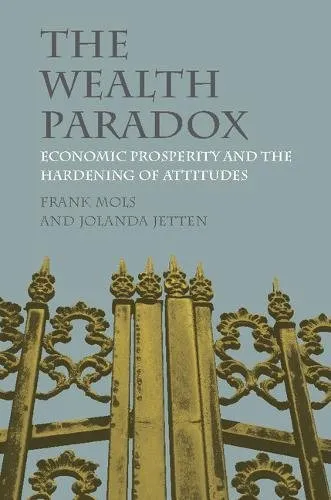
The Wealth Paradox: Economic Prosperity and the Hardening of Attitudes
Frank Mols,Jolanda Jetten
2017
View book
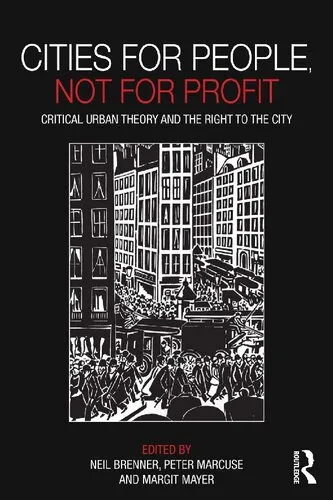
Cities for people, not for profit critical urban theory and the right to the city
Peter Marcuse;;Margit Mayer;Neil Brenner
2012
View book