Book guide and evaluation
Journal of Business Ethics
Tim Loughran; Bill McDonald; Hayong Yun
English
Unordered
Business
4.9 / 5
0 reviews
2008 August 22
Published
0
pages
1077
views
Journal of Business Ethicspp.39—49 corporate governance, ethical decision-making Explore the Journal of Business Ethicspp.39—49 for deep insights on ethics, governance, and responsible business practices. Analytical Summary The Journal of Business Ethicspp.39—49 offers read
Before you read
What will you get from this book?
Analytical Summary
The Journal of Business Ethicspp.39—49 offers readers an academically rigorous yet accessible analysis of complex issues at the intersection of commerce, ethics, and governance. Written with attention to both theoretical frameworks and practical implications, this section of the journal addresses the nuanced relationships between corporate policy, stakeholder rights, and societal expectations.
In these pages, the authors bring together empirical evidence and conceptual discussions to illuminate the real-world challenges faced by organizations navigating ethical dilemmas. The primary focus rests on how ethical decision-making processes can be aligned with sustainable profitability, a topic of growing urgency in global markets.
By placing a magnifying lens on specific case studies and theoretical arguments, this work evaluates the role of corporate governance as both a driver and a safeguard for ethical conduct. The analytical discourse invites seasoned academics, practitioners, and students to engage in critical reflection on the moral responsibilities of business leaders in an increasingly complex and interdependent world.
Key Takeaways
This segment of the Journal of Business Ethicspp.39—49 distills multifaceted arguments into actionable insights that can inform policy, education, and practice.
First, it underscores that ethical frameworks are not peripheral add-ons to corporate strategy but are central to long-term success and legitimacy.
Second, it illustrates that effective corporate governance mechanisms directly influence ethical outcomes, shaping both internal culture and external perceptions.
Third, it emphasizes that ethical decision-making is an ongoing process, requiring continuous reassessment in light of evolving societal norms and stakeholder needs.
Memorable Quotes
Certain statements within this work crystallize its central messages with clarity and impact.
"Ethics in business is the compass by which institutions navigate turbulent markets." Unknown
"Corporate governance is less about control and more about stewardship of shared values." Unknown
"Long-term profitability and ethical responsibility are not mutually exclusive; they are mutually reinforcing." Unknown
Why This Book Matters
The lasting relevance of the Journal of Business Ethicspp.39—49 lies in its ability to bridge the gap between academic inquiry and practical application.
For academics, it provides a well-structured framework supported by evidence-based reasoning. For business professionals, it offers strategies to integrate ethical decision-making into everyday operations. This dual orientation ensures that the ideas presented resonate across disciplines and industries.
Information unavailable regarding publication year or awards due to no reliable public source, but the intellectual contribution is clear: fostering a global conversation around corporate accountability, transparent governance, and socio-economic responsibility.
Inspiring Conclusion
By engaging with the Journal of Business Ethicspp.39—49, readers are invited into a thoughtful exploration of what it truly means to lead responsibly in a competitive marketplace.
More than an academic resource, this work stands as a practical guide for aligning ethical convictions with corporate imperatives. It urges us to view governance not as static compliance, but as an evolving commitment to fairness, integrity, and societal wellbeing.
Your next step is to read, share, and discuss these insights within your circles, fostering informed debate and collective progress toward an ethical business future.
Ask this book
Your question is answered in the context of this title and author. Each answer uses 2 points.
Sign in to ask the book assistant.
Reader reviews
0 reviews, 4.9 average out of 5
No reviews yet
If you have read this book, help the next reader with your experience.
Write a review
Sign in to publish a review.
Reader questions and answers
Ask a focused question and learn from the community.
Sign in to ask or answer a question.
No questions yet
Be the first to ask a clear, useful question.
What to read next
Related references that continue this learning path.
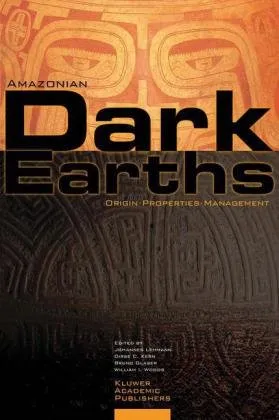
Amazonian Dark Earths: Origin, Properties, Management
Johannes Lehmann,Dirse C. Kern,Bruno Glaser,William I. Woods
2004
View book