
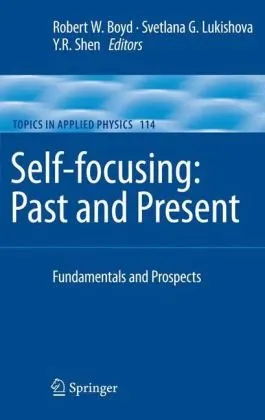
Self-focusing: Past and Present: Fundamentals and Prospects
Y. Ron Shen (auth.),Robert W. Boyd,Svetlana G. Lukishova,Y.R. Shen (eds.)
2009
View book
Book guide and evaluation
Zhou, Wenna; Du, Xiaojuan; Li, Jiyan
0 reviews
Published
pages
views
Journal of Applied Geophysicspp.237—242 Applied geophysical methods, subsurface investigation Explore cutting-edge insights in geoscience with the Journal of Applied Geophysicspp.237—242 and deepen your subsurface investigation knowledge. Analytical Summary The Journal of A
Before you read
The Journal of Applied Geophysicspp.237—242 presents a concentrated and rigorous examination of a specific research contribution within the broader discipline of applied geophysics. Written by Zhou Wenna, Du Xiaojuan, and Li Jiyan, the publication reflects a scholarly commitment to both precision in data interpretation and clarity in presenting complex concepts.
Applied geophysical methods form the backbone of this work, as the authors address critical questions about subsurface structures and their environmental, engineering, or mineral exploration implications. While the exact publication year is information unavailable—due to the absence of a reliable public source—the content remains relevant for contemporary readers who apply physics-based measurement techniques to geological problems.
In this segment of the journal, the authors synthesize empirical observations, advanced modeling approaches, and analytical methods to construct a coherent narrative of their findings. Data integrity and reproducibility are emphasized, aligning with modern demands for transparency in scientific research. Whether your interest lies in seismic imaging, resistivity surveying, or magnetics, this focused piece offers a rich tapestry of methods and interpretations.
Readers who engage deeply with Journal of Applied Geophysicspp.237—242 will emerge with sharpened insights into the pivotal role of methodological rigor in applied geoscience.
First, the work reinforces the idea that subsurface investigation demands a nuanced balance between theoretical modeling and empirical validation. Second, it underscores the necessity of adapting geophysical techniques to specific environmental conditions and project scopes. Third, the article demonstrates how integrated datasets can illuminate hidden patterns, offering higher accuracy in interpretations. Finally, it serves as an example of clear scientific communication that bridges complex data with actionable conclusions for practitioners.
Precision in observation is the compass that guides successful geophysical interpretation.Unknown
Every dataset tells a story; our duty is to listen with disciplined methods.Unknown
Applied geophysics thrives at the intersection of theory, technology, and the Earth’s hidden truths.Unknown
For academics, industry professionals, and advanced students, the publication offers more than just research results—it provides a model for problem-solving in complex geophysical scenarios.
The Journal of Applied Geophysicspp.237—242 contributes to the evolving conversation about how we approach subsurface investigation in diverse contexts. By rigorously applying and evaluating applied geophysical methods, the authors empower readers to critically assess project methodologies. This relevance extends to mineral exploration, environmental impact studies, infrastructure development, and hazard assessment. With data-rich analysis and methodical reasoning, the work becomes an essential touchpoint in the landscape of geoscientific literature.
Engaging with the Journal of Applied Geophysicspp.237—242 is an invitation to explore the depths of scientific discipline, curiosity, and practical application.
It brings together cutting-edge applied geophysical methods with a profound respect for observational precision, enabling readers to harness the power of science in real-world projects. As you reflect on the systematic approaches and empirical rigor presented, consider how these principles might inform your own work or research. Whether for academic enrichment or professional advancement, your next step could be to read, share, and discuss this influential piece—fostering a deeper collective understanding of our planet's intricate subsurface structures.
Your question is answered in the context of this title and author. Each answer uses 2 points.
0 reviews, 4.8 average out of 5
Sign in to publish a review.
Ask a focused question and learn from the community.
Related references that continue this learning path.
Y. Ron Shen (auth.),Robert W. Boyd,Svetlana G. Lukishova,Y.R. Shen (eds.)
Sarah Abdulla, Christopher Clarke
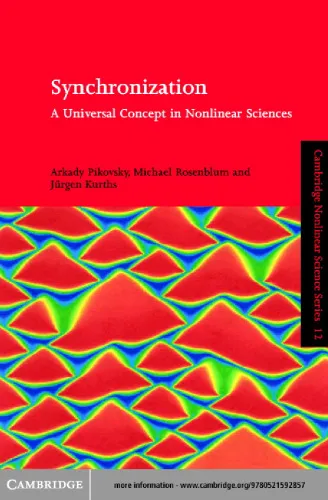
Arkady Pikovsky, Michael Rosenblum, Jurgen Kurths
