Book guide and evaluation
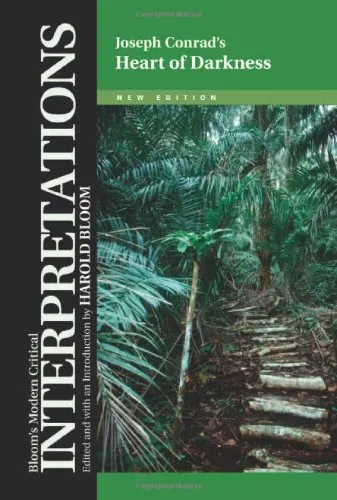
Joseph Conrad's Heart of Darkness (Bloom's Modern Critical Interpretations)
Harold Bloom
English
Intermediate
novel
3.8 / 5
0 reviews
2008
Published
172
pages
874
views
Introduction Joseph Conrad's Heart of Darkness is a landmark work of late 19th-century literature that has intrigued readers with its complex web of symbolism, its profound psychological depth, and its stark portrayal of colonial exploitation. As part of the Bloom'
Before you read
What will you get from this book?
Introduction
Joseph Conrad's Heart of Darkness is a landmark work of late 19th-century literature that has intrigued readers with its complex web of symbolism, its profound psychological depth, and its stark portrayal of colonial exploitation. As part of the Bloom's Modern Critical Interpretations series, this book offers an insightful analysis and an array of critical essays that illuminate the various facets of Conrad’s enigmatic novella. In this introduction, we delve into its detailed summary, explore its key takeaways, highlight famous quotes, and discuss why this book retains its powerful grip on literary scholarship and why it still matters today.
Detailed Summary
Set at the peak of European imperialism, Heart of Darkness unfolds as a tale within a tale. The novella begins aboard a boat on the River Thames, as the protagonist, Charles Marlow, narrates his harrowing journey into the heart of the African continent. Engaged by a Belgian trading company as a riverboat captain, Marlow penetrates the Congo River in search of the mysterious Kurtz, an ivory trader of great personal charisma and notoriety.
As Marlow ventures deeper into the jungle, he confronts the veneer of civilization that slips away to reveal an unsettling reality where cruelty and greed overpower moral restraint. Conrad’s narrative weaves between Marlow's confrontation with the African wilderness and his eventual encounter with Kurtz — whose own descent into madness becomes emblematic of the broader depravity and moral ambiguity that characterize colonial enterprises.
Key Takeaways
- The Nature of Evil: Conrad’s novella probes the darkest reaches of the human psyche, suggesting that evil is not an external force, but something that resides within, awaiting circumstances to reveal itself.
- Critique of Imperialism: By dramatizing the brutal exploitation of the Congo, Conrad raises questions about the legitimacy and moral underpinnings of imperial endeavors.
- The Ambiguity of Truth: The novella questions the reliability of perception and the subjective nature of truth, challenging readers to question the stories they are told.
- Modernism’s Emergence: Heart of Darkness exemplifies modernist themes such as alienation, existential doubt, and the quest for meaning in a fragmented world.
Famous Quotes from the Book
"The horror! The horror!"
"We live in the flicker—may it last as long as the old earth keeps rolling! But darkness was here yesterday."
"Your strength is just an accident arising from the weakness of others."
Why This Book Matters
The enduring significance of Heart of Darkness lies in its ability to speak to universal, timeless themes. By confronting the reader with unsettling truths about human nature and societal constructs, Conrad’s work compels a deep examination of ethical boundaries and the capacity for moral degeneration. Its layered narrative and symbolic complexity have established the novella as a central text in both post-colonial studies and psychological literary criticism.
Moreover, as modern readers grapple with issues of power, inequality, and cultural conflict, Heart of Darkness offers a poignant historical reflection and a mirror to contemporary global dynamics. Its resonance continues to provoke debate and inspire adaptations across multiple mediums, confirming its status as a cornerstone of Western literary canon.
Audio introductions
Persian Summary
Ask this book
Your question is answered in the context of this title and author. Each answer uses 2 points.
Sign in to ask the book assistant.
Reader reviews
0 reviews, 3.8 average out of 5
No reviews yet
If you have read this book, help the next reader with your experience.
Write a review
Sign in to publish a review.
Reader questions and answers
Ask a focused question and learn from the community.
Sign in to ask or answer a question.
No questions yet
Be the first to ask a clear, useful question.
What to read next
Related references that continue this learning path.