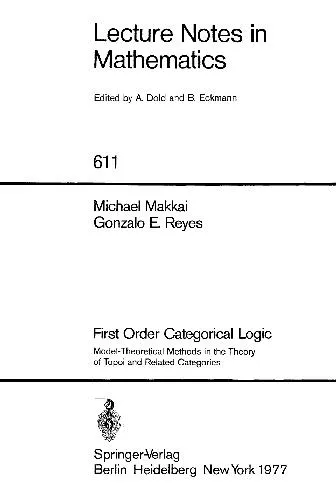
First Order Categorical Logic: Model-Theoretical Methods in the Theory of Topoi and Related Categories
Michael Makkai,Gonzalo E. Reyes
1977
View book
Book guide and evaluation
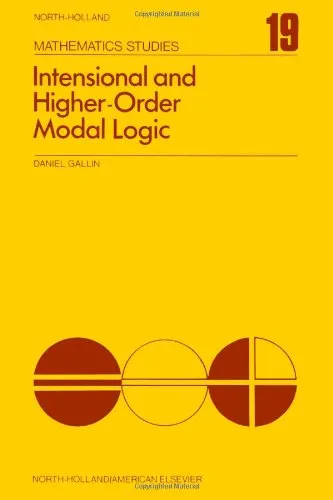
Daniel Gallin (Eds.)
0 reviews
Published
pages
views
Welcome to the comprehensive introduction of "Intensional and Higher-Order Modal Logic", a profound exploration into the realms of logic where intensional and modal dimensions converge. Edited by Daniel Gallin, this book embarks on a journey through the abstract yet fascina
Before you read
Welcome to the comprehensive introduction of "Intensional and Higher-Order Modal Logic", a profound exploration into the realms of logic where intensional and modal dimensions converge. Edited by Daniel Gallin, this book embarks on a journey through the abstract yet fascinating landscape of logic that seeks to bridge the gap between traditional modal logic and higher-order constructs.
"Intensional and Higher-Order Modal Logic" delves into the synergistic relationship between two significant aspects of logic: intensional contexts and higher-order modalities. Intensional logic typically deals with the complexities arising from the interpretation of predicates and modal operators. Meanwhile, higher-order logic extends traditional predicate logic by embedding predicates and quantifiers within the realm of logical constructs. This book skillfully unifies these domains, offering readers insights into how they interplay to solve complex problems in philosophical logic, computer science, linguistics, and related fields.
The book is meticulously structured to guide readers through foundational concepts, advanced theories, and applied scenarios that demonstrate the practical utility of these logical frameworks. The content ranges from the exploration of Kripkean semantics for intensional logics to the examination of various higher-order systems. This blend ensures that readers not only gain a theoretical understanding but also appreciate the pragmatic implications of these logical systems.
While the book primarily focuses on detailed logical arguments and formulations, it contains thought-provoking statements that encapsulate its essence. Some notable quotes include:
"The richness of modal and intensional logic lies not in mere abstraction, but in its profound ability to model the intricacies of both thought and language."
"In a world defined by multiplicity, higher-order modalities allow us to traverse the bounds of conventional logic and predict new pathways."
The significance of "Intensional and Higher-Order Modal Logic" extends beyond its academic contributions. This book represents a pivotal resource for researchers and students alike who pursue a deeper comprehension of logic's potential to explain and predict phenomena across various domains. Its interdisciplinary approach integrates philosophy, mathematics, and computational theories, making it a cornerstone reference for those involved in extending the boundaries of knowledge in logic and its applications.
Furthermore, by addressing both foundational and advanced topics, the book serves as a bridge for newcomers to the field who aim to grasp the basics, as well as seasoned scholars seeking to expand their intellectual horizons. The clarity and depth of discussion promote a profound understanding of intensional and higher-order logics’ pivotal role in modern theoretical frameworks and practical implementations.
Your question is answered in the context of this title and author. Each answer uses 2 points.
0 reviews, 4.7 average out of 5
Sign in to publish a review.
Ask a focused question and learn from the community.
Related references that continue this learning path.
Michael Makkai,Gonzalo E. Reyes
Petr Cintula,Carles Noguera
Charles S. Chihara