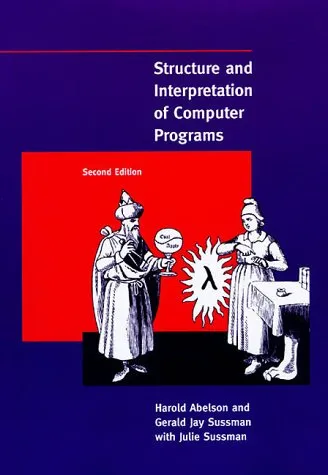
Structure and Interpretation of Computer Programs - 2nd Edition
Harold Abelson,Gerald Jay Sussman
1996
View book
Book guide and evaluation
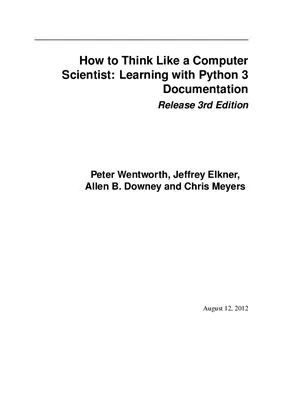
Wentworth P.,Elkner J.,Downey A.B,Meyers C.
0 reviews
Published
pages
views
Introduction Welcome to 'How to Think Like a Computer Scientist: Learning with Python 3', a comprehensive guide designed to immerse you in the world of programming and computer science principles through Python 3. This book is a cornerstone for
Before you read
Welcome to 'How to Think Like a Computer Scientist: Learning with Python 3', a comprehensive guide designed to immerse you in the world of programming and computer science principles through Python 3. This book is a cornerstone for novices and enthusiasts alike, providing a robust framework to think algorithmically and solve problems effectively.
Python 3 is an accessible, powerful, and versatile language, making it an ideal choice for beginners. With Python's clear syntax and readability, you can focus on learning programming concepts without being bogged down by complex code structures. Our book aims to inspire and equip you with the tools to think critically and program creatively.
This book unravels the art of thinking like a computer scientist, which involves understanding computational processes and utilizing them to tackle real-world problems. It covers fundamental concepts such as variables, data types, control structures, and functions. As you delve deeper, you encounter more complex topics like object-oriented programming, recursion, data structures, and algorithms.
Each chapter builds on the last, enabling a progressive learning experience where abstract concepts are slowly transformed into practical skills. Real-world examples and exercises reinforce learning, ensuring readers not only understand the theory but also apply what they've learned practically. This solid foundation in Python allows learners to transfer these skills to other programming languages and paradigms effortlessly.
"The art of programming is the art of organizing complexity, of mastering multitude and avoiding its bastard chaos as effectively as possible."
"Understanding, articulating, and solving problems is the heart of being a successful programmer."
In an era where technology pervades every aspect of life, understanding programming and computer science concepts is invaluable. 'How to Think Like a Computer Scientist: Learning with Python 3' doesn't just teach you how to code; it instills a mindset that transcends programming languages, equipping you to innovate and adapt in a rapidly evolving digital landscape.
The book is crafted to nurture problem solvers who can approach challenges with analytical prowess. Whether you aim to develop software, analyze data, or automate mundane tasks, the foundational skills paved in this book are essential. This impact makes it an indispensable resource for anyone looking to excel in computer science or any tech-driven field.
Your question is answered in the context of this title and author. Each answer uses 2 points.
0 reviews, 4.5 average out of 5
Sign in to publish a review.
Ask a focused question and learn from the community.
Related references that continue this learning path.
Harold Abelson,Gerald Jay Sussman