SOFTWARE ARCHITECTURE WITH C# 10 AND .NET 6 : develop software solutions using... microservices, devops, ef core, and design pattern.
GABRIEL ABBRUZZESE FRANCESCO BAPTISTA
2022
View book
Book guide and evaluation
0 reviews
Published
pages
views
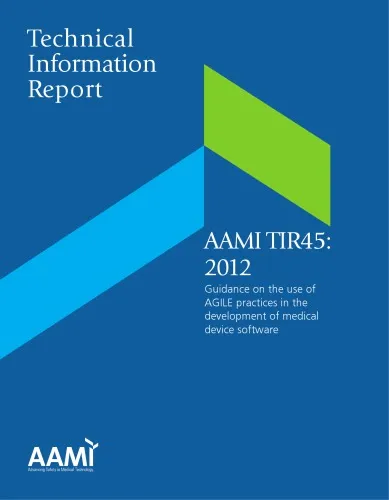
Welcome to the introduction of "Guidance on the Use of AGILE Practices in the Development of Medical Device Software." In a rapidly evolving field where technology intersects with healthcare, this book serves as a crucial companion for professionals seeking to integrate Agile
Before you read
Welcome to the introduction of "Guidance on the Use of AGILE Practices in the Development of Medical Device Software." In a rapidly evolving field where technology intersects with healthcare, this book serves as a crucial companion for professionals seeking to integrate Agile methodologies into the complex landscape of medical device software development. With its practical insights and comprehensive guidance, this book endeavors to be a pivotal resource for developers, engineers, project managers, and regulatory professionals.
In the world of medical device software, strict regulations and the necessity for precision and reliability often pose significant challenges. Traditional methodologies have dominated this domain for decades, but the agility needed to meet modern demands is undeniable. This book explores how Agile practices, known for their responsiveness and adaptability, can be effectively integrated into medical device software development without compromising on quality or compliance.
The book begins with an exploration of the core principles of Agile methodologies, delineating each facet and how these can be adapted to resonate with the norms of the medical device industry. Through a series of well-structured chapters, readers are taken on a journey from understanding foundational Agile concepts to implementing them in real-world scenarios specific to medical device software development.
Subsequent chapters delve into practical guidance, offering step-by-step frameworks, annotated case studies, and templates that can be directly applied to ongoing projects. The importance of collaboration, continuous feedback, and iterative design, all hallmarks of Agile practices, are emphasized throughout, demonstrating their contribution to enhanced innovation and efficiency.
Among the key takeaways from this book are the strategic advantages gained by integrating Agile methods with medical device regulations. Readers will acquire skills in:
Throughout the book, key insights and reflections shed light on the significant impacts of Agile adoption:
"Transformation is not an overnight event; it is a continuous journey where each iterative cycle brings us closer to excellence."
"In the realm of medical device software, agility does not mean bypassing regulations—it means evolving with them."
The pertinence of this book lies in its confluence of Agile methodologies and the stringent requirements of the medical devices sector. As the healthcare field aligns more closely with technological advancement, streamlined processes that can pivot rapidly without sacrificing quality or regulatory compliance are indispensable. This book offers a profound understanding of how Agile can not only coexist but also thrive within the regulatory landscapes of medical device development.
Moreover, this guide stands as a testament to the possibility of innovation within boundaries. By dispelling the myth that Agile is incompatible with stringent industries, the book equips professionals with strategies and confidence to reimagine their project management approaches, ultimately leading to safer, more effective medical solutions.
Persian Summary
Your question is answered in the context of this title and author. Each answer uses 2 points.
0 reviews, 4.3 average out of 5
Sign in to publish a review.
Ask a focused question and learn from the community.
Related references that continue this learning path.
GABRIEL ABBRUZZESE FRANCESCO BAPTISTA