English-Greek dictionary ; a vocabulary of the Attic language
Sidney Chawner Woodhouse
1910
View book
Book guide and evaluation
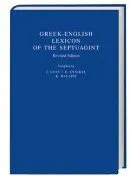
J. Lust,J. Lust,E. Eynikel,K. Hauspie
0 reviews
Published
pages
views
Greek-English Lexicon of the Septuagint (Greek Edition) Septuagint vocabulary, Koine Greek lexicography Authoritative reference for scholars, the Greek-English Lexicon of the Septuagint (Greek Edition) bridges classical Greek and biblical studies. Analytical Summary The Gre
Before you read
The Greek-English Lexicon of the Septuagint (Greek Edition) stands as a seminal work in the discipline of biblical and linguistic studies, offering a meticulous compilation of vocabulary from the Septuagint translated into English. Edited and authored by J. Lust, E. Eynikel, and K. Hauspie, this lexicon is an indispensable resource for academics, theologians, translators, and serious students of Koine Greek.
The Septuagint, an ancient Greek translation of the Hebrew Bible, holds a central place in the history of early Judaism and Christianity. This lexicon systematically catalogues the words found within the Septuagint corpus, providing nuanced definitions, cross-references, and, where relevant, semantic ranges. For scholars comparing Greek terms with their Hebrew source texts or exploring the linguistic shifts that occurred during the translation process, this reference offers a precision that is rarely matched.
More than a mere word list, the lexicon contextualizes Greek vocabulary within its biblical usage, noting differences from classical Greek and highlighting unique idiomatic expressions. The editors’ expertise ensures philological rigor, making it a trusted resource for textual criticism, theological exegesis, and historical linguistics.
Readers will find that the structure and completeness of the Greek-English Lexicon of the Septuagint (Greek Edition) transform the daunting task of engaging with ancient Greek scripture into a manageable, scholarly endeavor.
Among the many benefits are: comprehensive coverage of the Septuagint vocabulary, clear and concise English definitions, careful attention to linguistic nuance, and contextual notes that draw connections with other biblical or extra-biblical sources. The lexicon’s design facilitates both targeted word studies and broader thematic research.
The work also serves as a bridge between disciplines—uniting textual criticism, translation theory, and historical theology—allowing professionals from different fields to engage meaningfully with the original text.
“A lexicon is not merely a tool—it is a doorway into the mind and culture of an ancient world.”Unknown
“To read the Septuagint without a lexicon is to journey without a map.”Unknown
“In every word of the Septuagint, there echoes a history that shapes theology and language alike.”Unknown
The Greek-English Lexicon of the Septuagint (Greek Edition) is more than an academic reference; it is a cornerstone for interdisciplinary scholarship.
For translators, it offers clarity in rendering Greek biblical texts into modern languages without losing the depth of meaning. For historians, it provides a lens through which the evolution of religious thought from Hebrew to Greek contexts can be studied. For theologians, it is a wellspring of interpretive insight anchored in rigorous language analysis.
Its authority stems from years of careful compilation and verification, with each entry contributing to a more accurate and holistic understanding of the Septuagint. As such, it supports both academic instruction and independent scholarly inquiry.
The Greek-English Lexicon of the Septuagint (Greek Edition) has earned its place as a trusted companion for anyone dedicated to uncovering the linguistic and theological riches of the ancient scriptures.
Whether you are a professor guiding students through Koine Greek, a translator striving to preserve the texture of sacred texts, or a researcher delving into the interplay of languages in biblical history, this lexicon offers both depth and precision. The journey into the Septuagint is enriched immeasurably when guided by such a meticulously crafted tool.
Take the next step: read, share, and discuss this work with peers; explore its pages with curiosity; and let it illuminate your engagement with the language that shaped much of the theological heritage we know today.
Your question is answered in the context of this title and author. Each answer uses 2 points.
0 reviews, 4.3 average out of 5
Sign in to publish a review.
Ask a focused question and learn from the community.
Related references that continue this learning path.
Sidney Chawner Woodhouse
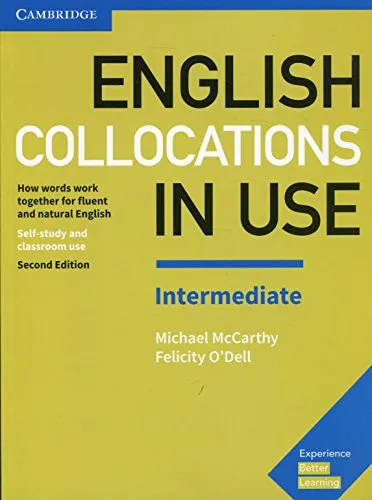
Michael McCarthy,Felicity O’Dell