English-Greek dictionary ; a vocabulary of the Attic language
Sidney Chawner Woodhouse
1910
View book
Book guide and evaluation
Liddell.Scott
0 reviews
Published
pages
views
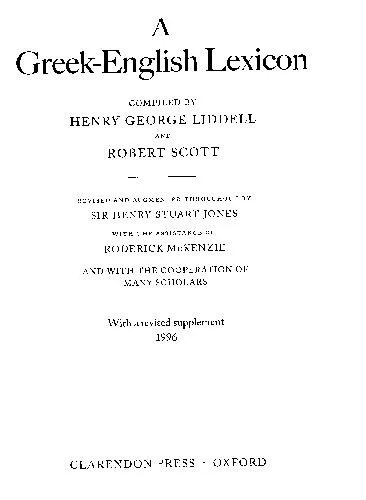
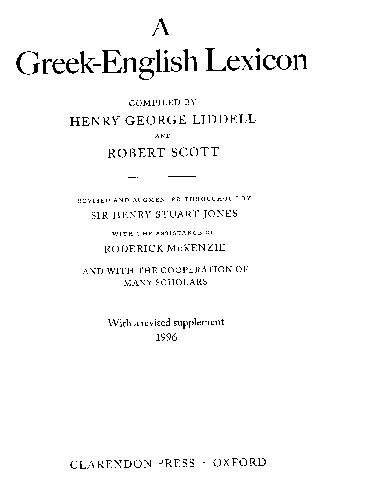
A Greek-English Lexicon Ancient Greek language, Classical philology A Greek-English Lexicon remains the definitive resource for understanding and translating the richness of Ancient Greek vocabulary. Analytical Summary A Greek-English Lexicon is a monumental work
Before you read
A Greek-English Lexicon is a monumental work in the field of classical philology, meticulously compiled to serve scholars, academics, and serious students of Ancient Greek. Originally authored by Henry George Liddell and Robert Scott, this lexicon is celebrated as the most authoritative dictionary for translating and interpreting Ancient Greek into English, capturing linguistic nuances with precision and depth.
The lexicon encompasses a vast range of vocabulary from Homer through the later Greek writers, providing grammatical details, contextual usage, and etymological insights. Its systematic entries make it an indispensable tool for classicists, historians, theologians, and linguists engaged with Greek texts, whether they are studying philosophical dialogues, historical treatises, or poetic works.
Over multiple editions, A Greek-English Lexicon has undergone careful revisions to improve accuracy and incorporate scholarly discoveries. Information unavailable on exact award recognitions means we focus instead on its lasting legacy in educational and research settings, where it continues to be the gold standard of reference.
Readers who engage deeply with A Greek-English Lexicon will discover a precisely crafted reference that enables accurate comprehension of Ancient Greek texts.
Its breadth of linguistic coverage ensures that it meets the needs of both beginners and seasoned experts, facilitating translation, interpretation, and the appreciation of Greek literature.
Secondary keywords such as “Ancient Greek language” and “Classical philology” reflect the lexicon’s core thematic scope, each underscoring the scholarly rigor and cultural significance of mastering this classical tongue.
“The study of language is the most fruitful way of approaching ancient thought.”Unknown
“True mastery of a culture begins with mastery of its words.”Unknown
“A lexicon is not merely a dictionary; it is a lens through which the past comes into focus.”Unknown
In the sphere of classical studies, few works hold as much authority as A Greek-English Lexicon. It is more than a dictionary; it is a scholarly bridge between ancient texts and modern readers.
The depth of information it offers on each entry allows researchers to see beyond literal meanings, incorporating historical context, linguistic evolution, and literary nuance. This makes it vital for comprehensive translations and for preserving the integrity of ancient works in contemporary scholarship.
Its role in academic institutions worldwide highlights its enduring relevance, ensuring that new generations can approach Ancient Greek language with the same rigor afforded to established scholars.
A Greek-English Lexicon stands as an enduring cornerstone of classical scholarship, guiding readers through the intricacies of the Ancient Greek language with authority and clarity.
Whether you are a seasoned classicist or an ambitious student of Ancient Greek language, this work’s scholarly precision, breadth, and historical scope make it an indispensable companion. By engaging with its entries, you join a lineage of readers and researchers committed to preserving and understanding one of history’s richest linguistic traditions.
Now is the time to open its pages, share its insights, and discuss its findings with colleagues. In doing so, you ensure that the legacy of A Greek-English Lexicon continues to inspire and inform future generations.
Your question is answered in the context of this title and author. Each answer uses 2 points.
0 reviews, 4.5 average out of 5
Sign in to publish a review.
Ask a focused question and learn from the community.
Related references that continue this learning path.
Sidney Chawner Woodhouse
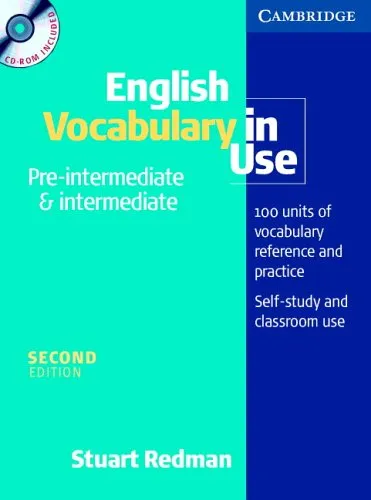
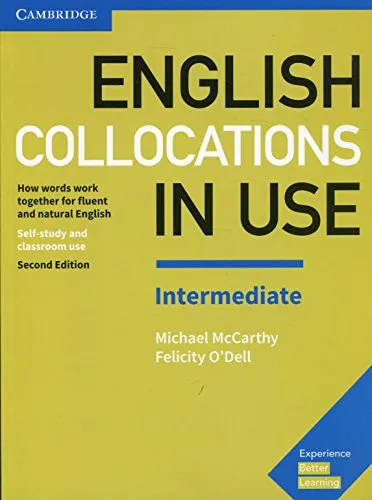
Michael McCarthy,Felicity O’Dell