

Conceptual Modeling: Foundations and Applications: Essays in Honor of John Mylopoulos
Michael L. Brodie (auth.),Alexander T. Borgida,Vinay K. Chaudhri,Paolo Giorgini,Eric S. Yu (eds.)
2009
View book
Book guide and evaluation
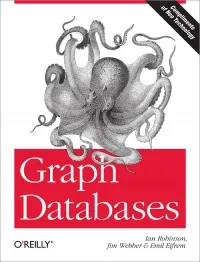
Ian Robinson,Jim Webber,Emil Eifrem
0 reviews
Published
pages
views
Introduction to 'Graph Databases, Early Release' In an era where data connectivity and complex relationships are more crucial than ever, the book 'Graph Databases, Early Release' provides a comprehensive exploration of graph database technology and its significance in today's
Before you read
In an era where data connectivity and complex relationships are more crucial than ever, the book 'Graph Databases, Early Release' provides a comprehensive exploration of graph database technology and its significance in today's data-driven world. Authored by Ian Robinson, Jim Webber, and Emil Eifrem, this book serves as an essential guide for understanding the distinctive capabilities and wide-ranging applications of graph databases.
The book introduces readers to the world of graph databases, a domain that stands out for its ability to map complex interconnections in data. As data grows, both in volume and complexity, traditional database approaches can fall short. Graph databases provide a robust solution for modeling and querying complex and interconnected data at scale.
The narrative begins with an explanation of what graph databases are, emphasizing their structure comprising nodes, edges, and properties. These components collectively allow for an intricate representation of data relationships, making it possible to handle queries involving complex paths and patterns with remarkable efficiency.
As the book progresses, readers aboard a journey through various real-world applications of graph databases, ranging from social networks to recommendation engines and fraud detection systems, illustrating how graphs naturally model relationships and derive insights.
The authors also delve into the technical underpinnings of graph databases, discussing graph theory fundamentals, different types of graph databases—including property graphs and RDF (Resource Description Framework) databases—and the languages designed for querying and managing graph data. Throughout the book, emphasis is placed on the practical aspects of graph data storage, querying capabilities, and how they surpass traditional models in specific scenarios.
"Graph databases enable us to ask deeper questions which lead to insights of a granular dimension fostered by the natural expression of data relationships."
"In a world where connectivity defines the contemporary applications, graph databases emerge as the cornerstone technology."
In a digital environment increasingly dependent on data insights, understanding and employing the right tools to manage and analyze data becomes paramount. 'Graph Databases, Early Release', represents a definitive resource for embracing the paradigm shift towards graph database technology—a domain experiencing rapid adoption across industry sectors.
The book matters because it not only equips readers with foundational knowledge but also arms them with the skills to leverage graph databases to solve contemporary data challenges. Whether you are a developer, data analyst, or IT architect, this resource empowers you to harness the full potential of graph databases, thus positioning you at the forefront of modern data management and analytics innovation.
In sum, this comprehensive introduction to graph databases is an indispensable tool, adding significant value to one's understanding of data intricacies and the best practices for deploying graph-based data solutions.
Your question is answered in the context of this title and author. Each answer uses 2 points.
0 reviews, 4.9 average out of 5
Sign in to publish a review.
Ask a focused question and learn from the community.
Related references that continue this learning path.
Michael L. Brodie (auth.),Alexander T. Borgida,Vinay K. Chaudhri,Paolo Giorgini,Eric S. Yu (eds.)
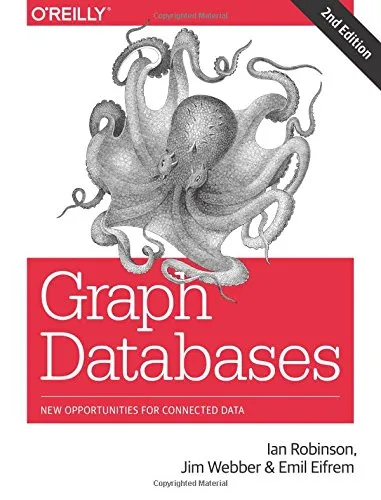
Ian Robinson,Jim Webber,Emil Eifrem