Loading
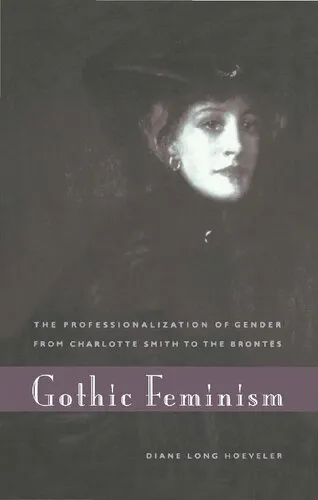
Cover of Gothic Feminism: The Professionalization of Gender from Charlotte Smith to the Brontës

Book guide and evaluation

Gothic Feminism: The Professionalization of Gender from Charlotte Smith to the Brontës

Diane Long Hoeveler

English Intermediate novel
4.4 / 5

0 reviews

1998

Published

271

pages

256

views

As British women writers in the late eighteenth and early nineteenth centuries sought to define how they experienced their era's social and economic upheaval, they helped popularize a new style of bourgeois female sensibility. Building on her earlier work in Romantic Androgyny, D

Before you read

What will you get from this book?

As British women writers in the late eighteenth and early nineteenth centuries sought to define how they experienced their era's social and economic upheaval, they helped popularize a new style of bourgeois female sensibility. Building on her earlier work in Romantic Androgyny, Diane Long Hoeveler now examines the Gothic novels of Charlotte Smith, Ann Radcliffe, Jane Austen, Charlotte Dacre Byrne, Mary Shelley, and the Brontës to show how these writers helped define femininity for women of the British middle class.Hoeveler argues that a female-created literary ideology, now known as "victim feminism," arose as the Gothic novel helped create a new social role of professional victim for women adjusting to the new bourgeois order. These novels were thinly disguised efforts at propagandizing a new form of conduct for women, teaching that "professional femininity"-a cultivated pose of wise passiveness and controlled emotions-best prepared them for social survival. She examines how representations of both men and women in these novels moved from the purely psychosexual into social and political representations, and how these writers constructed a series of ideologies that would allow their female characters-and readers-fictitious mastery over an oppressive social and political system.Gothic Feminism takes a neo-feminist approach to these women's writings, treating them not as sacred texts but as thesis-driven works that attempted to instruct women in a series of strategic poses. It offers both a new understanding of the genre and a wholly new interpretation of feminism as a literary ideology.

Ask this book

Your question is answered in the context of this title and author. Each answer uses 2 points.

Sign in to ask the book assistant.

Reader reviews

0 reviews, 4.4 average out of 5

No reviews yet

If you have read this book, help the next reader with your experience.

Write a review

Sign in to publish a review.

Reader questions and answers

Ask a focused question and learn from the community.

Sign in to ask or answer a question.

No questions yet

Be the first to ask a clear, useful question.