
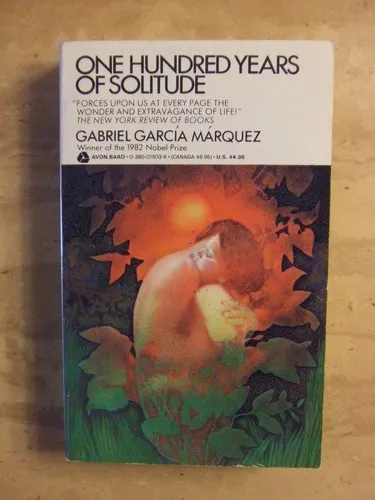

Book guide and evaluation
Ghosts, Metaphor, and History in Toni Morrison's Beloved and Gabriel García Márquez's One Hundred Years of Solitude
Daniel Erickson
English
Intermediate
novel
3.8 / 5
0 reviews
2009
Published
264
pages
652
views
Introduction Welcome to an in-depth exploration of two seminal works in contemporary literature: Toni Morrison's Beloved and Gabriel García Márquez's One Hundred Years of Solitude. This book, Ghosts, Metaphor, and History, intends to traverse the dense layers of spectral m
Before you read
What will you get from this book?
Introduction
Welcome to an in-depth exploration of two seminal works in contemporary literature: Toni Morrison's Beloved and Gabriel García Márquez's One Hundred Years of Solitude. This book, Ghosts, Metaphor, and History, intends to traverse the dense layers of spectral metaphor and historical narrative woven intrinsically into these masterpieces. By employing the literary motifs of ghosts and memories, Morrison and García Márquez not only craft compelling tales but also offer profound insights into the socio-political tapestries of their respective cultures.
Detailed Summary of the Book
This work delves into the complex ways in which both novelists use ghosts as an integral part of their storytelling. Through Morrison's Beloved, we witness the haunting legacy of slavery, where personal and collective trauma materializes in literal and metaphorical ways. The ghost in Morrison's narrative, both enigmatic and tangible, serves as a vessel for exploring the aftermath of oppression and yearning for an identity that has been historically erased.
In contrast, García Márquez's One Hundred Years of Solitude employs ghosts and apparitions as narrative devices that echo through generations. In the fictional town of Macondo, the blurred lines between the past and present call attention to the cyclical nature of human experiences and historical repetitions. Both authors push the conventional boundaries of narrative to engage with history not just as a backdrop but as an omnipresent force that actively shapes reality.
Key Takeaways
- Understanding how Morrison and García Márquez utilize ghostly figures to address themes of memory, trauma, and cultural identity.
- The role of magical realism in emphasizing historical and societal commentaries.
- An appreciation for how literature can preserve histories that are often marginalized or forgotten.
- Insight into the broader implications of history as a living entity that influences current and future realities.
Famous Quotes from the Book
"Ghosts, in these narratives, are far more than specters haunting the living; they are metaphors for the histories that continue to influence and determine the present."
"Through the veil of magical realism, what appears surreal becomes an exploration of truths deeply rooted in cultural consciousness."
Why This Book Matters
Both Beloved and One Hundred Years of Solitude are pivotal texts that challenge readers to reflect on the intersection of history, culture, and identity. By dissecting these novels, Ghosts, Metaphor, and History serves as a crucial academic and literary guide for understanding the intricate narratives crafted by Morrison and García Márquez. It sheds light on the universal human experience of grappling with the ghosts of the past and the metaphorical significance of these apparitions in shaping personal and collective futures. This book matters because it calls attention to the enduring power of storytelling as a means of cultural preservation and social critique.
Audio introductions
Persian Summary
Ask this book
Your question is answered in the context of this title and author. Each answer uses 2 points.
Sign in to ask the book assistant.
Reader reviews
0 reviews, 3.8 average out of 5
No reviews yet
If you have read this book, help the next reader with your experience.
Write a review
Sign in to publish a review.
Reader questions and answers
Ask a focused question and learn from the community.
Sign in to ask or answer a question.
No questions yet
Be the first to ask a clear, useful question.
What to read next
Related references that continue this learning path.

One hundred years of solitude: by Gabriel García Márquez
Stavans, Ilan;Garcia Marquez, Gabriel
2011
View book
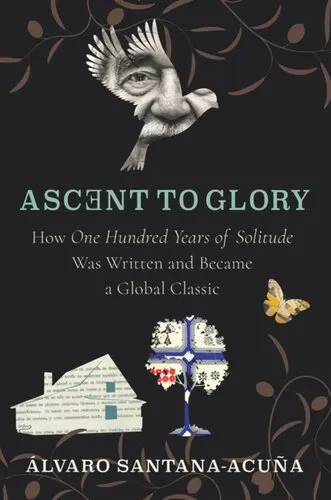
Ascent to Glory: How One Hundred Years of Solitude Was Written and Became a Global Classic
Álvaro Santana-Acuña
2020
View book