Book guide and evaluation
Fuel
Zhen, Xudong; Li, Xiaoyan; Wang, Yang; Liu, Daming; Tian, Zhi; Wang, Yuxiang
English
Unordered
Technology
4.4 / 5
0 reviews
2020 February
Published
410
pages
1548
views
The world's ever-growing demand for power has created an urgent need for new efficient and sustainable sources of energy and electricity. Today's consumers of portable electronics also demand devices that not only deliver more power but are also environmentally friendly. Fuel cel
Before you read
What will you get from this book?
The world's ever-growing demand for power has created an urgent need for new efficient and sustainable sources of energy and electricity. Today's consumers of portable electronics also demand devices that not only deliver more power but are also environmentally friendly. Fuel cells are an important alternative energy source, with promise in military, commercial and industrial applications, for example power vehicles and portable devices. A fuel cell is an electrochemical device that directly converts the chemical energy of a fuel into electrical energy. Fuel cells represent the most efficient energy conversion technologies to-date and are an integral part in the new and renewable energy chain (e.g., solar, wind and hydropower). Fuel cells can be classified as either high-temperature or lowtemperature, depending on their operating temperature, and have different materials requirements. This book is dedicated to the study of high temperature fuel cells. In hightemperature fuel cells, the electrolyte materials are ceramic or molten carbonate, while the electrode materials are ceramic or metal (but not precious metal). High operation temperature fuel cells allow internal reforming, promote rapid kinetics with non-precious materials and offer high flexibilities in fuel choice, and are potential and viable candidate to moderate the fast increase in power requirements and to minimize the impact of the increased power consumption on the environment. 'Materials for High Temperature Fuel Cells' is part of the series on Materials for Sustainable Energy and Development edited by Prof. Max Q. Lu. The series covers advances in materials science and innovation for renewable energy, clean use of fossil energy, and greenhouse gas mitigation and associated environmental technologies.
Ask this book
Your question is answered in the context of this title and author. Each answer uses 2 points.
Sign in to ask the book assistant.
Reader reviews
0 reviews, 4.4 average out of 5
No reviews yet
If you have read this book, help the next reader with your experience.
Write a review
Sign in to publish a review.
Reader questions and answers
Ask a focused question and learn from the community.
Sign in to ask or answer a question.
No questions yet
Be the first to ask a clear, useful question.
What to read next
Related references that continue this learning path.
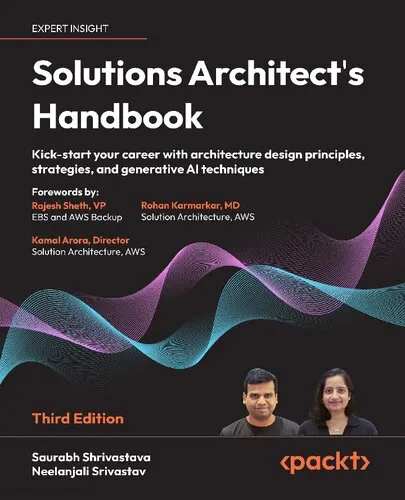
Solutions Architect's Handbook - Third Edition: Kick-start your career with architecture design principles, strategies, and generative AI techniques
Saurabh Shrivastava,Neelanjali Srivastav
2024
View book