
Book guide and evaluation
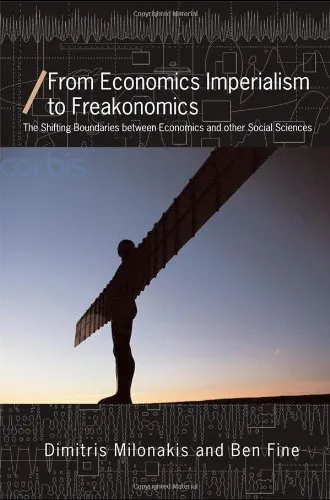
From Economics Imperialism to Freakonomics: The Shifting Boundaries Between Economics and Other Social Sciences (Economics As Social Theory)
Ben Fine,Dimitris Milonakis
English
Beginner
Finance
4.0 / 5
0 reviews
2009
Published
215
pages
427
views
"From Economics Imperialism to Freakonomics: The Shifting Boundaries Between Economics and Other Social Sciences" presents a comprehensive analysis of the expansion of economics into various realms traditionally occupied by the other social sciences. As authors Ben Fine and
Before you read
What will you get from this book?
"From Economics Imperialism to Freakonomics: The Shifting Boundaries Between Economics and Other Social Sciences" presents a comprehensive analysis of the expansion of economics into various realms traditionally occupied by the other social sciences. As authors Ben Fine and Dimitris Milonakis delve into this phenomenon, they expose the transformation and impact of what is often termed as 'economics imperialism.' This book critically evaluates how economic methodologies and reasoning have increasingly infiltrated sociology, political science, history, and beyond, sometimes to the detriment of these disciplines' unique contributions to understanding societal complexities.
Detailed Summary of the Book
The book commences by tracing the historical evolution of economics as a discipline. It highlights how economics has transcended its traditional boundaries, beginning as a field primarily focused on markets and financial systems, to a discipline claiming to explain a broader array of social phenomena. This historical perspective is crucial as it illustrates the gradual transformation and expansion of economic thought, setting the groundwork for what the authors describe as 'economics imperialism.'
The authors argue that this imperialism is characterized by the application of economic theories and quantitative methods to areas such as crime, education, marriage, and even religion. They examine seminal works and prominent figures within this movement, including the popular "Freakonomics," which epitomizes the quirky and broad application of economic principles to social behavior and everyday life.
Central to this exploration is the critique of how economic methodologies have overshadowed qualitative analyses traditionally employed by other social sciences. Fine and Milonakis debate whether this crossover enriches interdisciplinary studies or diminishes the nuanced understanding provided by disciplines like sociology and anthropology. They emphasize the potential reductionism in complex social phenomena being explored through the narrow lens of economics.
Key Takeaways
- The expansion of economic principles beyond their traditional scope signals both opportunity and risk for interdisciplinary study.
- Economics imperialism raises critical questions about methodology and the appropriateness of economic models in explaining social behaviors.
- The authors stress the importance of maintaining the unique lenses and methodologies of traditional social sciences to preserve their capacity for in-depth sociocultural analysis.
Famous Quotes from the Book
"As economics spreads its ambit, we must question whether we are gaining in scope or losing in depth, understanding society through the eyes of its models."
"Economics imperialism is as much about power and influence within academia as it is about the shifting nature of knowledge itself."
Why This Book Matters
This book is pivotal for students, scholars, and practitioners across various social sciences, offering a thought-provoking examination of how disciplines evolve and interact. As economics increasingly claims territory in explaining human behavior, understanding the implications of this expansion is crucial. Fine and Milonakis provide a robust framework for analyzing the benefits and drawbacks of interdisciplinary study, highlighting the consequences of allowing economics to dominate social discourse. This work invites readers to critically engage with the balance between applying rigorous economic methodology and preserving the rich, qualitative insights offered by other social sciences, ensuring a holistic approach to understanding complex societal issues.
By shedding light on the dynamics of intellectual imperialism, the book encourages a reevaluation of interdisciplinary boundaries, fostering dialogue on the future of social scientific inquiry. It matters because it challenges assumptions, provokes debate, and promotes a deeper understanding of where the power of economic analysis lies and where its limitations begin.
Ask this book
Your question is answered in the context of this title and author. Each answer uses 2 points.
Sign in to ask the book assistant.
Reader reviews
0 reviews, 4.0 average out of 5
No reviews yet
If you have read this book, help the next reader with your experience.
Write a review
Sign in to publish a review.
Reader questions and answers
Ask a focused question and learn from the community.
Sign in to ask or answer a question.
No questions yet
Be the first to ask a clear, useful question.
What to read next
Related references that continue this learning path.
The Wealth and Poverty of Nations: Why Some Are So Rich and Some So Poor
David S. Landes
1998
View book