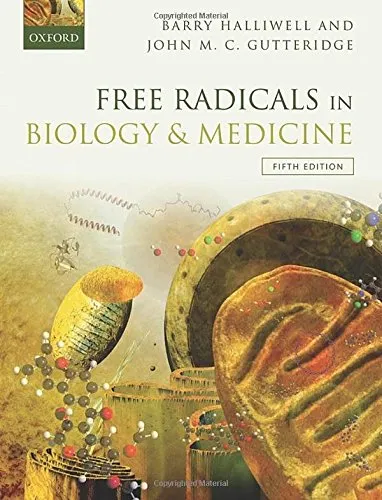
Welcome to 'Free Radicals in Biology and Medicine', a comprehensive exploration into the captivating world of free radicals and their intricate roles within biological systems. Authored by renowned experts in the field, John M. C. Gutteridge and Barry Halliwell, this seminal text delves deep into the science of free radicals, oxidative stress, and the profound implications they hold for human health and disease.
Detailed Summary of the Book
The book meticulously examines the generation and behavior of free radicals in biological organisms. It explains the chemical nature of these reactive molecules, their formation, and the systemic effects they can cause. Particular emphasis is placed on the biological contexts in which free radicals emerge, from cellular metabolism to environmental exposure. Both the destructive and protective roles of free radicals are highlighted, explaining how they can contribute to cellular damage and aging processes yet also perform essential signaling functions. The authors discuss diverse mechanisms of oxidative stress and delineate the body’s intricate antioxidant defenses designed to mitigate harmful effects, striking a balance crucial for maintaining health.
Furthermore, detailed discussions explore innovative methods for measuring and analyzing free radical activity, providing insights into research approaches that have revolutionized our understanding of these entities. This book offers a critical evaluation of the involvement of free radicals in various pathological states, including cancer, cardiovascular diseases, and neurodegenerative conditions, driving home the importance of ongoing research in these areas.
Key Takeaways
- Free radicals are not solely deleterious; they are also integral to normal biochemical processes.
- Antioxidant defenses are crucial in maintaining the balance and preventing oxidative stress.
- Oxidative damage is implicated in numerous diseases, making it a critical area of medical research.
- Understanding free radical chemistry can lead to novel therapeutic approaches and preventive strategies.
Famous Quotes from the Book
"The balance between free radicals and antioxidants is a crucial aspect of homeostasis in biological systems."
"Free radicals are like the proverbial two-edged sword: capable of both protecting and harming, depending on the context."
Why This Book Matters
'Free Radicals in Biology and Medicine' is a pivotal resource for both researchers and practitioners. For scientists, it serves as a comprehensive reference that consolidates current knowledge while inspiring future research directions. For healthcare professionals, this book provides the scientific foundation necessary to understand the underlying oxidative mechanisms in pathophysiology, which can influence clinical decisions and patient care. Its meticulous attention to detail and integration of theory with practical research findings make it an indispensable addition to the fields of biochemistry, medicine, and molecular biology.
The authors’ dedication to explaining complex concepts with clarity and precision ensures that this book remains a cornerstone in the study of free radical biology and oxidative medicine, fostering a greater understanding of these pivotal biological components.