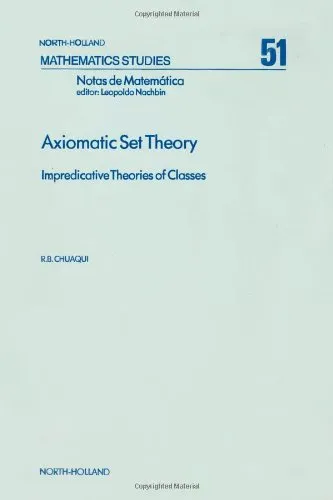
Axiomatic Set Theory: Theory Impredicative Theories of Classes
Leopoldo Nachbin (Eds.)
1981
View book
Book guide and evaluation
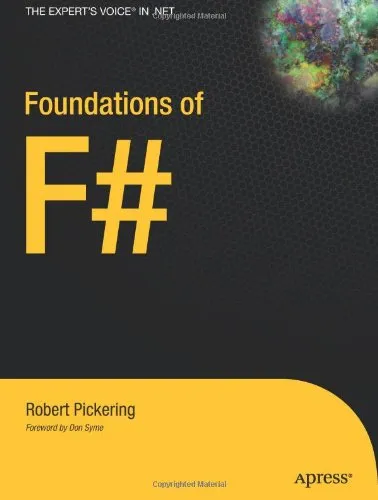
Robert Pickering
0 reviews
Published
pages
views
Introduction to "Foundations of F#" Welcome to "Foundations of F#", a comprehensive guide designed to take you on a transformative journey into the world of F# programming. Authored with developers in mind—whether you are a beginner, a seasoned programmer, or someone trans
Before you read
Welcome to "Foundations of F#", a comprehensive guide designed to take you on a transformative journey into the world of F# programming. Authored with developers in mind—whether you are a beginner, a seasoned programmer, or someone transitioning into functional programming—this book aims to give you the knowledge and confidence you need to master one of the most productive, expressive, and robust languages in the .NET ecosystem.
F# is much more than just a functional programming language; it is a multiparadigm language that seamlessly integrates functional, object-oriented, and imperative programming styles. In this book, we will explore how you can leverage F#'s rich syntax, concise expressiveness, and powerful type system to develop clean, maintainable, and scalable software solutions.
Throughout the pages of "Foundations of F#", you’ll find real-world insights, practical examples, and concepts presented in a thoughtful, step-by-step approach. No matter your background, my goal is to bridge the gap between theory and practical implementation, ensuring F# becomes a valuable tool in your toolkit.
"Foundations of F#" begins with an introduction to the philosophy of functional programming, followed by an overview of the F# language itself. From there, we delve into basic concepts such as functions, immutability, lists, and tuples, laying the groundwork for more advanced topics.
As the book progresses, we explore pattern matching, asynchronous programming, type providers, and working with data in F#. A significant focus is placed on solving practical problems, ensuring you not only learn the syntax of F# but how to wield it effectively in realistic scenarios. Whether you are scripting, building web applications, or working with data science, this book provides examples that resonate with your specific domain.
Other highlights include F#'s integration within the .NET ecosystem, best practices for testing and debugging, and guidance on optimizing F# code for performance. By the end, you’ll have a solid foundation in F# and the confidence to tackle projects of any scale.
"F# doesn't just teach you syntax; it changes the way you think about programming itself."
"In functional programming, less truly is more. F# allows you to achieve functional simplicity while retaining pragmatic power."
"Every line of F# code is an opportunity to express clarity, purpose, and elegance."
In a world where software development is continuously evolving, learning a powerful and productive language like F# is no longer optional for developers aiming to stay ahead. F# empowers you to write better quality code with fewer errors while promoting clean architecture and scalability.
This book matters because it demystifies the core concepts of functional programming and makes F# approachable for learners of all skill levels. It provides you with practical skills and best practices, enabling you to immediately apply what you learn to your day-to-day projects.
Whether you are looking to sharpen your skills, explore functional programming, or bring new efficiency to your projects, "Foundations of F#" delivers the knowledge you need to excel in this exciting and rapidly growing domain. By embracing F#, you’re not just learning a language—you’re adopting a new paradigm of problem-solving.
Your question is answered in the context of this title and author. Each answer uses 2 points.
0 reviews, 4.5 average out of 5
Sign in to publish a review.
Ask a focused question and learn from the community.
Related references that continue this learning path.
Leopoldo Nachbin (Eds.)
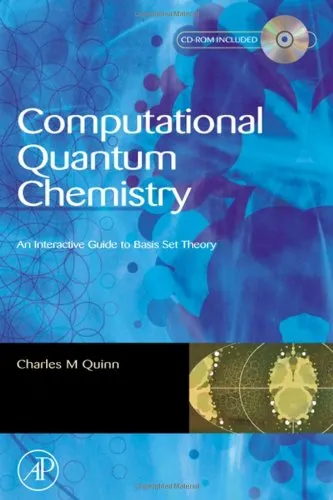
Charles M. Quinn