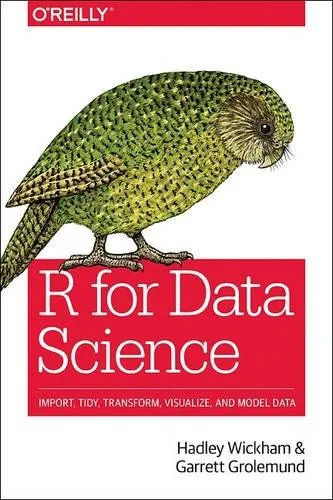
R for Data Science: Import, Tidy, Transform, Visualize, and Model Data
Hadley Wickham,Garrett Grolemund
2017
View book
Book guide and evaluation
Laurent Cesalli;Frédéric Goubier;Alain De Libera
0 reviews
Published
pages
views
Introduction to "Formal Approaches and Natural Language in Medieval Logic" "Formal Approaches and Natural Language in Medieval Logic" is a comprehensive exploration of the interplay between formal methodologies and natural language analysis in the context of me
Before you read
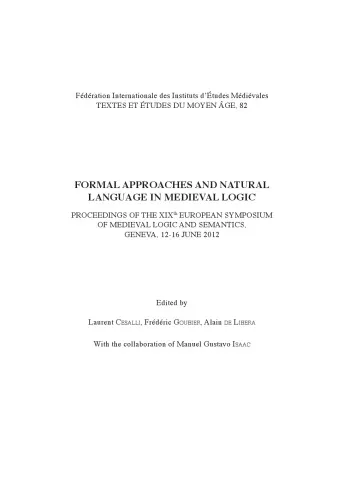
"Formal Approaches and Natural Language in Medieval Logic" is a comprehensive exploration of the interplay between formal methodologies and natural language analysis in the context of medieval logic. This book presents the proceedings of the XIXth European Symposium of Medieval Logic and Semantics, held in Geneva from June 12 to June 16, 2012. As a platform where scholars and researchers converge, it delves into how logic in the Middle Ages reconciled rigorous formal systems with the complexities of natural language.
The historical development of medieval logic is a fascinating topic, serving as the cornerstone for modern logical theories. This book provides readers with a multifaceted perspective on these developments, presenting a synergy between traditional semantic frameworks and innovative modern interpretations. Not only is it an essential addition to the field of medieval studies, but it also offers valuable insights into the philosophical and linguistic foundations of logical analysis.
The book is structured into several thematically interconnected sections, each addressing key aspects of medieval logic and natural language. The contributions in this volume involve specialists in medieval philosophy and logic, presenting papers that explore the relationship between formal logic systems and their linguistic underpinnings during the Middle Ages.
One of the primary themes of the book is the evolution of semantic theories and their grounding in natural language. The authors examine how medieval logicians integrated Aristotelian logic with their innovative approaches to propositions, predications, and syntactic structures. A significant portion of the work is dedicated to modal logic and its interpretation, particularly in relation to necessity, possibility, and contingency in natural language representation.
Another key discussion centers on the interplay between formal syntax and linguistic semantics. The way medieval scholars bridged the gap between abstract, formalized systems of thought and the unpredictability of natural human speech continues to inspire contemporary thinkers. This dialogue is explored through a variety of topics, including syllogistic reasoning, supposition theory, fallacies, and the distinction between spoken and written discourse during the period.
Additionally, the book discusses the transmission and transformation of logical ideas, highlighting how medieval logic has influenced subsequent intellectual traditions. The contributions collectively argue that the medieval period was not merely a precursor to modern logic but a field of study that deserves recognition for its independent contributions.
Here are some memorable and thought-provoking quotes from the book:
"The syntax of natural language is not chaotic; it reflects the structure of thought itself."
"Medieval logicians saw the uncertainties of language as an opportunity rather than an obstacle."
"To understand logic, one must first understand the language in which logic is articulated."
This book matters because it bridges the gap between the historical contributions of medieval logic and the contemporary study of formal semantics and linguistics. It sheds light on the intellectual achievements of a period often dismissed as a 'Dark Age,' demonstrating the sophistication and relevance of medieval scholarship for present-day philosophical and logical inquiries.
The proceedings provide valuable resources for philosophers, linguists, historians, and theorists. They underscore the universality and timelessness of logical inquiry, proving that historic philosophical traditions continue to inspire innovation in modern thought. Whether you are a seasoned scholar or a curious learner, this book serves as both a guide and an inspiration for exploring the rich interplay between formal systems and the dynamics of natural language.
Your question is answered in the context of this title and author. Each answer uses 2 points.
0 reviews, 3.7 average out of 5
Sign in to publish a review.
Ask a focused question and learn from the community.
Related references that continue this learning path.
Hadley Wickham,Garrett Grolemund