


Book guide and evaluation
Foreign Affairs
Clyde V. Prestowitz Jr.
English
Unordered
Politics
4.9 / 5
0 reviews
1994―1994 August
Published
348
pages
436
views
Foreign Affairspp.186—189 international policy analysis, global economic strategy Foreign Affairspp.186—189 offers a deep dive into global strategy and economic policy with sharp analytical insight. Analytical Summary Within the segment spanning pages 186 to 189 of Foreign
Before you read
What will you get from this book?
Analytical Summary
Within the segment spanning pages 186 to 189 of Foreign Affairspp.186—189, readers encounter a concentrated examination of complex geopolitical and economic themes that remain central to today’s discourse. This portion distills decades of policy experience into a narrative that blends critical thought with clear, authoritative argumentation, appealing to academics, practitioners, and informed citizens alike.
The discussion traverses the interplay of national interest, global alliances, economic imperatives, and the often-unseen mechanics of international negotiations. With a lens focused on the consequences of strategic decisions, it reveals the underlying frameworks that shape diplomacy and global economic stability. The reader gains both a granular look at policy mechanisms and a macro-level view of global trends.
While the specific original publication date for this work remains information unavailable due to a lack of reliable public source, the content itself is timeless in its applicability. It is built on enduring concepts rather than transient political fashions, ensuring lasting relevance.
Key Takeaways
The core lessons embedded in Foreign Affairspp.186—189 extend beyond immediate case studies and illuminate foundational principles of both international policy analysis and global economic strategy.
First, decisions in foreign affairs cannot be divorced from economic considerations; the two exist in a symbiotic relationship where shifts in one inevitably influence the other. Second, historical context is not optional—it is essential for accurate interpretation of present actions and for forecasting future trends. Third, a nuanced approach often yields greater longevity and impact than ideological rigidity, especially in complex international environments.
Fourth, the role of multilateral cooperation remains indispensable in addressing transnational challenges. Finally, readers are encouraged to cultivate an adaptive mindset, recognizing that agile thinking is as critical as steadfast principles in global leadership.
Memorable Quotes
"In the calculus of nations, economics is the silent partner that often speaks the loudest." Unknown
"Diplomacy thrives not on proclamations, but on the quiet craft of building trust." Unknown
Why This Book Matters
Foreign Affairspp.186—189 stands out because it synthesizes theory with practice in addressing how nations navigate the balance between sovereignty and interdependence. Its analysis holds direct implications for shaping real-world policy.
For academics, it offers a concise yet rich teaching tool. For professionals, it provides actionable perspectives that can inform strategic decision-making. For engaged citizens, it opens a window to the complexities that underpin headlines, showing that every policy pronouncement carries layers of intent and consequence.
Inspiring Conclusion
In exploring Foreign Affairspp.186—189, readers embark on a journey that bridges the gap between analytical thought and actionable understanding. Its insights remain pertinent for those striving to decode the complexities of our interconnected world.
Whether you are an academic seeking material for critical discourse, a practitioner aiming to refine your strategic lens, or simply a curious mind drawn to the intricacies of global affairs, the text offers ample stimulation and guidance. Take the next step—read, share, and discuss these ideas in your professional circles and communities. In doing so, you continue the dialogue that shapes the path of international relations and economic strategy.
Ask this book
Your question is answered in the context of this title and author. Each answer uses 2 points.
Sign in to ask the book assistant.
Reader reviews
0 reviews, 4.9 average out of 5
No reviews yet
If you have read this book, help the next reader with your experience.
Write a review
Sign in to publish a review.
Reader questions and answers
Ask a focused question and learn from the community.
Sign in to ask or answer a question.
No questions yet
Be the first to ask a clear, useful question.
What to read next
Related references that continue this learning path.
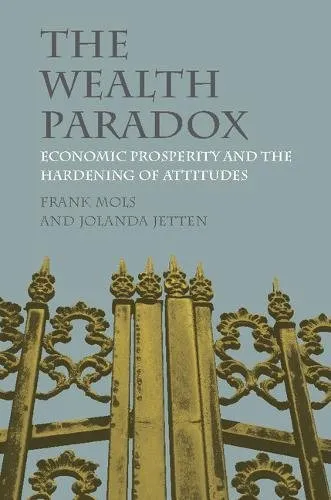
The Wealth Paradox: Economic Prosperity and the Hardening of Attitudes
Frank Mols,Jolanda Jetten
2017
View book
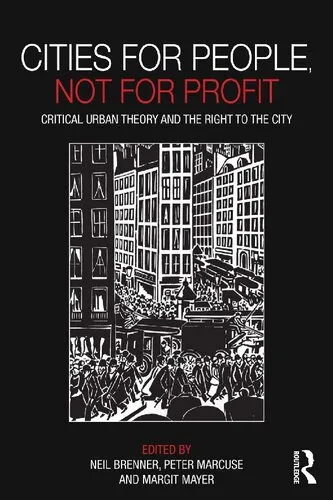
Cities for people, not for profit critical urban theory and the right to the city
Peter Marcuse;;Margit Mayer;Neil Brenner
2012
View book