

Leadership and Management in the 21st Century: Business Challenges of the Future
Edited by Cary L. Cooper
2005
View book
Book guide and evaluation
Jordan Richard Schoenherr
0 reviews
Published
pages
views
Introduction Artificial Intelligence (AI) represents one of the most transformative advancements in contemporary technology, touching every aspect of our lives, from healthcare to entertainment, transportation, and beyond. Yet with its growing dominance comes an ur
Before you read
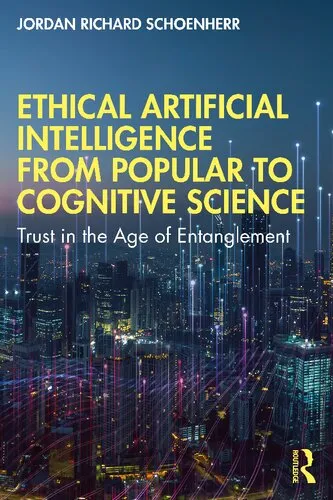
Artificial Intelligence (AI) represents one of the most transformative advancements in contemporary technology, touching every aspect of our lives, from healthcare to entertainment, transportation, and beyond. Yet with its growing dominance comes an urgent, complex question: how can AI systems be designed, implemented, and overseen ethically? In Ethical Artificial Intelligence from Popular to Cognitive Science: Trust in the Age of Entanglement, I explore this intricate network, a web where ethics, cognitive science, and technology meet. This book delves into how trust in AI systems is fostered, misplaced, and sometimes manipulated, all through the lens of popular perceptions and scientific principles. It calls upon us to embrace a nuanced understanding of AI's potential to serve humanity while recognizing its risks.
This book serves as both a philosophical inquiry into AI’s ethics and a practical guide, bridging the gap between technical design and human values. It is structured to explore key ideas from popular interpretations of AI as seen in films and media, while also grounding the discussion in theory and empirical evidence from the field of cognitive science. Ultimately, my goal is to guide readers in rethinking their relationship with AI in this “age of entanglement,” where humans and machines are increasingly interwoven.
Ethical Artificial Intelligence from Popular to Cognitive Science: Trust in the Age of Entanglement begins with an analysis of how AI is portrayed in public discourse and popular culture. From dystopian fears to utopian dreams, popular narratives both inform and distort our understanding of what AI actually is. This sets the stage for deeper explorations of the ethical concerns AI presents—issues of bias, accountability, and transparency.
The book then transitions into cognitive science, offering readers a deeper understanding of how humans perceive and evaluate AI systems. Concepts such as trust calibration, mental models, and user experience form the foundation for exploring the psychology of human-machine interactions. Here, I argue that trust is not just a technical problem to be solved but a relational one, intrinsically tied to our cognitive and emotional frameworks.
The last third of the book addresses the future: how can developers, policymakers, and users build a more ethical AI ecosystem? By offering real-world examples and actionable frameworks, I bring theory into practice, ensuring that readers not only grasp the ethics of AI but also understand how to apply these principles in meaningful, tangible ways.
"Trust is neither a luxury nor an afterthought in AI design—it is the very foundation of its legitimacy."
"When machines make decisions, they inherit the imperfections of their creators and the data they are fed."
"To truly interact ethically with machines, we must first confront our own ethical blind spots as humans."
In many ways, the future of AI will shape the future of humanity. This makes the ethical inspection of AI not just important, but urgent. The choices made today in designing algorithms, implementing machine learning systems, and planning regulations will ripple through generations.
My book matters because it invites diverse audiences—engineers, policymakers, philosophers, and everyday users—into this critical dialogue. It avoids overly technical jargon, instead presenting ideas in a way that is both intellectually rigorous and accessible. Whether you are an AI expert or simply curious about where technology is headed, you will find something valuable in these pages.
By challenging assumptions and calling for action, Ethical Artificial Intelligence from Popular to Cognitive Science: Trust in the Age of Entanglement provides a roadmap for navigating the complexities of AI with care, trust, and integrity.
Your question is answered in the context of this title and author. Each answer uses 2 points.
0 reviews, 4.5 average out of 5
Sign in to publish a review.
Ask a focused question and learn from the community.
Related references that continue this learning path.
Edited by Cary L. Cooper


Kenneth M. Strandberg