Loading
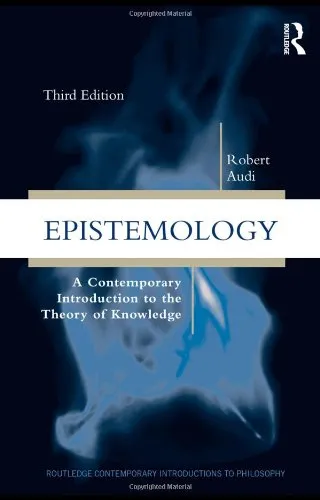
Cover of Epistemology: A Contemporary Introduction to the Theory of Knowledge, Third Edition (Routledge Contemporary Introductions to Philosophy)

Book guide and evaluation

Epistemology: A Contemporary Introduction to the Theory of Knowledge, Third Edition (Routledge Contemporary Introductions to Philosophy)

Robert Audi

English Intermediate novel
4.7 / 5

0 reviews

2010

Published

427

pages

256

views

Epistemology, or “the theory of knowledge,” is concerned with how we know what we know, what justifies us in believing what we believe, and what standards of evidence we should use in seeking truths about the world and human experience.  This comprehensive introduction to the fie

Before you read

What will you get from this book?

Epistemology, or “the theory of knowledge,” is concerned with how we know what we know, what justifies us in believing what we believe, and what standards of evidence we should use in seeking truths about the world and human experience.  This comprehensive introduction to the field of epistemology explains the concepts and theories central to understanding knowledge. Along with covering the traditional topics of the discipline in detail, Epistemology explores emerging areas of research.  The third edition features new sections on such topics as the nature of intuition, the skeptical challenge of rational disagreement, and “the value problem” – the range of questions concerning why knowledge and justified true belief have value beyond that of merely true belief.  Updated and expanded, Epistemology remains a superb introduction to one of the most fundamental fields of philosophy.    Special features of the third edition of Epistemology include: * a comprehensive survey of basic concepts, major theories, and emerging research in the field* enhanced treatment of key topics such as contextualism, perception (including perceptual content), scientific hypotheses, self-evidence and the a priori, testimony, understanding, and virtue epistemology* expanded discussion of the relation between epistemology and related fields, especially philosophy of mind, philosophy of science, and ethics * increased clarity and ease of understanding for an undergraduate audience* an updated list of key literature and annotated bibliography.  

Ask this book

Your question is answered in the context of this title and author. Each answer uses 2 points.

Sign in to ask the book assistant.

Reader reviews

0 reviews, 4.7 average out of 5

No reviews yet

If you have read this book, help the next reader with your experience.

Write a review

Sign in to publish a review.

Reader questions and answers

Ask a focused question and learn from the community.

Sign in to ask or answer a question.

No questions yet

Be the first to ask a clear, useful question.