Book guide and evaluation
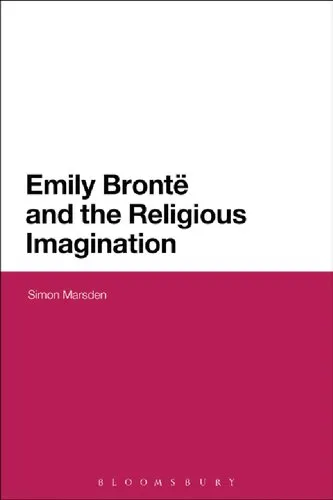
Emily Brontë and the Religious Imagination
Simon Marsden
English
Intermediate
novel
4.5 / 5
0 reviews
2014
Published
193
pages
279
views
Readers of Emily Brontë's poetry and of Wuthering Heights have seen in their author, variously, a devout if somewhat unorthodox Christian, a heretic, or a visionary & mystic of the moors&. Rather than seeking to resolve this matter, Emily Brontë and the Religious Imagination sugg
Before you read
What will you get from this book?
Readers of Emily Brontë's poetry and of Wuthering Heights have seen in their author, variously, a devout if somewhat unorthodox Christian, a heretic, or a visionary & mystic of the moors&. Rather than seeking to resolve this matter, Emily Brontë and the Religious Imagination suggests that such conflicting readings are the product of tensions, conflicts and ambiguities within the texts themselves. Rejecting the idea that a single, coherent set of religious doctrines are to be found in Brontë's work, this book argues that Wuthering Heights and the poems dramatise individual experiences of faith in the context of a world in which such faith is always conflicted, always threatened. Brontë's work dramatises the experience of imaginative faith that is always contested by the presence of other voices, other worldviews. Her characters cling to visionary faith in the face of death and mortality, awaiting and anticipating a final vindication, an eschatological fulfilment that always lies in a future beyond the scope of the text.
Ask this book
Your question is answered in the context of this title and author. Each answer uses 2 points.
Sign in to ask the book assistant.
Reader reviews
0 reviews, 4.5 average out of 5
No reviews yet
If you have read this book, help the next reader with your experience.
Write a review
Sign in to publish a review.
Reader questions and answers
Ask a focused question and learn from the community.
Sign in to ask or answer a question.
No questions yet
Be the first to ask a clear, useful question.
What to read next
Related references that continue this learning path.
Crossing the Line: Violence, Play, and Drama in Naval Equator Traditions
Simon J. Bronner
2007
View book