
Book guide and evaluation
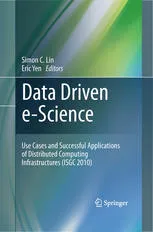
Data Driven e-Science: Use Cases and Successful Applications of Distributed Computing Infrastructures (ISGC 2010)
Francois Grey,Simon C. Lin (auth.),Simon C. Lin,Eric Yen (eds.)
English
Beginner
Software Engineering
4.9 / 5
0 reviews
2011
Published
539
pages
480
views
Introduction In the ever-evolving realm of science and technology, the ability to harness and process vast swathes of data is driving an unprecedented revolution. 'Data Driven e-Science: Use Cases and Successful Applications of Distributed Computing Infrastruct
Before you read
What will you get from this book?
Introduction
In the ever-evolving realm of science and technology, the ability to harness and process vast swathes of data is driving an unprecedented revolution. 'Data Driven e-Science: Use Cases and Successful Applications of Distributed Computing Infrastructures (ISGC 2010)' serves as an essential guide to understanding how distributed computing infrastructures (DCIs) are empowering scientists and researchers globally. Edited by Simon C. Lin and Eric Yen, this book compiles insightful case studies and applications that highlight the transformative power of DCIs in various scientific domains.
Detailed Summary of the Book
At the heart of this book lies a comprehensive exploration of distributed computing infrastructures and their pivotal role in modern e-Science. The text encapsulates the proceedings of the International Symposium on Grid and Cloud Computing (ISGC) 2010, offering a multifaceted view of how advanced computing resources are being utilized in innovative ways. Each chapter presents a detailed case study on different scientific projects, illustrating the challenges faced and solutions adopted in the deployment of large-scale computing resources.
The book delves into a variety of domains, including climate science, biomedicine, and high-energy physics. It explains how DCIs offer scalable solutions to complex problems, from simulating climate models to analyzing massive datasets in genomic research. Emphasizing collaboration and resource sharing, 'Data Driven e-Science' underscores the significance of international collaborations and how they enable breakthrough discoveries that would be otherwise unattainable.
Key Takeaways
- The book highlights the essential role of distributed computing in addressing the computational demands of modern science.
- It demonstrates how DCIs facilitate innovative solutions across diverse scientific fields through detailed use cases.
- Readers gain insights into the collaborative nature of contemporary scientific research, driven by cross-border partnerships.
- The case studies provide a blueprint for leveraging distributed computing to overcome data-intensive challenges.
Famous Quotes from the Book
"Distributed computing infrastructures pave the way for a new era of scientific exploration, where the potential of human intellect can be amplified by the power of computational collaboration."
"In leveraging shared resources across borders, we transcend the limitations of traditional scientific inquiry, ushering in discoveries that reshape our understanding of the universe."
Why This Book Matters
In a world where data deluge is becoming the norm, understanding how to efficiently process and analyze massive datasets is critical. This book stands out because it provides real-world applications and practical insights into how distributed computing can be harnessed to address some of the most demanding scientific questions. It not only serves as a technical resource but also inspires scientists and researchers to think creatively about the possibilities that lie within collaborative computing frameworks.
By capturing the essence of discussions from ISGC 2010, this book marks a pivotal moment in the digital transformation of science. It is of particular interest to researchers, computational scientists, and IT professionals who seek to explore the frontiers of e-Science and understand the strategic implementation of distributed computing infrastructures. Its relevance extends beyond the academic sphere, influencing policy makers and institutions that orchestrate international scientific collaborations.
Ask this book
Your question is answered in the context of this title and author. Each answer uses 2 points.
Sign in to ask the book assistant.
Reader reviews
0 reviews, 4.9 average out of 5
No reviews yet
If you have read this book, help the next reader with your experience.
Write a review
Sign in to publish a review.
Reader questions and answers
Ask a focused question and learn from the community.
Sign in to ask or answer a question.
No questions yet
Be the first to ask a clear, useful question.
What to read next
Related references that continue this learning path.
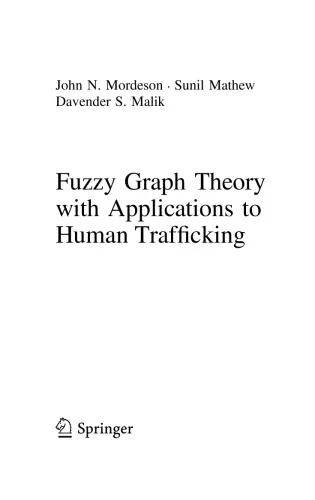
Fuzzy Graph Theory with Applications to Human Trafficking
John N. Mordeson,Sunil Mathew,Davender S. Malik
2018
View book
Understanding molecular simulation : from algorithms to applications
Daan Frenkel;Berend Smit
2002
View book