
Practical Lakehouse Architecture: Designing and Implementing Modern Data Platforms at Scale
Gaurav Ashok Thalpati
2024
View book
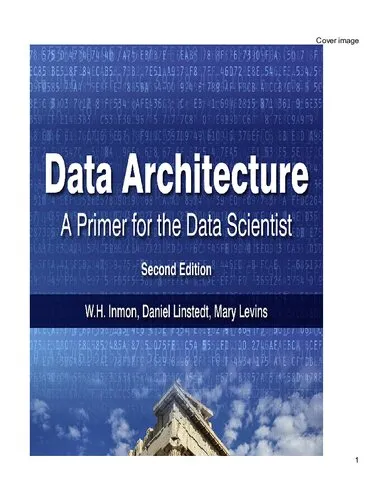
Book guide and evaluation
W.H. Inmon;Daniel Linstedt;Mary Levins
0 reviews
Published
pages
views
Welcome to the comprehensive introduction of "Data Architecture: A Primer for the Data Scientist," a seminal work by W.H. Inmon, Daniel Linstedt, and Mary Levins. This book serves as an essential guide for data scientists, architects, and business professionals looking to delve
Before you read
Welcome to the comprehensive introduction of "Data Architecture: A Primer for the Data Scientist," a seminal work by W.H. Inmon, Daniel Linstedt, and Mary Levins. This book serves as an essential guide for data scientists, architects, and business professionals looking to delve into the intricacies of data architecture and how it shapes the environment of data science.
In an era where data drives decision-making, understanding data architecture is critical for data scientists and business professionals. This book provides a structured approach to comprehending the multifaceted world of data architecture. The authors dissect complex concepts into digestible topics, offering insights into how data is captured, represented, and used effectively. It covers everything from the foundational concepts of data architecture, including its history and evolution, to modern-day practices and the role of big data in current business landscapes.
The authors shed light on the importance of strategic data management practices, emphasizing the lifecycle of data, data governance, and how accurately understanding data context can lead to greater business insights. As the reader navigates through the pages, they are introduced to key architectural components, such as data warehouses, data lakes, and cloud integration. The book also highlights the synergy between traditional data architectures and the emerging landscape of big data technologies like Hadoop and Spark.
"Data is the new oil, and architecture is the refinery that transforms it into fuel for businesses."
"Understanding the flow and structure of data is not just an IT concern; it is a business imperative."
The rapid evolution of data technologies has created a gap in how businesses can capitalize on big data. "Data Architecture: A Primer for the Data Scientist" addresses this challenge by providing a solid roadmap for developing an efficient and scalable data architecture. The book is invaluable for data professionals looking to enhance their understanding of the architectural frameworks that enable robust data management and analytical capabilities.
In an age where the volume, variety, and velocity of data are increasing exponentially, possessing a well-thought-out data architecture is paramount. This book doesn't just present theoretical knowledge; it provides actionable strategies that practitioners can implement to harness the full potential of their data assets.
Ultimately, this book matters because it demystifies a complex subject and equips data professionals with the knowledge they need to be impactful in their roles. It bridges the gap between data generation and data-driven insight, serving as both an educational tool and a strategic guide.
Your question is answered in the context of this title and author. Each answer uses 2 points.
0 reviews, 4.0 average out of 5
Sign in to publish a review.
Ask a focused question and learn from the community.
Related references that continue this learning path.
Gaurav Ashok Thalpati
Gildan Media.;Menasche, Steven;Siegel, Eric
Sawchik,Travis
W.H. Inmon,Dan Linstedt