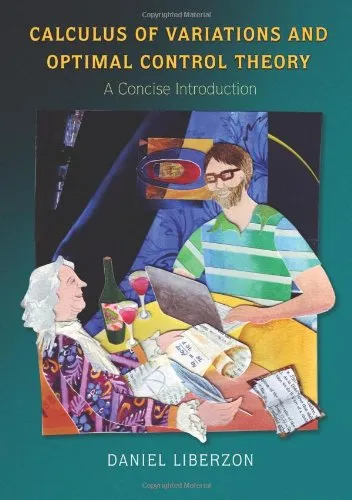
Calculus of Variations and Optimal Control Theory: A Concise Introduction
Daniel Liberzon
2012
View book

Book guide and evaluation
L. Poundie Burnstein,Joseph N. Strauss
0 reviews
Published
pages
views
Introduction to 'Concise Introduction to Tonal Harmony Workbook (Chapters 0-20)' The "Concise Introduction to Tonal Harmony Workbook (Chapters 0-20)" is a carefully crafted companion to tonal harmony, specifically designed to solidify and expand your understanding of key conce
Before you read
The "Concise Introduction to Tonal Harmony Workbook (Chapters 0-20)" is a carefully crafted companion to tonal harmony, specifically designed to solidify and expand your understanding of key concepts in tonal music. Written by L. Poundie Burstein and Joseph N. Strauss, the approach is both concise and practical, offering a balance between theoretical knowledge and hands-on application. This workbook is an essential resource for students, educators, and anyone seeking to deepen their knowledge of tonal harmony through structured exercises and examples. Below, we explore a detailed summary of the book, its key takeaways, famous quotes from its content, and the larger significance of this work in the field of music theory.
The workbook spans twenty chapters, beginning with foundational musical concepts before moving into more complex topics. Chapters 0-3 establish the basics, such as understanding scales, intervals, and chords, making this an excellent starting point even for those with minimal prior knowledge. The progression of the chapters ensures that students gain a strong grasp of diatonic harmony before delving into other essential aspects, including secondary dominants, modulation, and chromaticism.
Each chapter builds incrementally on knowledge developed in previous ones, helping readers grow confidence in analyzing music and solving written and aural exercises. The workbook stands out because of its engaging and accessible tone, clear explanations, and abundant exercises that challenge both technical and creative skills. With each progressive chapter, learners are encouraged to apply new concepts not just in written assignments but also by identifying these principles in real musical examples from the repertoire.
The book concludes with discussions on more advanced harmonic practices, ensuring that readers leave with a comprehensive understanding of tonal harmony’s structure, nuances, and expressive potential.
"Harmony is not just the vertical sonority of chords; it is the interaction of these chords and their connections that moves the music forward."
"Understanding tonal harmony means learning to hear music as a dialogue between tension and resolution."
"Retention and mastery of tonal harmony rely not only on theory but on consistent, thoughtful practice."
The "Concise Introduction to Tonal Harmony Workbook" is more than just a supplementary resource; it is a cornerstone for anyone learning music theory in the context of Western tonal tradition. The book’s structure makes it an invaluable tool for self-guided learners and music students alike, offering tools that bridge the gap between understanding and application.
What truly sets this workbook apart is its focus on developing functional musicianship. By encouraging learners to analyze, compose, and listen more critically, the authors provide an educational experience that feels transformative and empowering. Students who work through this book will not only gain a richer understanding of tonal harmony but will also cultivate a deeper appreciation of how it shapes expressive artistry in music.
Moreover, the unique combination of clarity, conciseness, and comprehensiveness has made this workbook a preferred resource among educators in both academic and private instructional settings. Whether you are an aspiring composer, a performer looking to broaden your theoretical knowledge, or simply a passionate music enthusiast, this book offers everything needed to build a strong foundation for understanding and appreciating tonal music at a profound level.
© 2023 by L. Poundie Burstein and Joseph N. Strauss. All rights reserved.
Your question is answered in the context of this title and author. Each answer uses 2 points.
0 reviews, 4.5 average out of 5
Sign in to publish a review.
Ask a focused question and learn from the community.
Related references that continue this learning path.
Daniel Liberzon