Book guide and evaluation
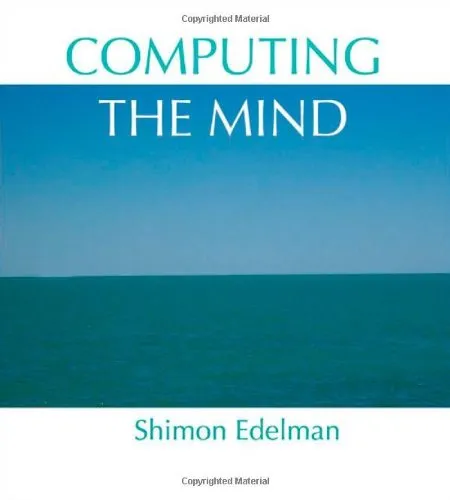
Computing the Mind: How the Mind Really Works
Shimon Edelman
English
Beginner
Psychiatry & Psychology
4.0 / 5
0 reviews
2008
Published
628
pages
470
views
Welcome to an in-depth exploration of Shimon Edelman's insightful work, "Computing the Mind: How the Mind Really Works." This book delves into the complex world of cognitive science, aiming to demystify the computational processes that underlie human cognition. By using a compu
Before you read
What will you get from this book?
Welcome to an in-depth exploration of Shimon Edelman's insightful work, "Computing the Mind: How the Mind Really Works." This book delves into the complex world of cognitive science, aiming to demystify the computational processes that underlie human cognition. By using a computational lens, Edelman redefines our understanding of how the mind perceives, processes, and manifests thoughts, emotions, and behaviors.
Summary of the Book
The journey into cognitive computation starts with a foundational overview of the core principles that govern the architecture of the mind. Edelman proposes that the mind can best be understood as a sophisticated computation system—one that processes information in a manner akin to a computer yet possesses the complexity and adaptability unique to biological organisms.
Within its pages, "Computing the Mind" offers a comprehensive examination of the various facets of cognitive functions, such as perception, learning, memory, language, and emotion. Edelman draws parallels between computational models and natural cognitive processes, highlighting how algorithms could mimic these functions. By elucidating these analogies, he challenges preconceived notions about the mystique of consciousness, positioning it instead as a product of complex, albeit explicable, computational interactions.
The book also explores the evolutionary backdrop that shapes cognitive processes, offering insights into why certain computational approaches align closely with human and animal cognition. It is not only a scientific exposition but also an invitation to re-evaluate theoretical frameworks concerning mental phenomena.
Key Takeaways
- Cognition can be effectively interpreted through computational models, bridging the gap between artificial systems and biological entities.
- Emulating cognitive processes through algorithms can lead to advancements in artificial intelligence, offering machines a semblance of human-like understanding.
- Understanding the computational nature of cognition empowers us to gain deeper insights into psychological disorders and develop advanced therapeutic strategies.
- The evolutionary trajectory of cognitive faculties sheds light on the discrepancies and similarities across species, enhancing our appreciation of cognitive diversity.
Famous Quotes from the Book
"The mind is not a black box, but a vibrant tapestry of computations that transcend mere digital operations."
"To comprehend the mind is to unravel the algorithms that not only serve function but also facilitate the richness of human experience."
Why This Book Matters
"Computing the Mind: How the Mind Really Works" holds significant relevance in current scientific and technological discourse. With the surge of interest in artificial intelligence and machine learning, understanding the cognitive architectures that these technologies seek to replicate is more crucial than ever. Edelman provides a roadmap for the development of AI that more accurately mirrors human cognition.
The book is a crucial read for cognitive scientists, psychologists, AI researchers, and anyone intrigued by the mysteries of the mind. It stands as a comprehensive guide that provides clarity to one of the most challenging frontiers of human knowledge—understanding the human mind in computational terms.
Moreover, it serves as a bridge between cognitive psychology and computational methodologies, encouraging interdisciplinary dialogue and collaboration. By reconciling these domains, Edelman lays the groundwork for the innovations of tomorrow, encouraging us to refine our tools, both intellectual and technological, in the quest for understanding.
Ask this book
Your question is answered in the context of this title and author. Each answer uses 2 points.
Sign in to ask the book assistant.
Reader reviews
0 reviews, 4.0 average out of 5
No reviews yet
If you have read this book, help the next reader with your experience.
Write a review
Sign in to publish a review.
Reader questions and answers
Ask a focused question and learn from the community.
Sign in to ask or answer a question.
No questions yet
Be the first to ask a clear, useful question.
What to read next
Related references that continue this learning path.